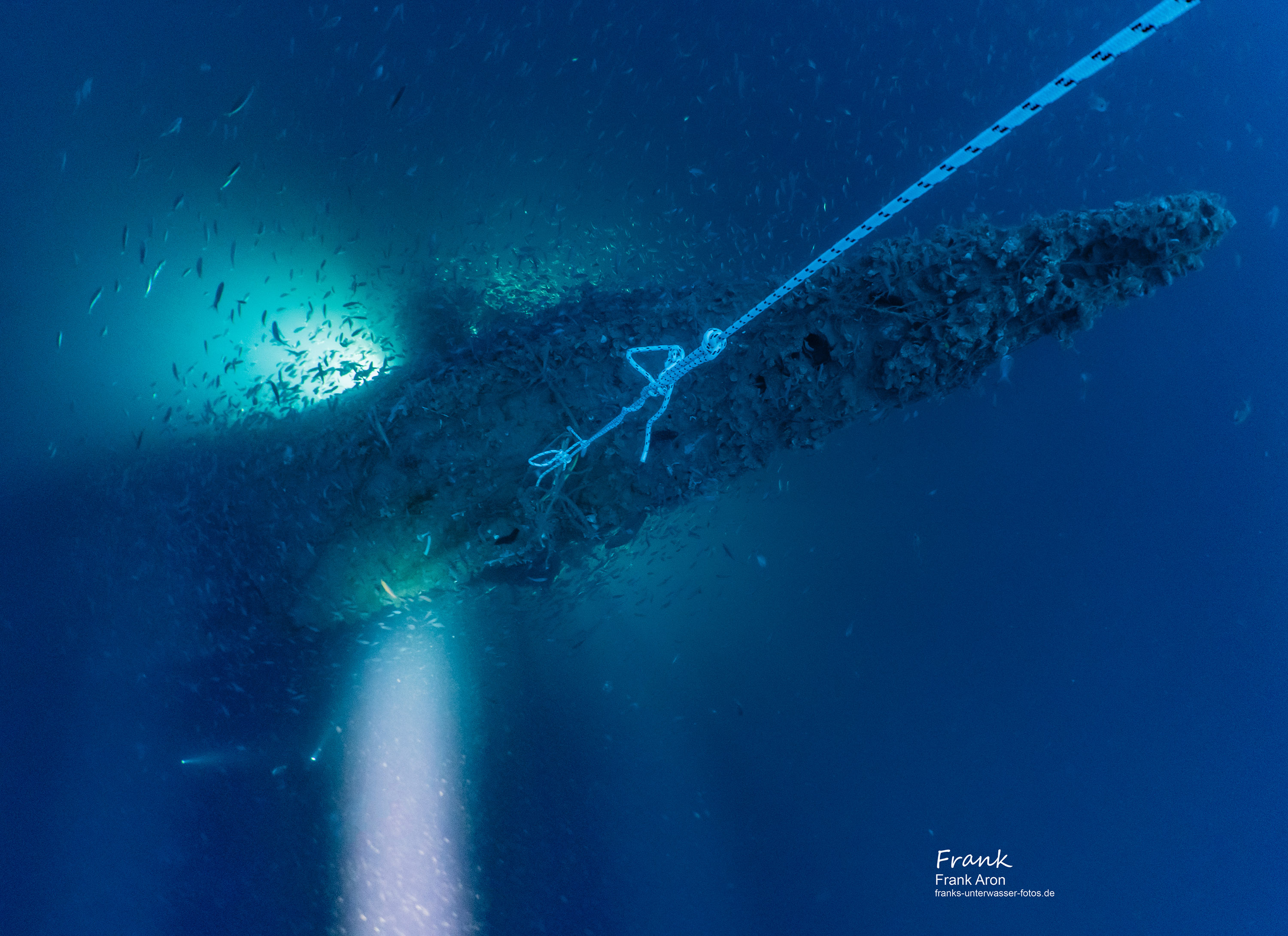
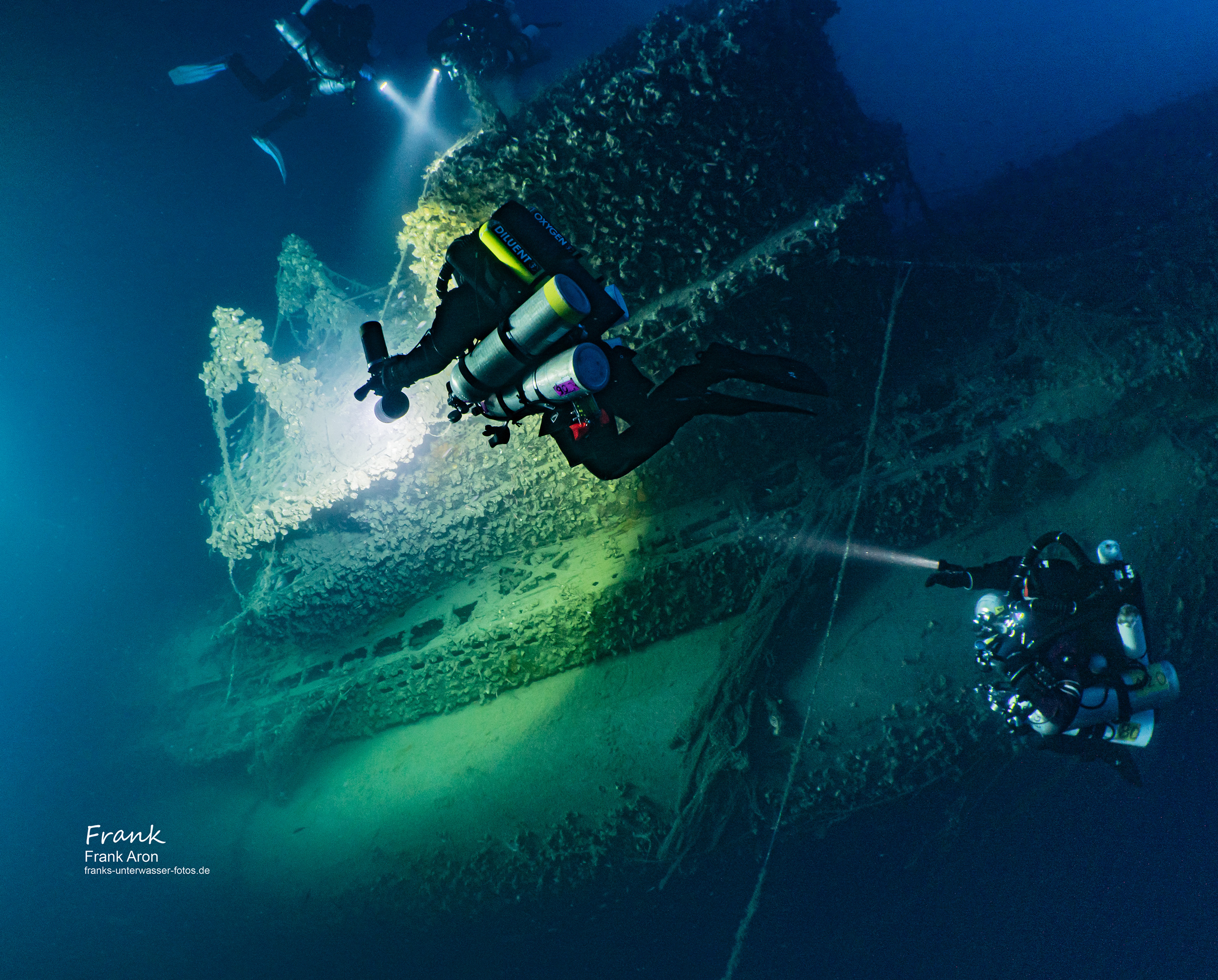
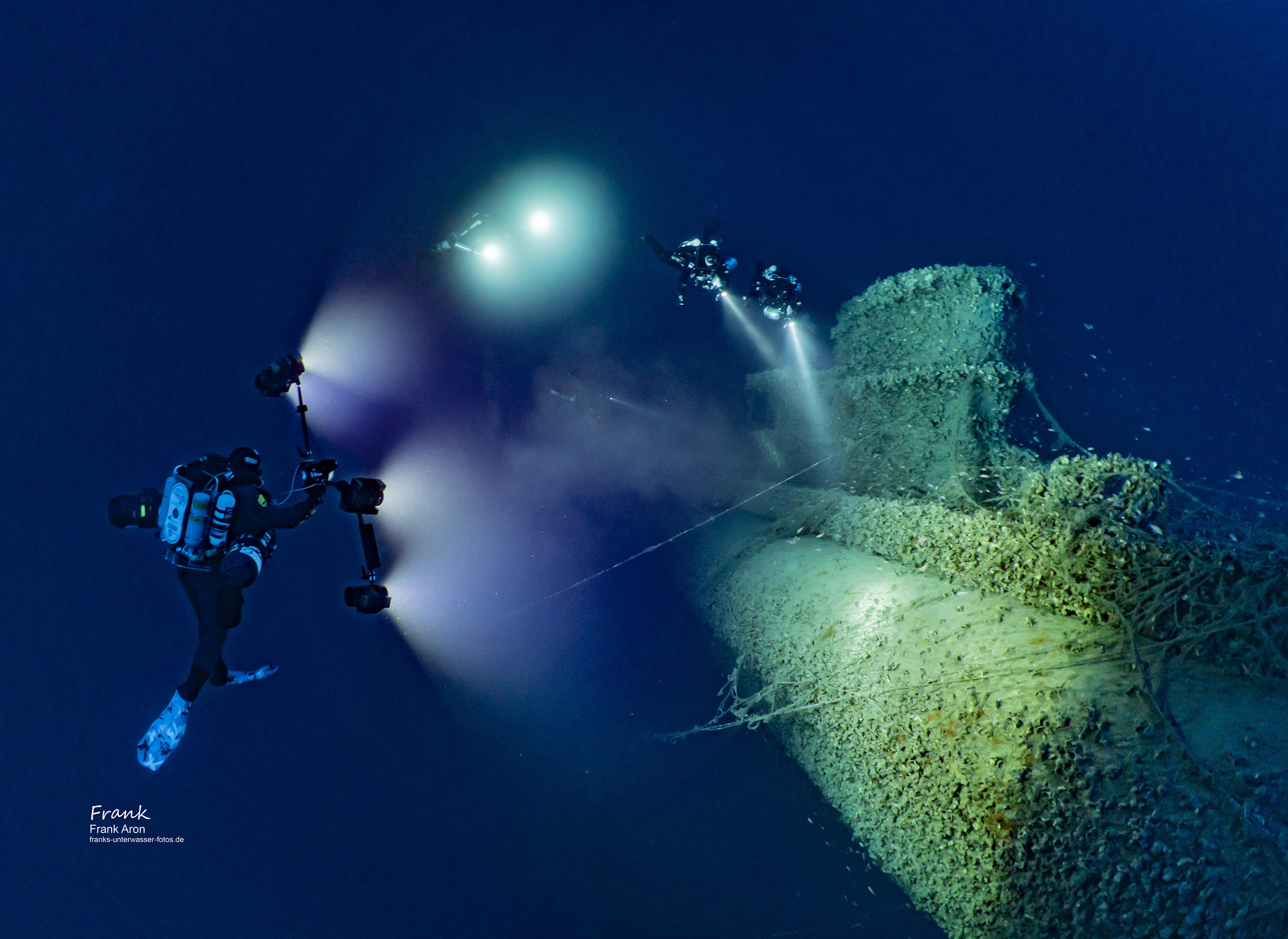
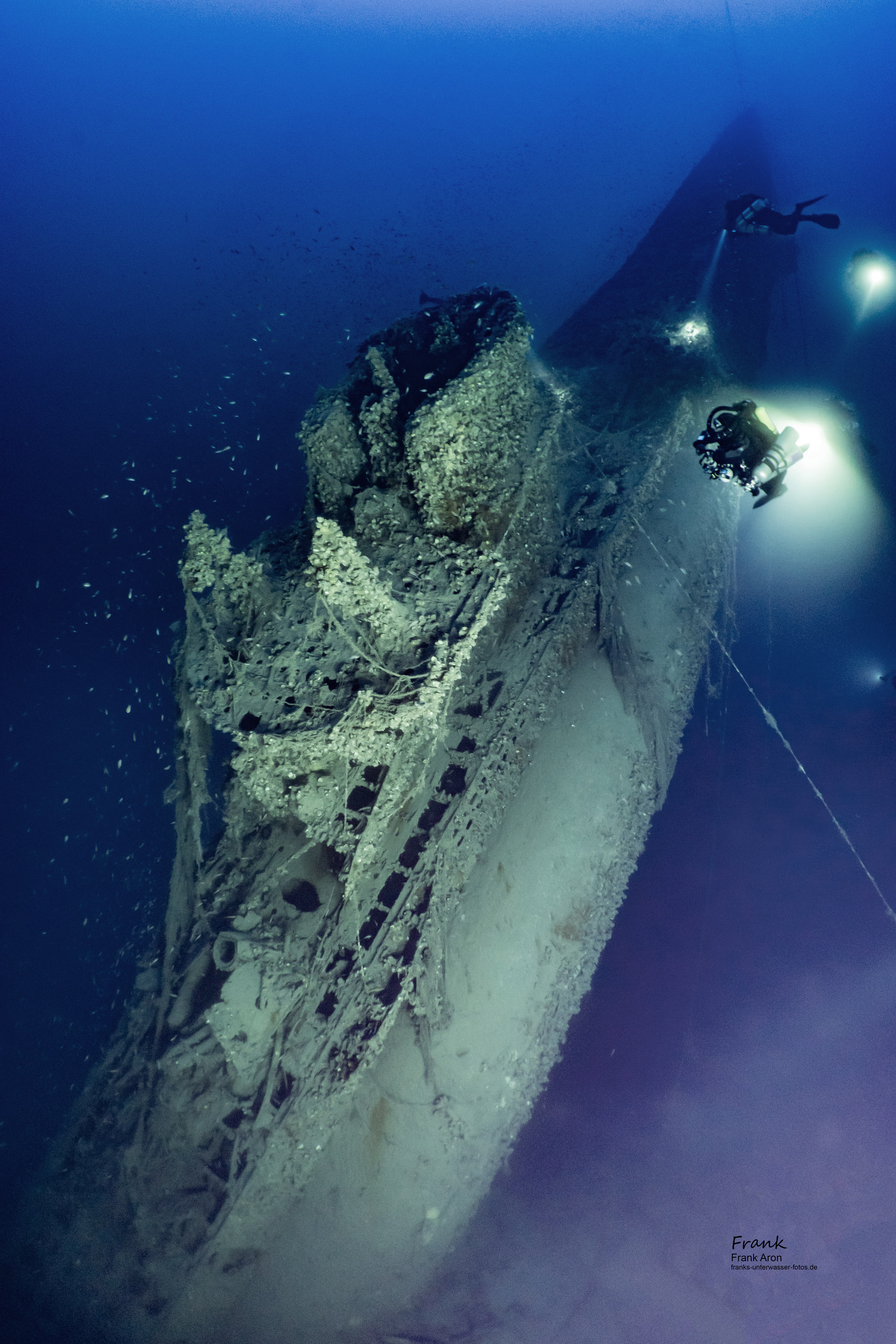
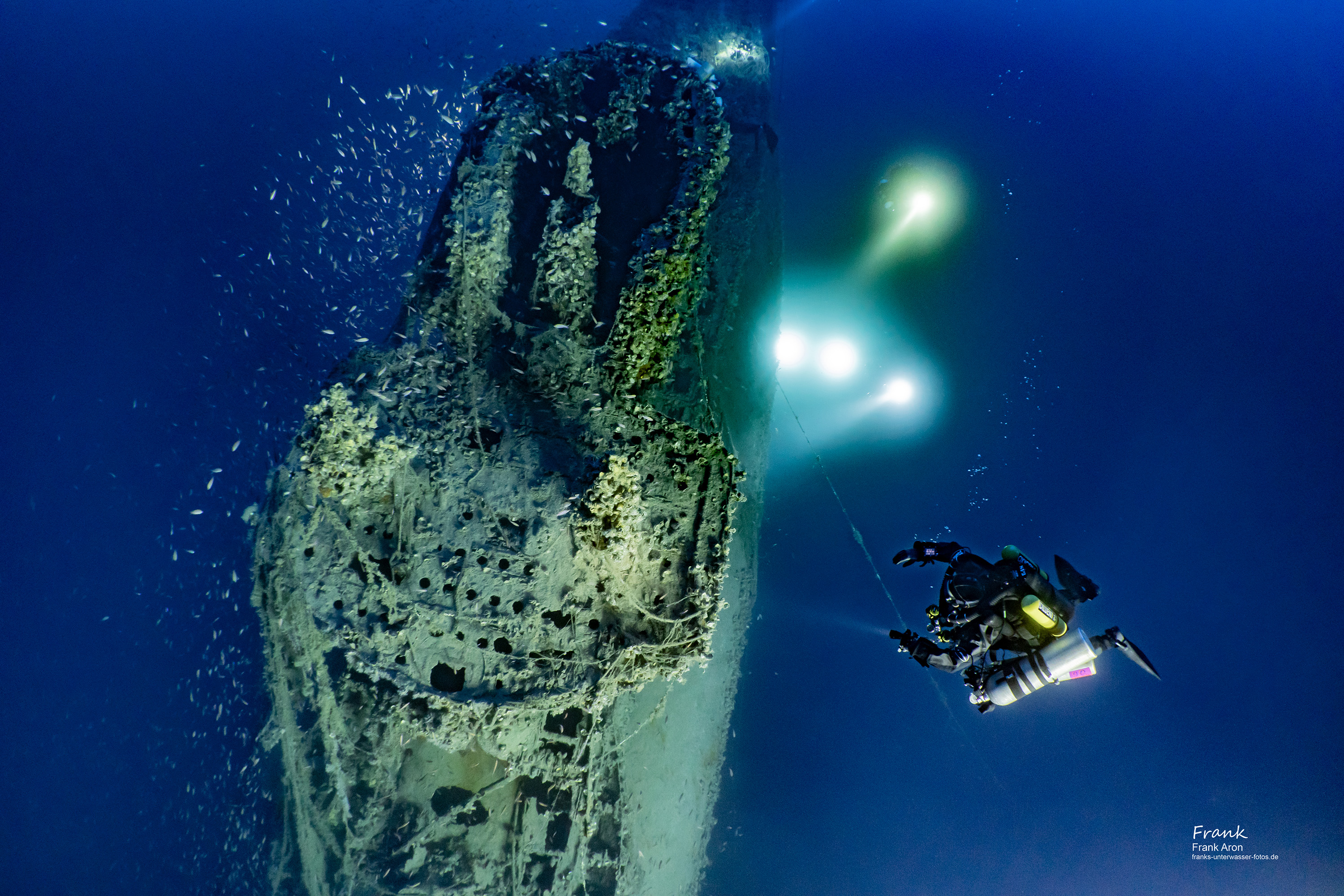
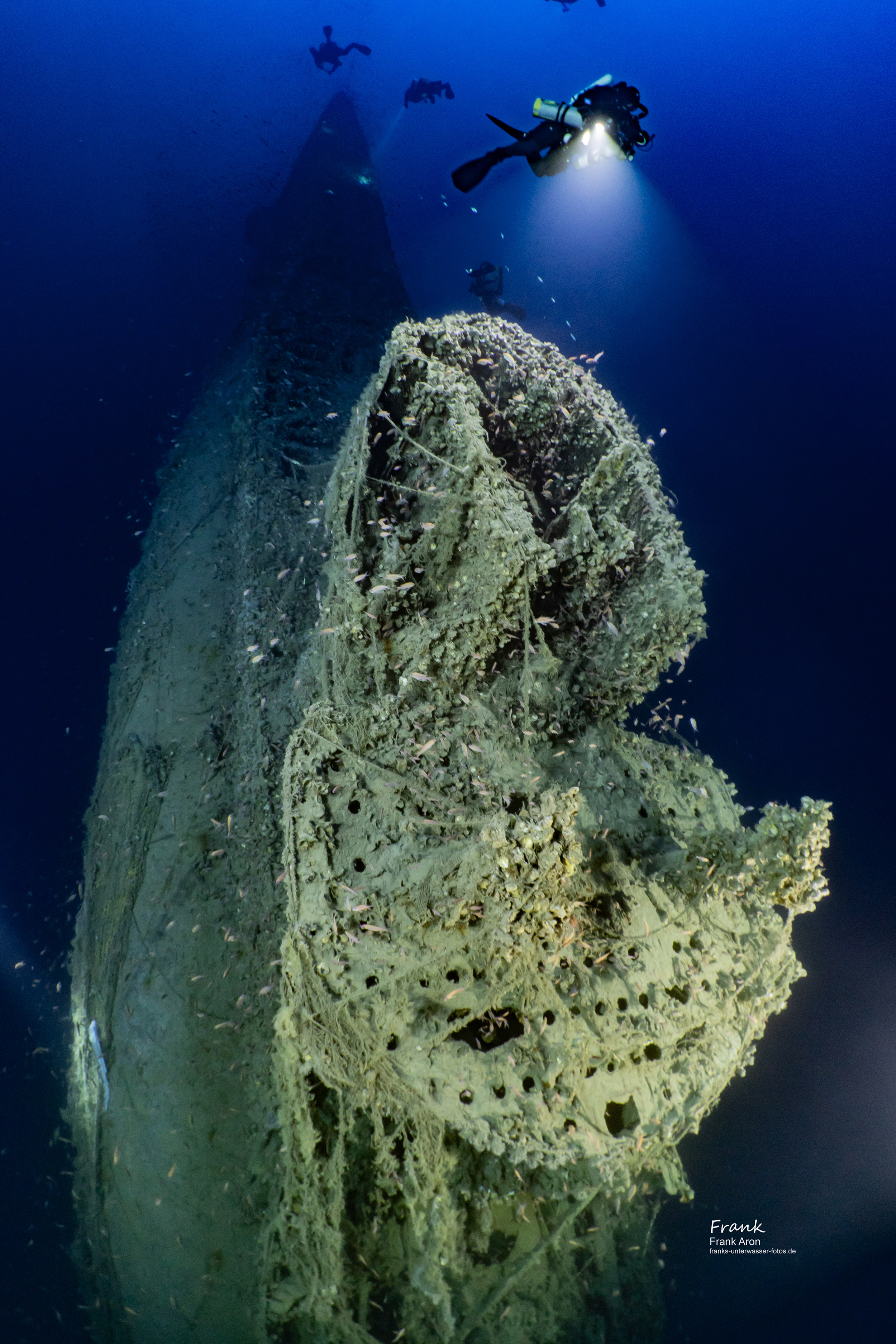
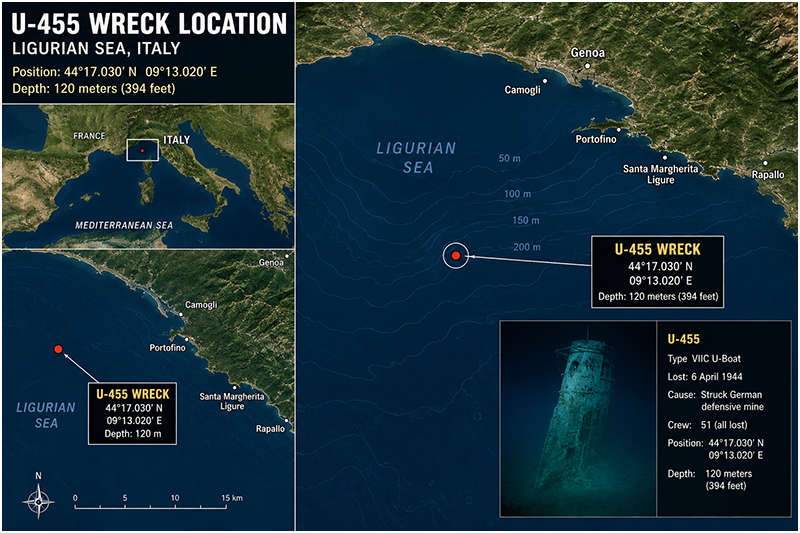
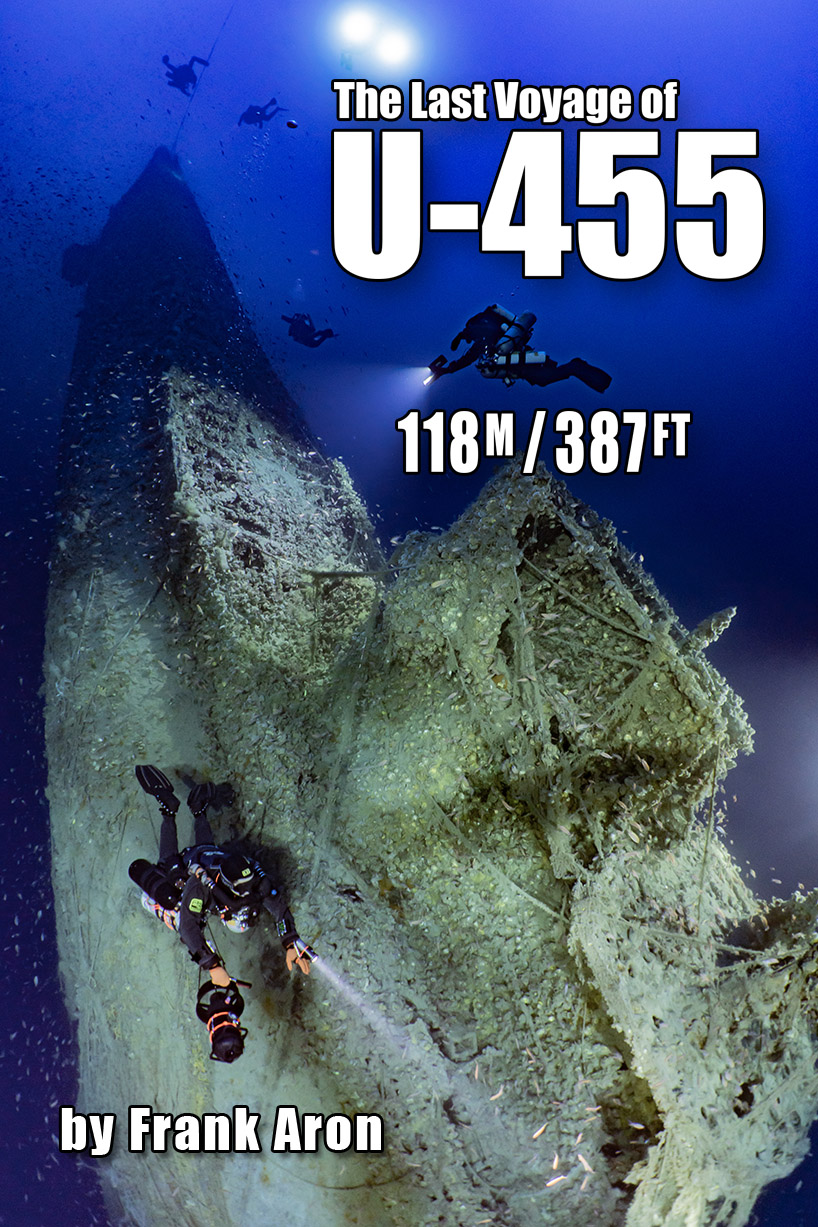
Today's dive was completely different from the previous days, when poor visibility had limited what we could see. This time, we descended through what seemed like an endless column of crystal-clear water. After passing through nearly 60 meters (197 feet) of exceptional visibility, the bow of the submarine gradually emerged beneath us, illuminated by the lights of the dive team ahead. At a depth of 85 meters (279 feet) lay the wreck of the German submarine U-455, lost in April 1944.
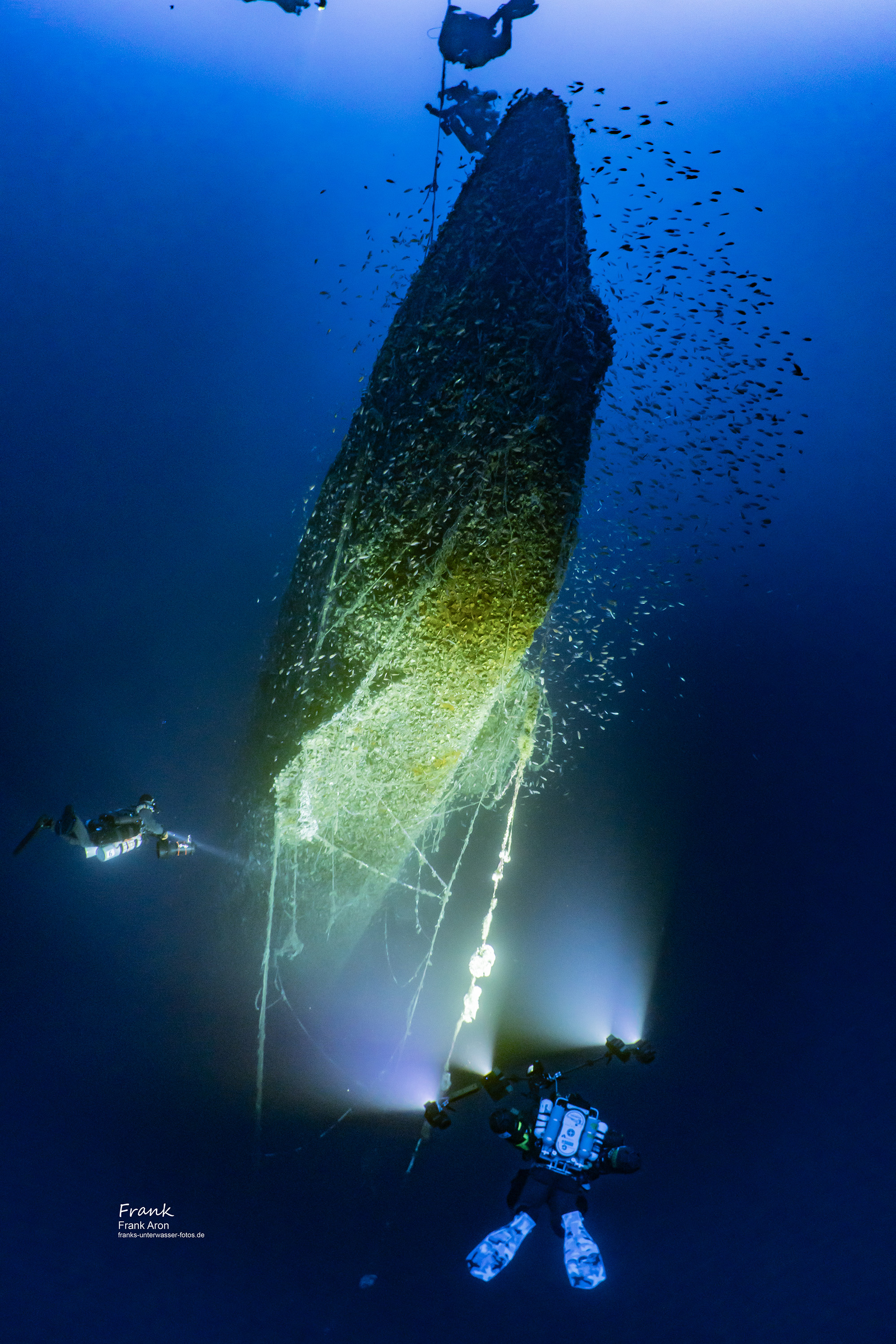
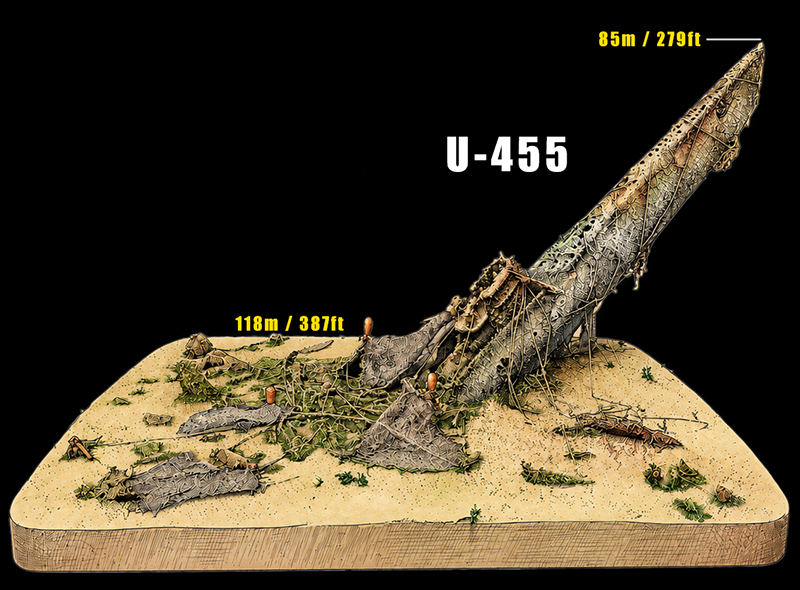
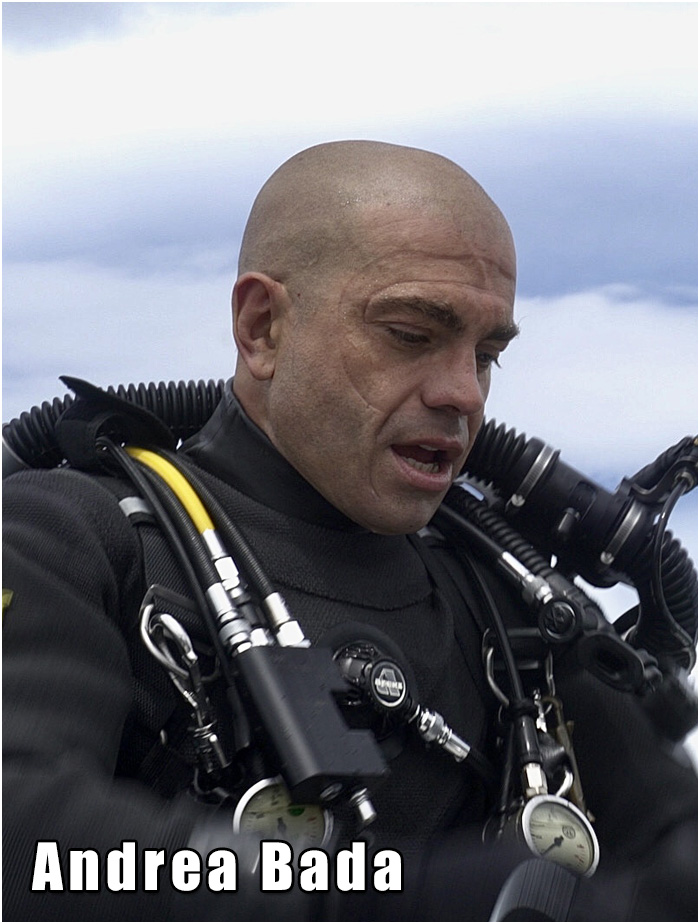
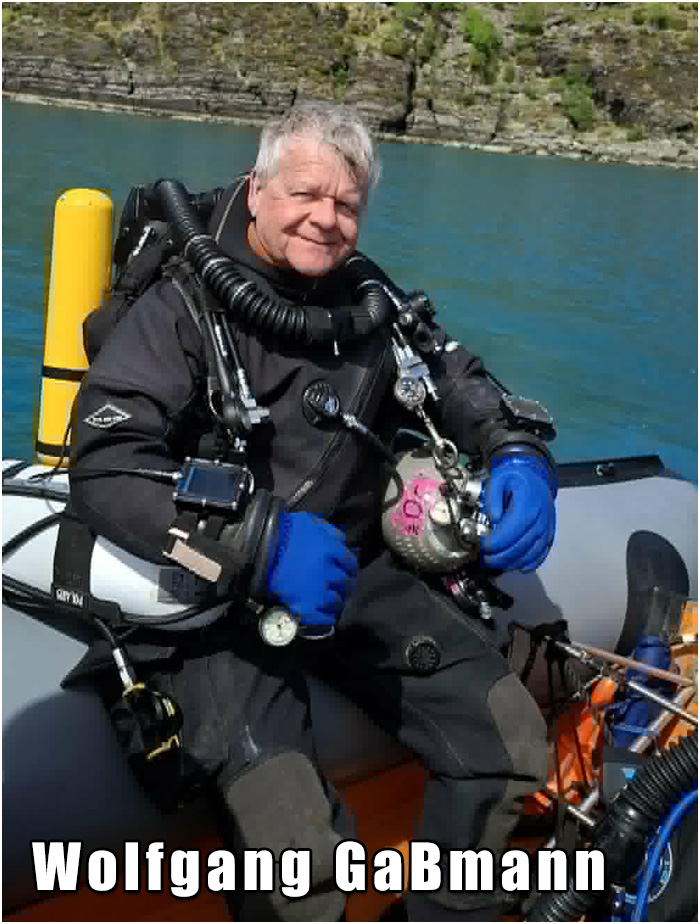
The journey from Arenzano aboard Andrea Bada's fast boat took about an hour and a half, but every minute was worthwhile. Better still, the remarkable visibility extended all the way to the seabed. At 110 meters (361 feet) we could view virtually the entire wreck, from the stern resting in the mud at 118 meters (387 feet) to the bow rising to 85 meters (279 feet). My dive partners, Andrea and Wolfgang, illuminated the entire scene with a combined output of more than 110,000 lumens, revealing details that would otherwise have remained hidden in the darkness.
On Her Final Mission
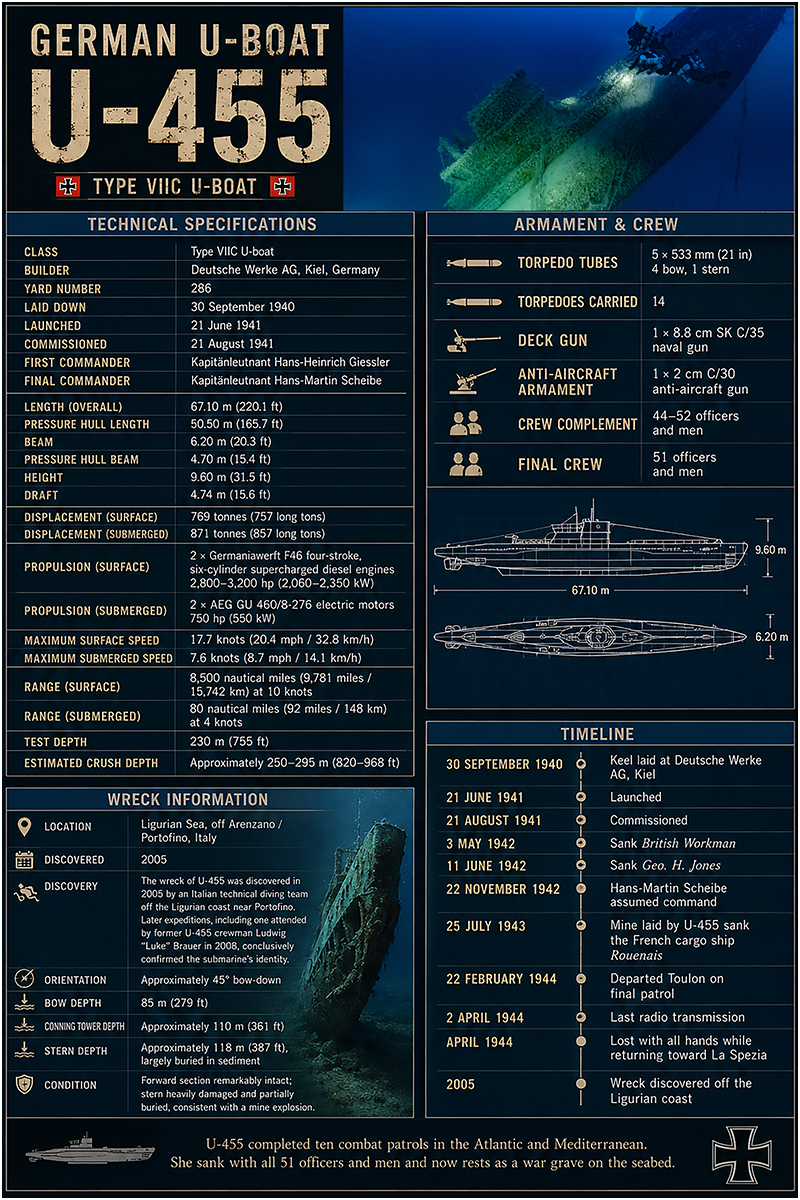
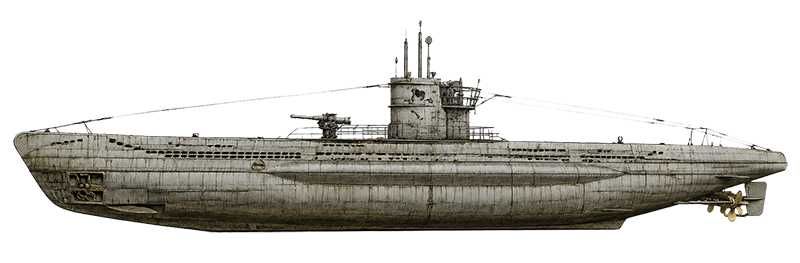
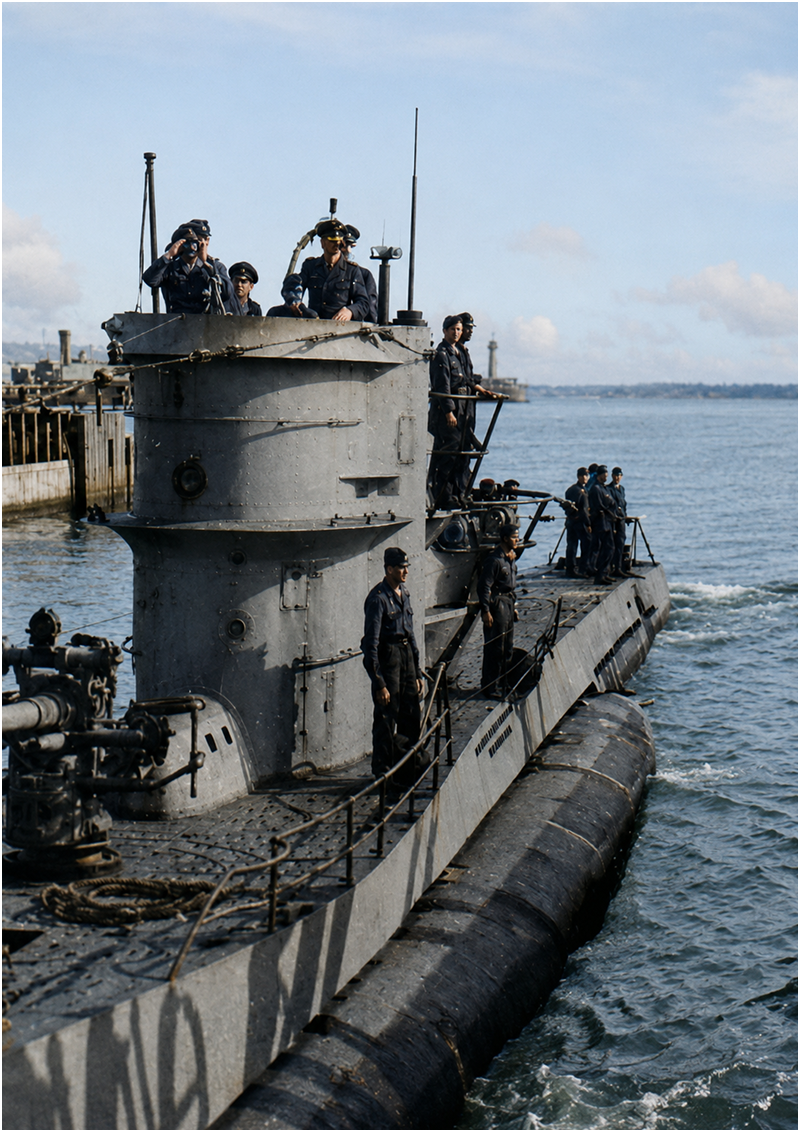
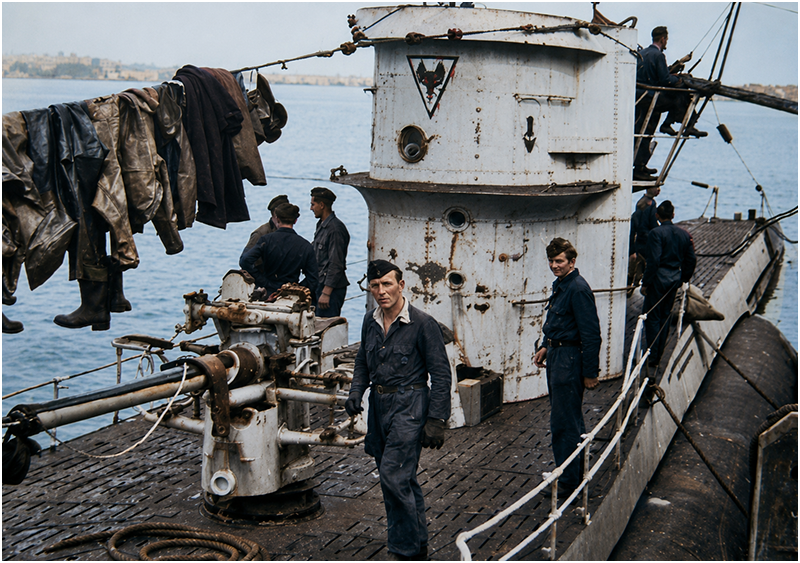
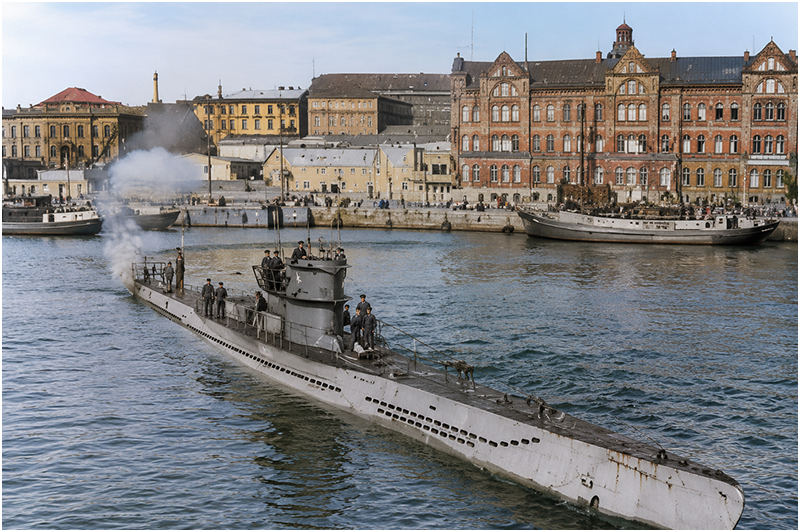
U-455 was a Type VIIC U-boat, the most successful and widely produced submarine class operated by the German Kriegsmarine during the Second World War. Between 1940 and 1945, more than 560 Type VIIC submarines were built, forming the backbone of Germany's U-boat fleet. Measuring 67.1 meters (220 feet) in length and powered by twin Germaniawerft diesel engines for surface running and electric motors while submerged, these submarines could reach speeds of more than 17 knots on the surface and nearly 8 knots underwater. With a range exceeding 8,500 nautical miles (9,800 miles / 15,700 kilometers), they were capable of operating far into the Atlantic and along the eastern coast of North America. Their versatility earned them the nickname Atlantikboot, or "Atlantic Boat," although many later served extensively in the Mediterranean.
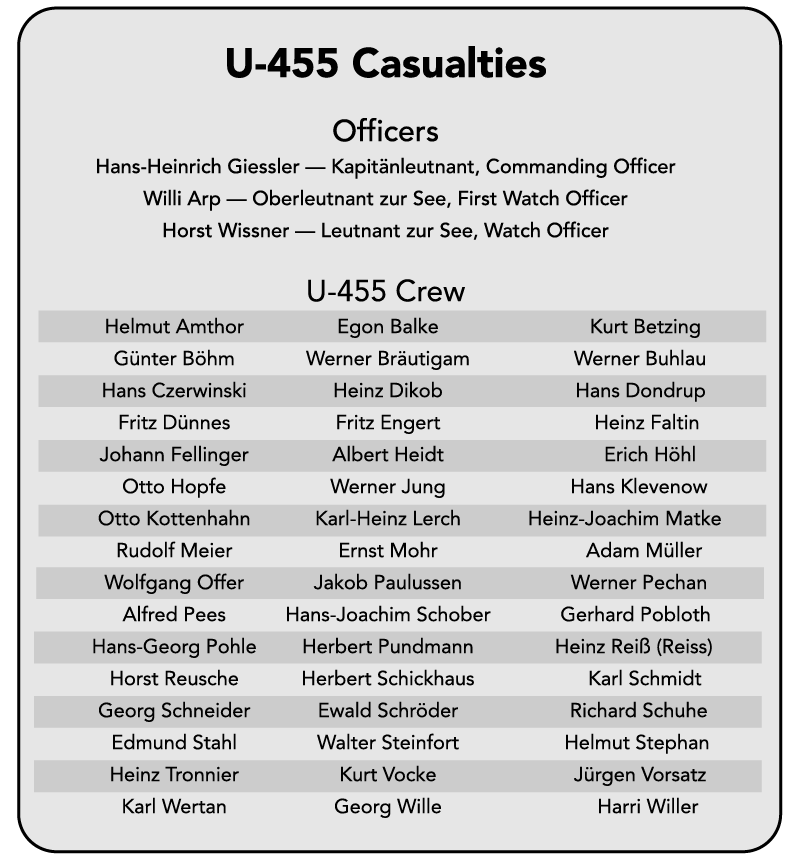
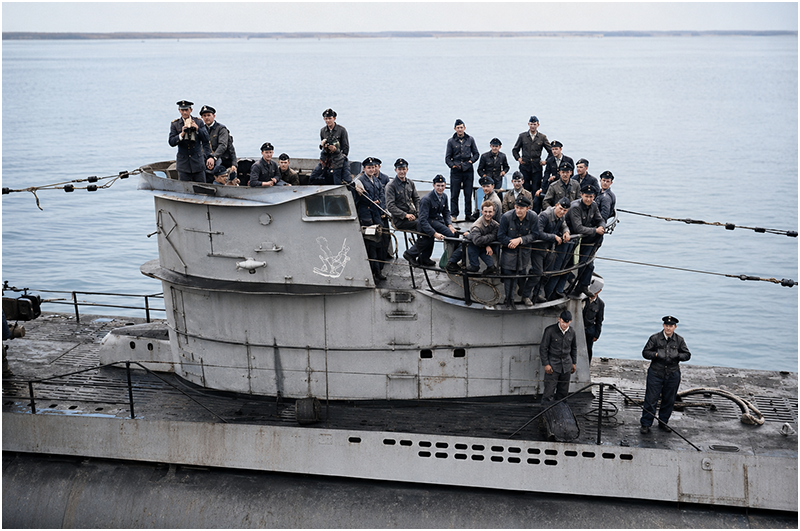
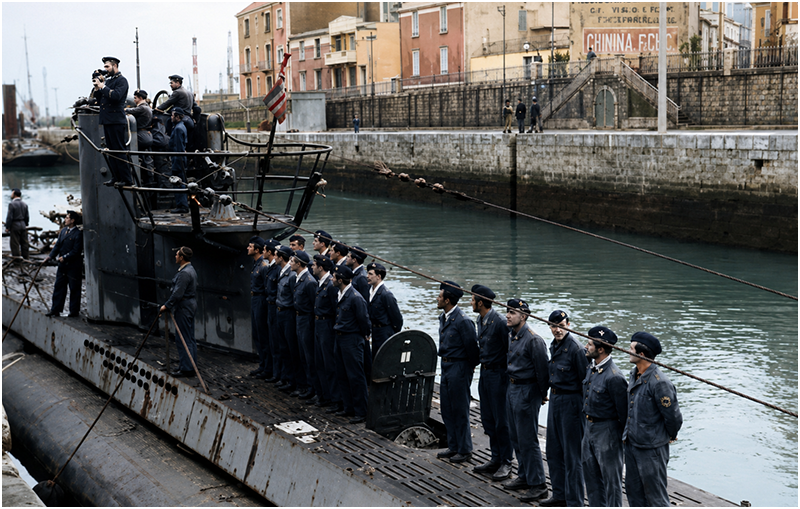
Constructed by Deutsche Werke AG in Kiel, U-455 was launched on 21 June 1941 and commissioned two months later on 21 August 1941 under the command of Kapitänleutnant Hans-Heinrich Giessler. Like every newly commissioned U-boat, she spent several months conducting intensive sea trials and crew training before becoming operational. Every member of the 51-man crew had to master navigation, torpedo attacks, crash dives, damage control, emergency repairs, and survival under combat conditions, knowing that once submerged beneath the Atlantic there would be no possibility of outside assistance.
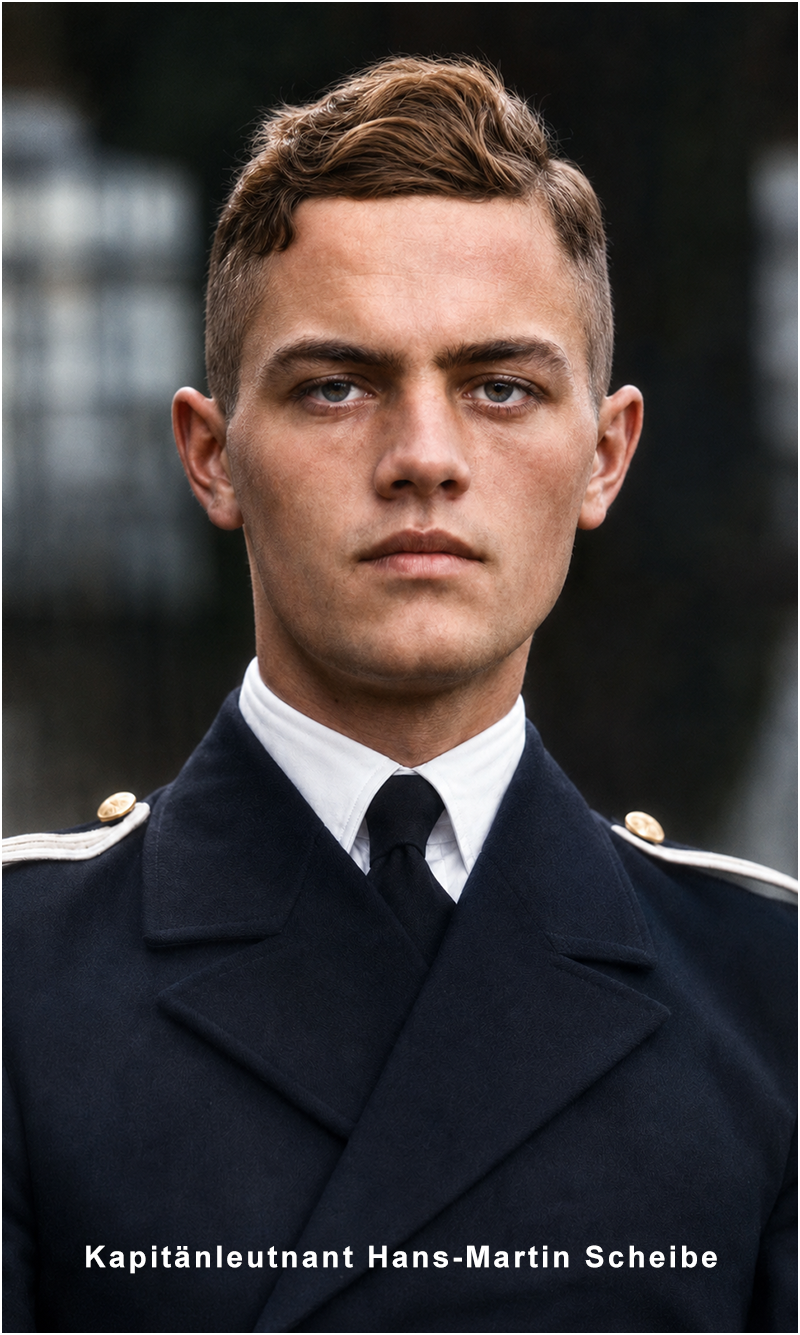
During her wartime career, U-455 completed ten combat patrols. Her first operations took place in the North Atlantic as part of the famous German wolfpack tactics, where groups of submarines coordinated attacks against Allied convoys. On 3 May 1942, she sank the British tanker British Workman, followed by the American cargo ship Geo. H. Jones on 11 June 1942. After transferring to the Mediterranean under the command of Kapitänleutnant Hans-Martin Scheibe, U-455 shifted from convoy attacks to offensive minelaying operations. One of those minefields later claimed the French cargo ship Rouenais off Casablanca on 25 July 1943, demonstrating that mines could remain deadly long after the submarine had departed the area.
One of the most dangerous moments of U-455's career came while refueling at sea, when an American aircraft surprised the submarine during replenishment operations. The crew executed an emergency dive just in time, escaping without serious damage. Like many veteran U-boats, U-455 survived repeated Allied patrols, aircraft attacks, and anti-submarine operations while operating in increasingly hostile waters.
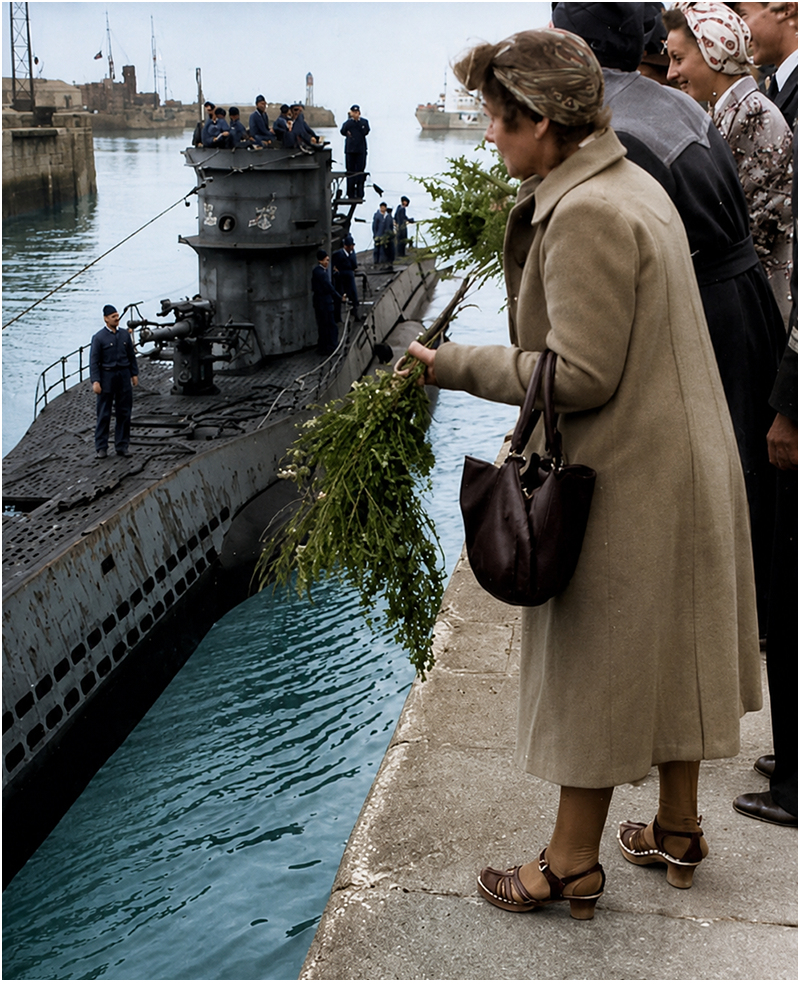
By early 1944, the strategic situation had changed dramatically. Allied air superiority, improved radar, sonar, escort carriers, and increasingly sophisticated anti-submarine tactics had transformed the Mediterranean into an exceptionally hazardous operating area. Nevertheless, on 22 February 1944, U-455 departed Toulon for what would become her final patrol. Her mission was to lay mines off the North African coast before returning to Italy.
On 2 April 1944, Commander Hans-Martin Scheibe transmitted a routine radio message to German naval headquarters reporting that the patrol had been terminated and that U-455 was proceeding toward the naval base at La Spezia, Italy. It was the final communication ever received from the submarine. Despite repeated radio calls over the following days, U-455 never answered.
Broken in Two
Today the wreck lies broken into two sections just aft of the conning tower. The stern is almost completely buried in the seabed at 118 meters (387 feet), with only a few structural remains still visible above the sediment. The forward section, however, stands dramatically at an angle of approximately 45 degrees, with the bow rising to 85 meters (279 feet). This remarkable orientation makes U-455 one of the most spectacular submarine wrecks in the Mediterranean.
The conning tower remains remarkably well preserved, while the forward dive planes are still clearly visible at approximately 90 meters (295 feet). As we slowly circled the wreck, it was impossible not to wonder about the submarine's final moments. The upper bridge hatch stands open, while the lower pressure hull hatch remains closed. Exactly what happened during those last minutes will probably never be known. Today, the wreck serves as the final resting place of all 51 officers and men who were lost aboard. As a war grave, it deserves the utmost respect, and there is no justification for entering the submarine.
Trimix CCR
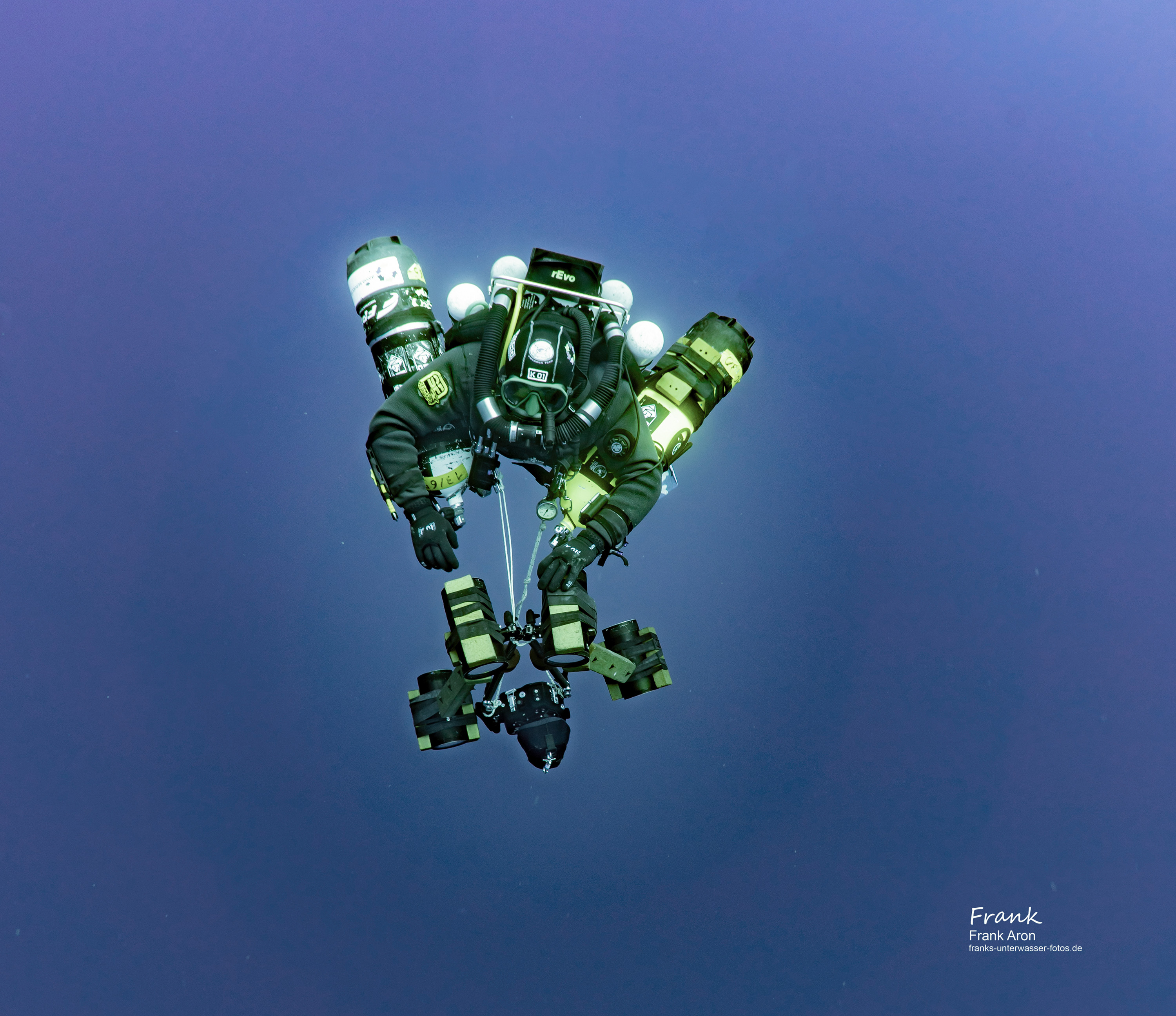
Our dive profile reflected the depth and complexity of the site. Entering the water on closed-circuit rebreathers, we followed the buoy line to the hull, reaching the bow at 85 meters (279 feet) despite noticeable current near the surface. We continued our exploration around the conning tower at approximately 110 meters (361 feet) while documenting the wreck with photographs and video.
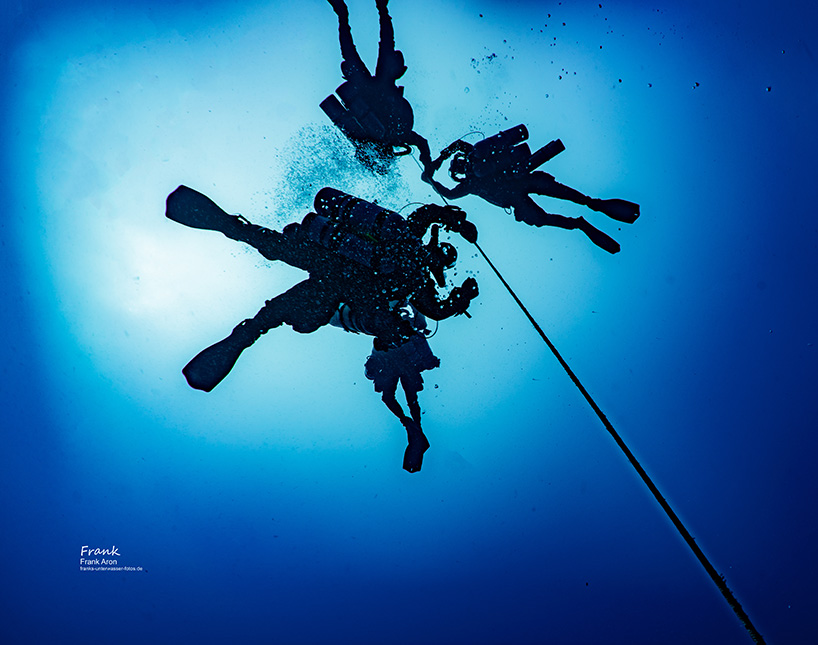
After approximately 15 minutes on the bottom, we began our ascent. The total runtime for the dive was 134 minutes, conducted on CCR using Trimix 10/70, with open-circuit team bailout available throughout the dive. Because of the dive profile and lengthy decompression schedule, remaining together as a team during the ascent proved to be the safest and most efficient approach.
The town of Arenzano, near Genoa in northern Italy, is home to two dive centers that specialize in supporting technical divers. They are best known for expeditions to the famous tanker Haven, but trips to the wreck of U-455 can also be arranged on request. Under favorable conditions, U-455 offers one of the most remarkable deep submarine dives in the world—a haunting combination of history, technical challenge, and underwater preservation that few divers will ever experience.
Photography by Frank Aron
Click to enlarge
NOTE: The U-455 was originally fitted with an 8.8 cm deck gun, it was removed before her final patrol and replaced with two anti-aircraft guns mounted on the platform aft of the conning tower, where their mounting bases remain visible today.



 The journey from Arenzano aboard Andrea Bada's fast boat took about an hour and a half, but every minute was worthwhile. Better still, the remarkable visibility extended all the way to the seabed. At 110 meters (361 feet) we could view virtually the entire wreck, from the stern resting in the mud at 118 meters (387 feet) to the bow rising to 85 meters (279 feet). My dive partners, Andrea and Wolfgang, illuminated the entire scene with a combined output of more than 110,000 lumens, revealing details that would otherwise have remained hidden in the darkness.