The story of a Great Lakes schooner, a captain who survived two fatal shipwrecks, and the crew whose final voyage ended on Lake Huron
During the closing decades of the nineteenth century, the Great Lakes were among the busiest transportation corridors in North America. Long before highways and modern freight networks connected the industrial cities of the Midwest, thousands of tons of coal, grain, lumber and other commodities moved across the inland seas aboard wooden ships. Three-masted schooners were among the workhorses of that trade, carrying enormous loads with remarkably small crews and depending upon little more than wind, canvas and the judgment of the men who sailed them.
Life aboard those vessels was demanding and dangerous. Storms could rise with frightening speed, navigation was primitive by modern standards, and collisions, groundings and structural failures were an accepted part of working the lakes. Every departure carried uncertainty, particularly late in the season when autumn winds swept across the open water and commercial vessels continued sailing as long as cargo remained to be moved.
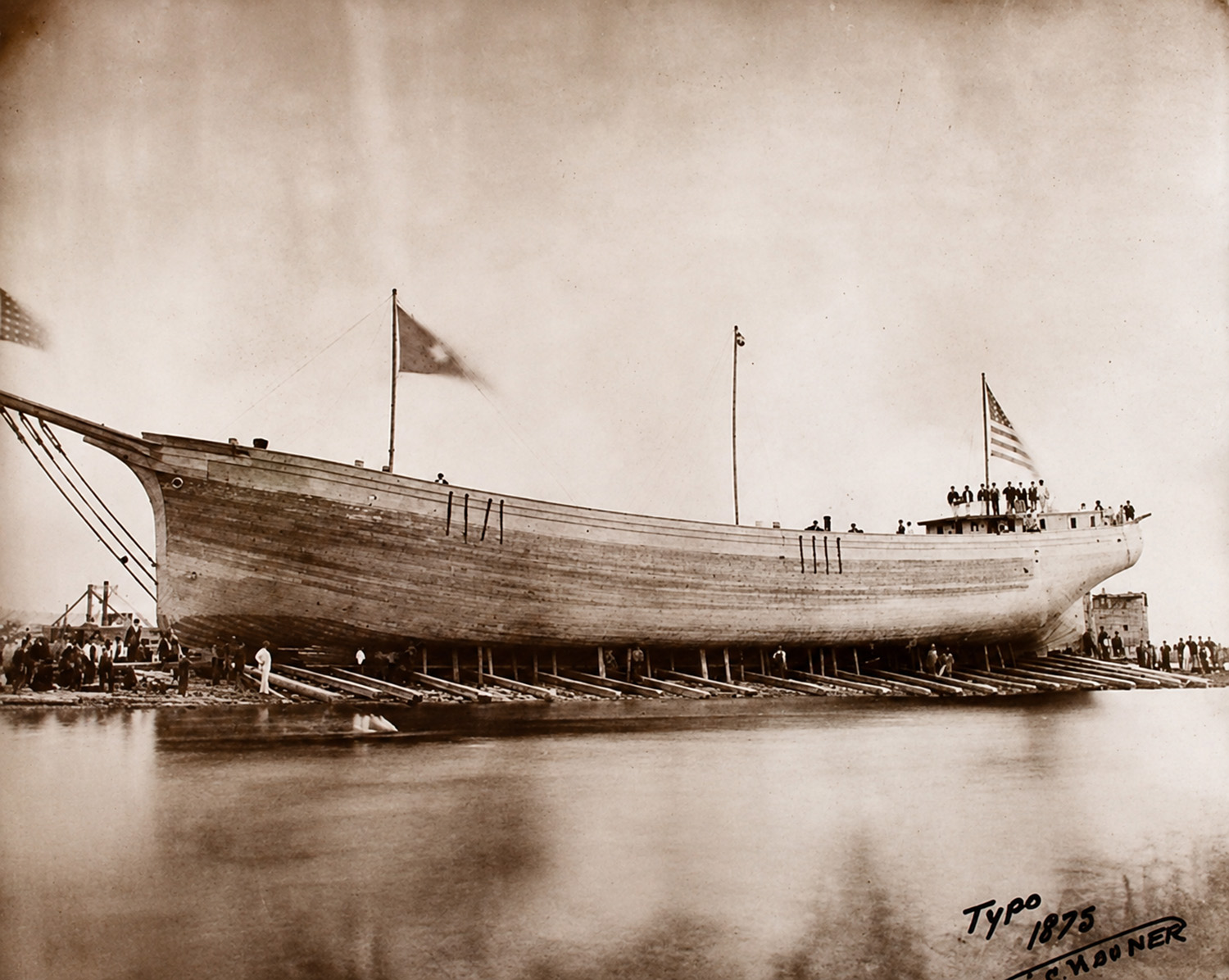
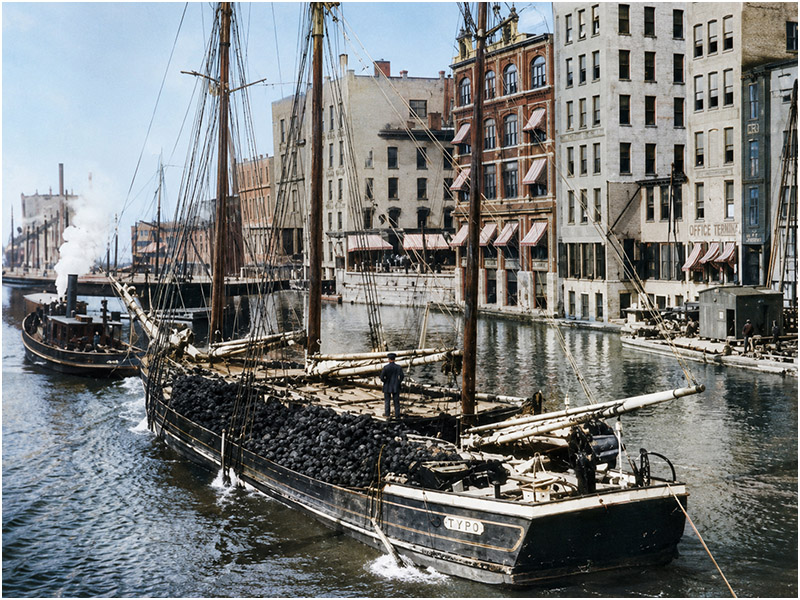
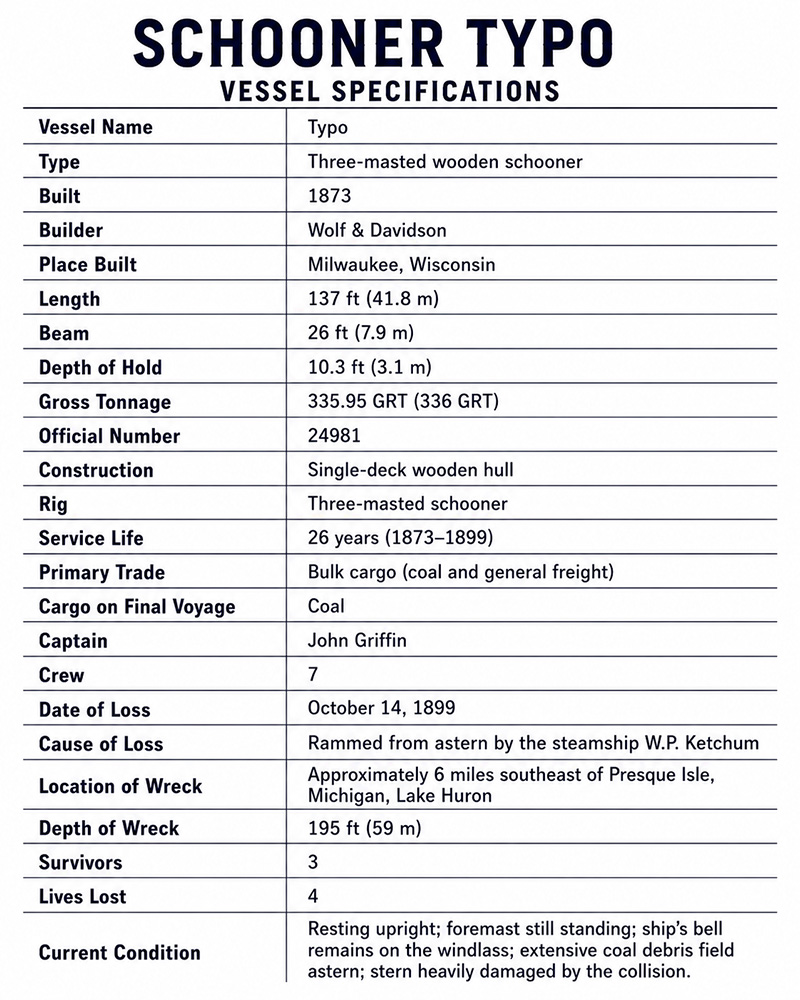
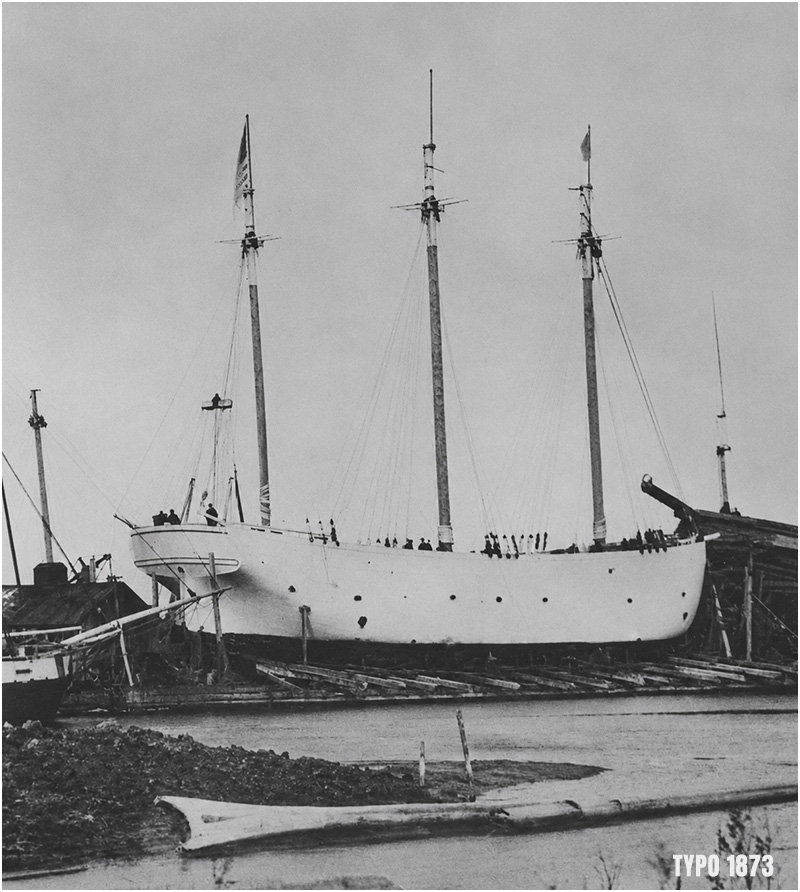
Among those ships was the three-masted wooden schooner Typo, built at Milwaukee, Wisconsin, in 1873 by Wolf & Davidson. Measuring approximately 137 feet in length, with a beam of 26 feet and registering about 336 gross tons, she was not built for elegance but for the hard, practical work of carrying bulk cargo from port to port. For more than a quarter century, she performed that work across the Great Lakes.
Her career was not without incident. In September 1883, Typo grounded at Amherst Island in Lake Ontario and required significant repairs before returning to service. Such accidents were hardly unusual among working schooners, and unless the damage proved catastrophic, vessels were repaired, refitted and sent back onto the lakes to continue earning their keep.
By the final years of Typo's career, however, the world around her was changing. When she had been launched in 1873, wooden sailing vessels still formed an essential part of Great Lakes commerce. Twenty-six years later, steam-powered ships were increasingly taking their place, capable of traveling without waiting for favorable winds, maintaining more predictable schedules and carrying increasingly large cargoes between the rapidly growing industrial ports surrounding the lakes.
Schooners continued to work, but their era was slowly passing. In the autumn of 1899, Typo was still carrying coal across the Great Lakes under the command of Captain John Griffin, and neither the schooner nor the men aboard her could have known that an ordinary commercial voyage was about to bring her twenty-six-year career to a sudden and violent end.
Captain John Griffin:
Captain John Griffin came aboard Typo carrying a history few Great Lakes captains could have shared. Less than a year earlier, he had commanded another three-masted schooner named St. Peter, a vessel owned by his wife, Josephine Griffin, who sailed aboard her on what would become one of the most devastating voyages of Griffin's life.
On October 26, 1898, St. Peter departed Oswego, New York, carrying 607 tons of coal. Six people were aboard: Captain Griffin, Josephine and four crew members. As the schooner crossed Lake Ontario, conditions deteriorated and a powerful westerly gale swept across the lake, forcing the crew to shorten sail and eventually turn eastward with the wind.
After St. Peter was reported in distress, the tug William A. Proctor was dispatched to search for her. Near Pultneyville, New York, the rescue vessel finally came within sight, but help arrived only moments before disaster. Two successive waves struck St. Peter, causing the schooner to roll heavily to port. She struggled upright and then suddenly foundered before the tug could reach her.
Josephine Griffin and all four members of the crew disappeared with the vessel. Captain Griffin survived by clinging to a topmast that remained protruding above the water after St. Peter went down, remaining there until the crew of William A. Proctor reached him and pulled him from Lake Ontario. Six people had departed aboard the schooner, and Griffin alone survived.
The historical record tells us little about what followed for him personally. There is no surviving account that allows us to know what he thought after losing his wife, his crew and his vessel, and there is no reason to invent emotions that were never recorded. What the record does tell us is remarkable enough: Griffin returned to his profession, and less than a year after surviving the destruction of St. Peter, he was again commanding a wooden schooner carrying coal across the Great Lakes. This time, his ship was Typo.
The Final Voyage:
On the morning of October 14, 1899, Typo was crossing Lake Huron carrying approximately 688 tons of coal bound for Racine, Wisconsin. Seven people were aboard as the heavily laden schooner traveled through the waters southeast of Presque Isle, Michigan. Contemporary reports described a northwest wind of approximately fifteen miles per hour, conditions that gave little indication of the catastrophe approaching them.
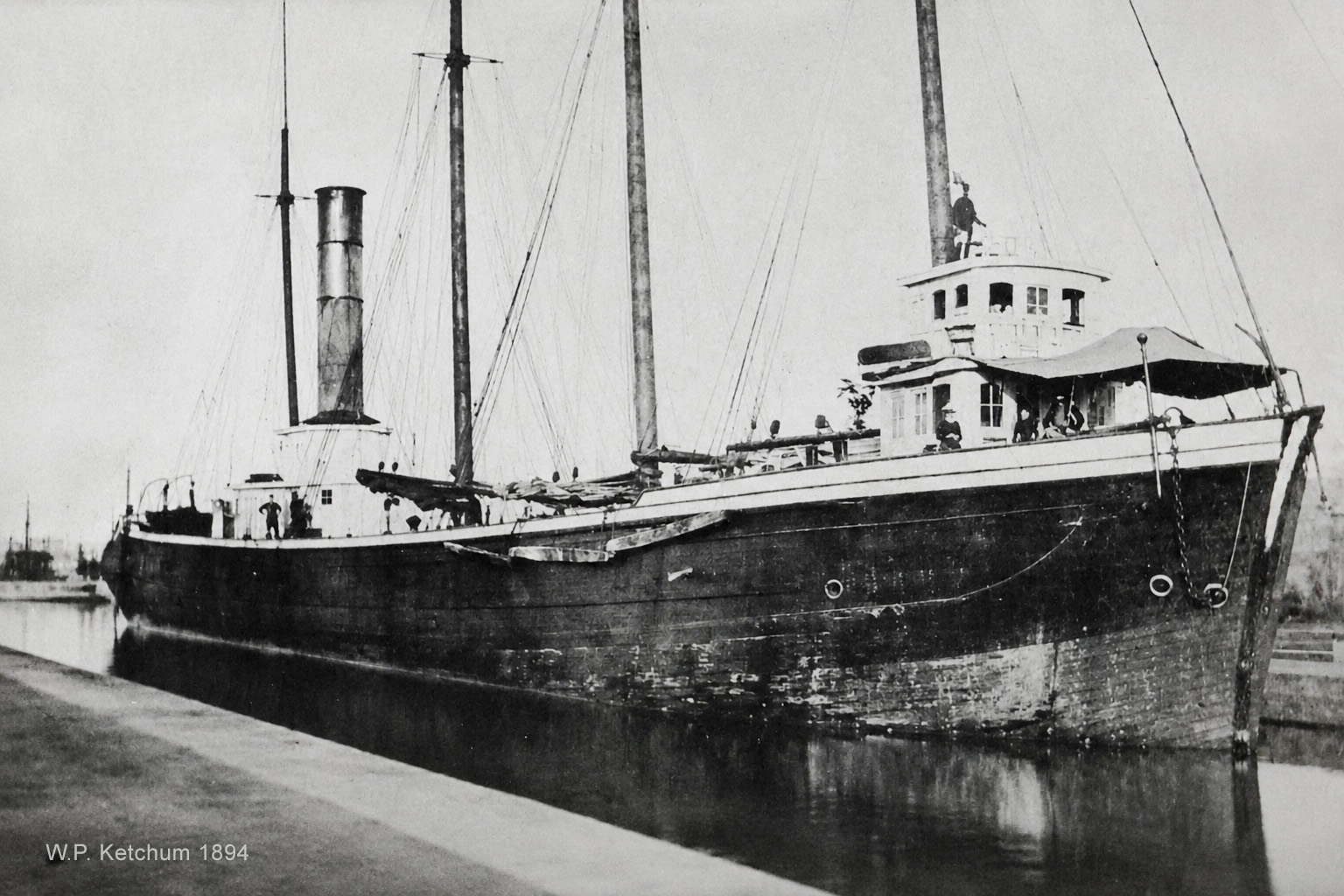
The danger that morning would not come from the weather but from another vessel approaching from astern. Coming up behind Typo was the W.P. Ketchum, a ship substantially larger, newer and more powerful than the schooner ahead of her. Built in 1893 at Bay City, Michigan, Ketchum was a wooden steam-powered cargo carrier constructed at a shipyard associated with prominent Great Lakes shipbuilder James Davidson.
The difference between the vessels was considerable. Typo was approximately 137 feet long and registered around 336 gross tons, while Ketchum stretched approximately 225 feet and registered roughly 946 gross tons. The steamer was nearly 88 feet longer than the schooner and almost three times her gross tonnage.
The two ships represented very different generations of Great Lakes transportation. Ahead sailed a wooden schooner launched in 1873, driven by wind pressing against canvas stretched high above her deck. Behind came a much larger steam-powered carrier built twenty years later, capable of maintaining her movement without depending upon the wind. As Ketchum began overtaking the slower schooner, those differences suddenly became important.
Captain Griffin saw the steamer coming up behind Typo and maintained his course. Contemporary reporting of Griffin's account indicates that he understood his sailing vessel to have the right of way and expected the powered vessel approaching from astern to keep clear. Under ordinary circumstances, Ketchum would simply pass the slower schooner and continue ahead, but instead the steamer continued closing the distance.
What should have been a routine overtaking maneuver became increasingly dangerous as the space between the two vessels disappeared. By the time Griffin realized that a collision had become unavoidable, there was almost no time left to react. According to contemporary reporting, he shouted to the watch below to save themselves, giving the crew only moments of warning before the much larger vessel reached them.
Ketchum struck Typo near the mizzen rigging on the schooner's port side, smashing into her after section. The impact caused catastrophic damage to the deeply laden wooden vessel, which was already riding low under the weight of hundreds of tons of coal. Once her hull was opened, Lake Huron poured inside, and it quickly became apparent that there would be no saving the schooner. The only question was whether the seven people aboard could escape before she went down.
Abandoning Typo:
The final minutes aboard Typo became a desperate struggle for survival. As the vessels came together, one sailor managed to seize a line from Ketchum and scramble aboard the steamer, escaping the doomed schooner before the two ships separated. Captain Griffin and the remaining crew turned toward Typo's yawl and managed to launch the small boat while the schooner continued settling beneath them.
Reaching the yawl did not mean they were safe. They remained dangerously close to a sinking three-masted vessel surrounded by heavy spars, booms, lines and rigging, and before they could push far enough away, Typo went down. As the schooner disappeared beneath Lake Huron, her mizzen boom swept across the yawl, overturning the small boat and throwing its occupants into the water.
For Griffin, the circumstances carried a terrible similarity to what had happened less than twelve months earlier. Once again, a schooner he commanded had disappeared beneath him, and once again he found himself in the water while people from his vessel were dying around him. Captain Griffin and one other sailor from the overturned yawl managed to remain afloat until help reached them. Together with the crewman who had escaped directly aboard Ketchum, they became the only three survivors from the seven people who had begun the voyage aboard Typo.
Four members of the schooner's company were lost. One of those deaths is firmly established in the surviving legal record: John Campbell, a member of Typo's crew, died as a consequence of the collision, and his death later became the subject of litigation. A 1903 Illinois Appellate Court decision specifically records that Campbell lost his life when W.P. Ketchum collided with Typo on Lake Huron on the morning of October 14, 1899.
Later historical research identifies the other three fatalities as Henry Ledford, the mate; Dan Carr, a seaman; and Mrs. Adams, the cook. Their names do not presently carry the same degree of independent primary documentation available for Campbell, but they have been identified in later historical research concerning the disaster. Together, John Campbell, Henry Ledford, Dan Carr and Mrs. Adams represented the human cost of what had begun as an ordinary working voyage across Lake Huron.
The Loss of the Schooner:
Typo disappeared beneath Lake Huron with much of her cargo still aboard, carrying hundreds of tons of coal to the bottom and ending a working career that had begun twenty-six years earlier in Milwaukee. News of the collision spread through the maritime communities surrounding the Great Lakes, raising an obvious question: how had a powered vessel overtaking from astern managed to collide with the sailing vessel directly ahead of it?
The consequences continued long after Typo disappeared. Litigation arising from the death of John Campbell eventually reached the Illinois Appellate Court, preserving important details about the collision in the legal record and ensuring that the events of that October morning would not disappear completely with the schooner.
The sinking also occurred during a remarkable transition in Great Lakes maritime history. When Wolf & Davidson launched Typo in 1873, wooden schooners were among the principal carriers of commerce on the inland seas. Their tall masts filled harbors from Lake Ontario to Lake Superior, while their holds carried the coal, grain, lumber and other commodities upon which expanding cities and industries depended.
By 1899, the balance was shifting toward steam. Powered ships could be larger and faster, maintain schedules sailing vessels could not, and operate without depending entirely upon favorable winds. As the nineteenth century drew to a close, their numbers and importance continued to increase, while the wooden schooners that had dominated Great Lakes commerce for generations gradually became vessels from another age.
The sinking of Typo should not be transformed into a symbolic battle between sail and steam. It was a collision between two working commercial vessels, and four people died because of it. Yet there is an unavoidable historical contrast in the two ships that came together that morning on Lake Huron: one was a 26-year-old sailing schooner measuring 137 feet and moving beneath canvas, while the other was a six-year-old steam-powered cargo vessel almost ninety feet longer and nearly three times her gross tonnage.
For Captain John Griffin, the sinking marked an extraordinary second escape from disaster. Within less than a year, he had commanded two schooners that foundered beneath him. On St. Peter, his wife and every other member of the crew had died while Griffin survived by clinging to a mast above Lake Ontario. On Typo, four more people were lost after the schooner was struck by Ketchum, yet Griffin again emerged alive.
There is no need to embellish that history because the documented events are extraordinary on their own. A wooden schooner built in Milwaukee in 1873 had spent twenty-six years carrying cargo across the Great Lakes. On an October morning in 1899, while carrying approximately 688 tons of coal toward Racine, she was overtaken by a much larger steam-powered vessel southeast of Presque Isle. Ketchum closed from astern, Griffin warned his crew, and moments later the steamer drove into Typo's port side.
Within minutes the schooner was gone. Seven people had been aboard when the voyage began, but only three survived the collision and sinking. John Campbell, Henry Ledford, Dan Carr and Mrs. Adams never reached Racine, and Typo, after twenty-six years of service on the Great Lakes, remained beneath the waters of Lake Huron.
(Click Image to Enlarge)
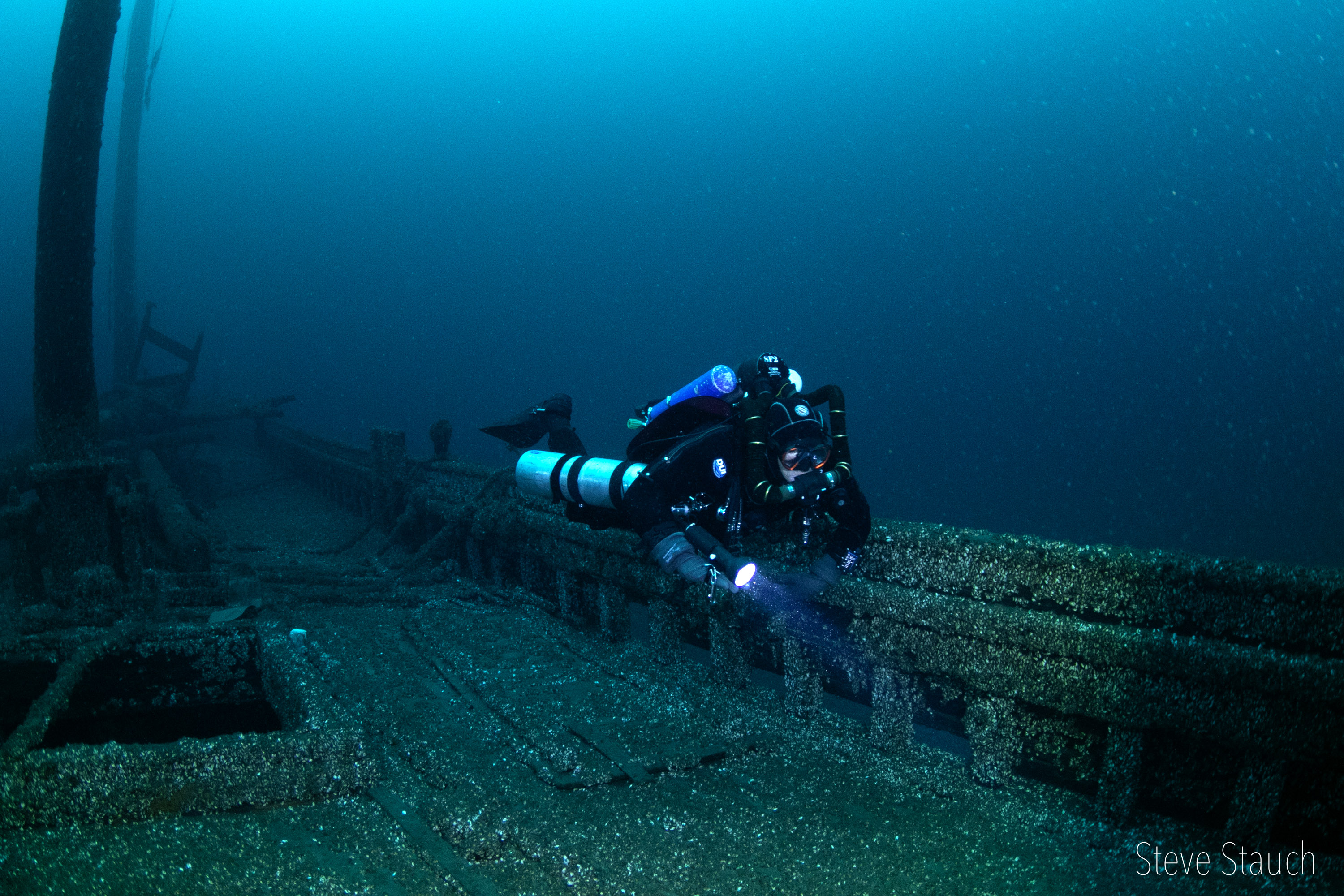
Above: CR2 Diver Shane Cooke swims along the rail of the remarkably preserved schooner Typo during a 2016 dive in Lake Huron. More than a century after the vessel sank in 1899, much of the wooden rail and surrounding deck structure remained intact, offering an extraordinary view of the ship’s original construction.
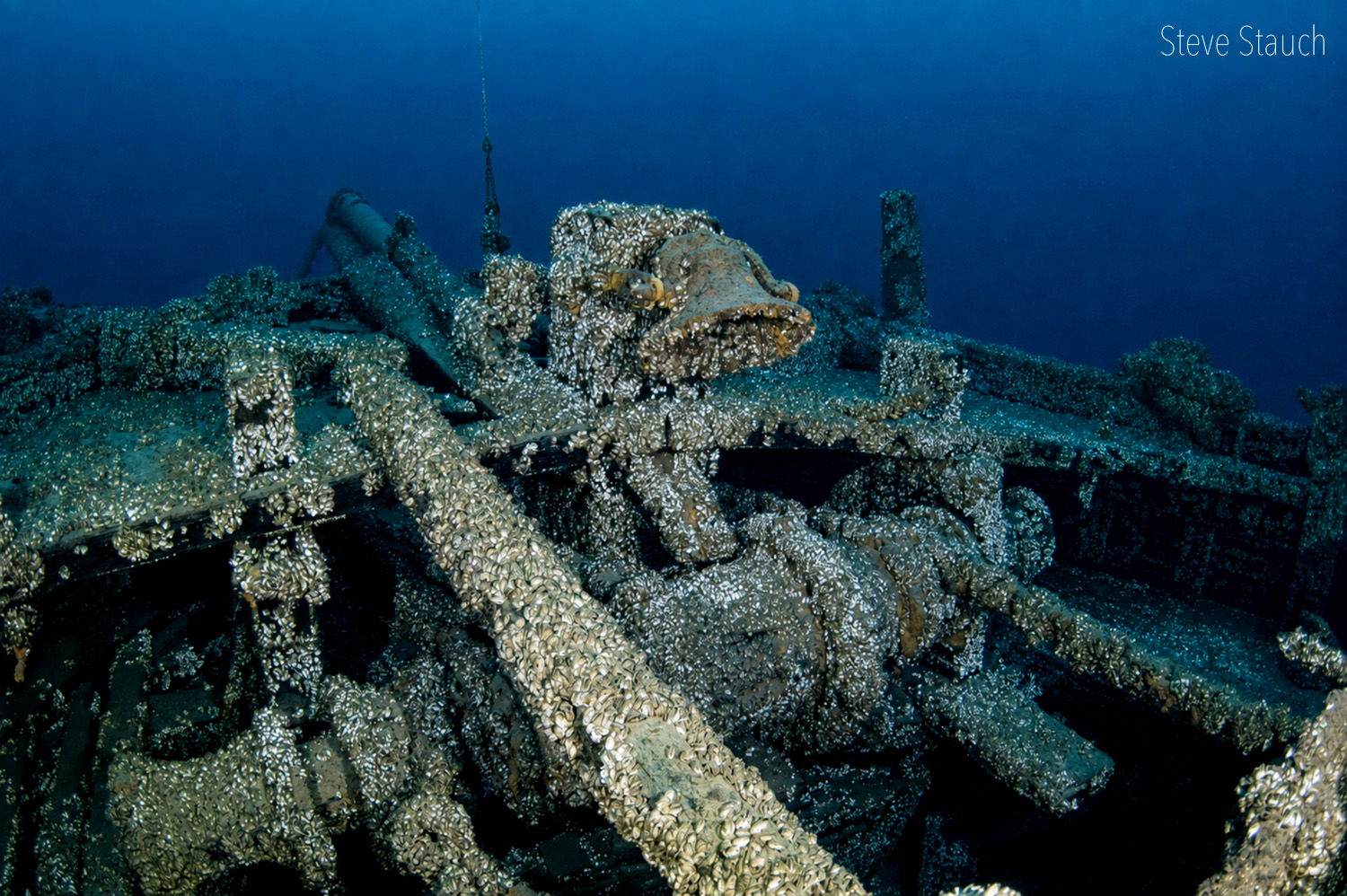
Above: The ship’s bell of Typo as it previously hung from its original mounting bracket above the forward deck. This photograph, taken during a 2016 dive, documents the bell still suspended in the same location where it had remained for well over a century after the schooner sank in Lake Huron in 1899. Sometime around 2021, after approximately 125 years underwater, the original bracket finally gave way and the bell dropped onto the deck below. Today, the bell remains on the forward deck, making this 2016 photograph an important record of how it appeared before the mounting failed.
Above: The port anchor of Typo remains hanging at the bow exactly as it was stowed when the schooner sank in Lake Huron on October 14, 1899. More than 125 years beneath the lake have left the anchor remarkably intact and still positioned against the wooden hull.
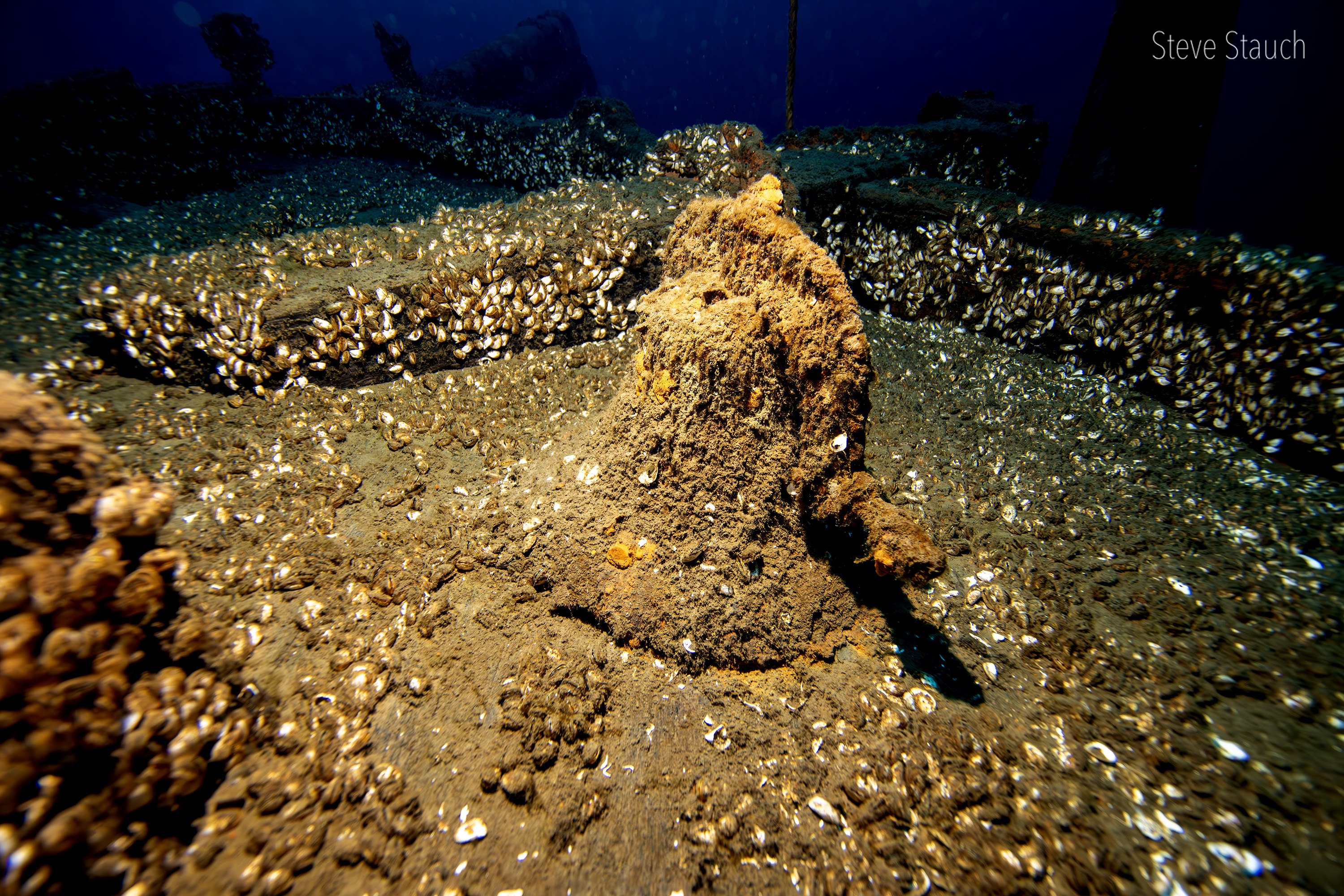
Above: The ship’s bell as it rests today in 2026. After remaining suspended from its original bracket for more than 125 years, the mounting finally gave way several years ago, allowing the bell to drop onto the wreck. It now rests on the forward deck of Typo, where it remains displayed as part of the remarkably preserved shipwreck.
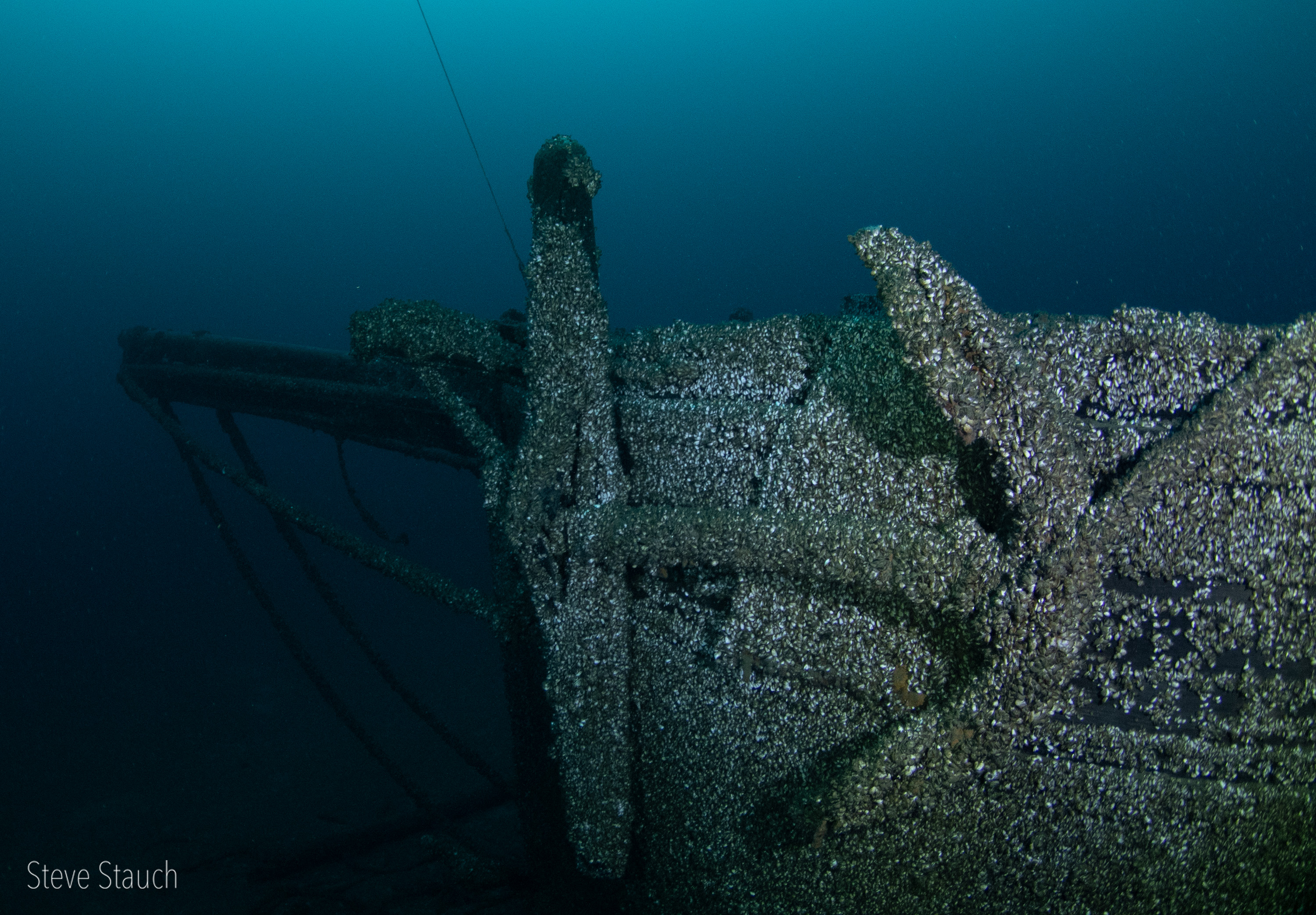
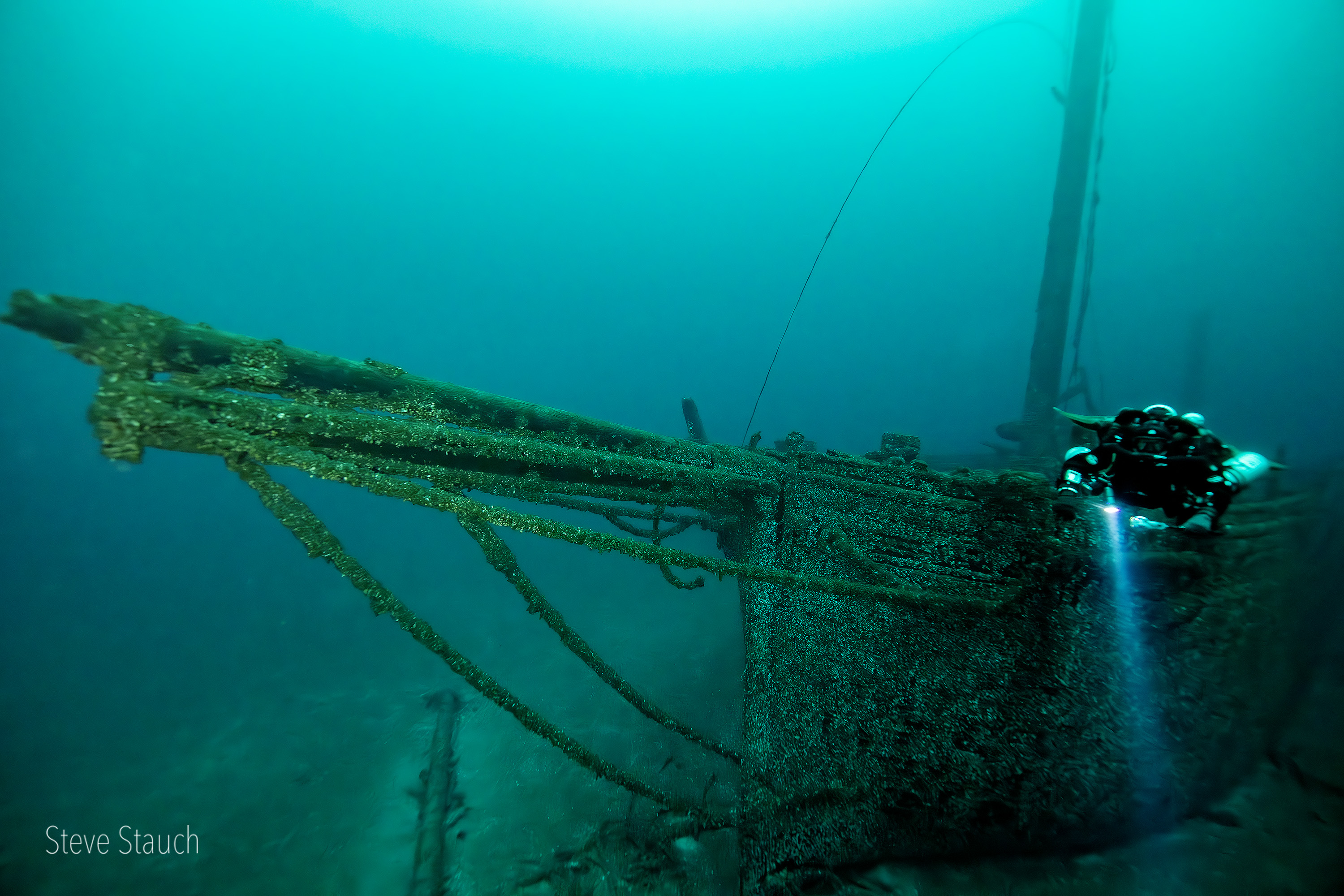
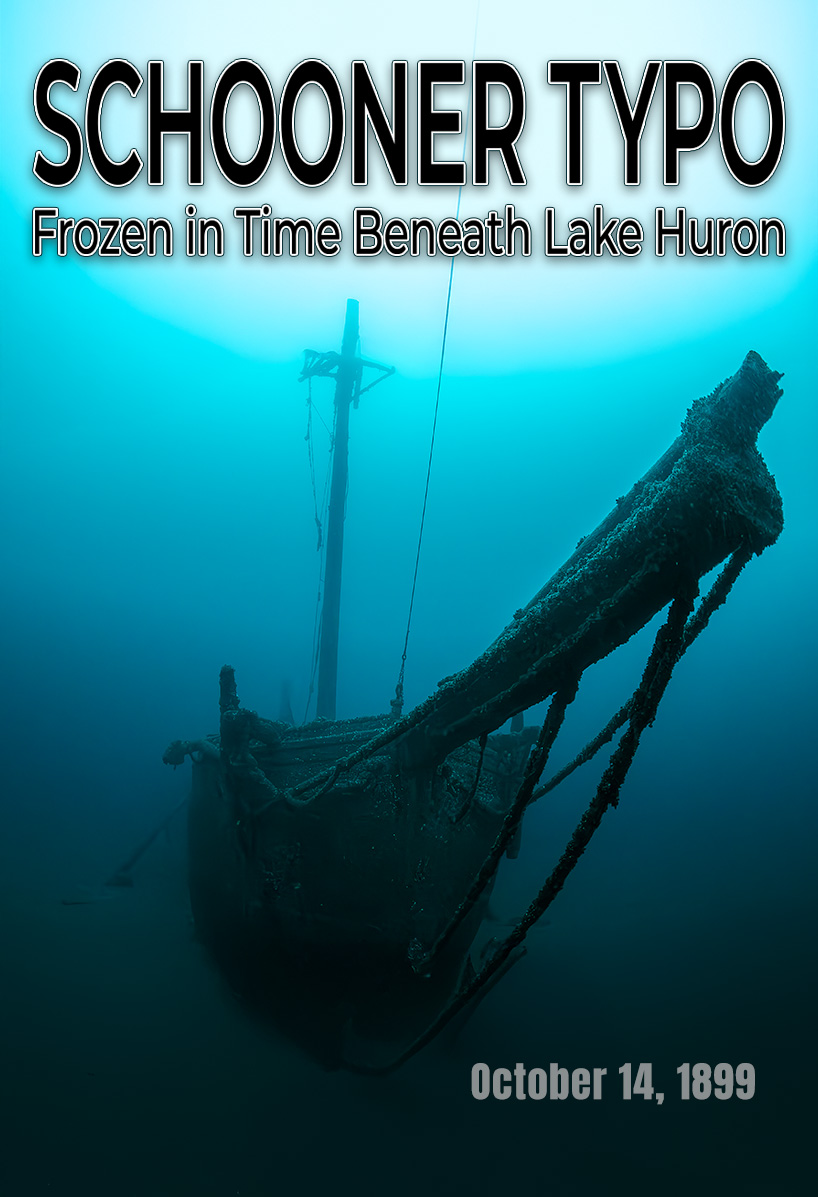
Above: Diver Mike MacDonald explores the remarkably intact bow and port anchor of the three-masted wooden schooner Typo. Built in 1873, the 137-foot (41.8 m) vessel rests upright in approximately 180–195 feet (55–59 m) of water in Lake Huron, with her anchors, bowsprit, windlass, rigging and much of the bow structure still intact.









 Life aboard those vessels was demanding and dangerous. Storms could rise with frightening speed, navigation was primitive by modern standards, and collisions, groundings and structural failures were an accepted part of working the lakes. Every departure carried uncertainty, particularly late in the season when autumn winds swept across the open water and commercial vessels continued sailing as long as cargo remained to be moved.