Wreck of the SS MAIA - The Fog that Claimed a Ship
My Track
0:000:00
🔊
Audio Player: Let ADM read the editorial for you.
The Fog That Claimed a Ship
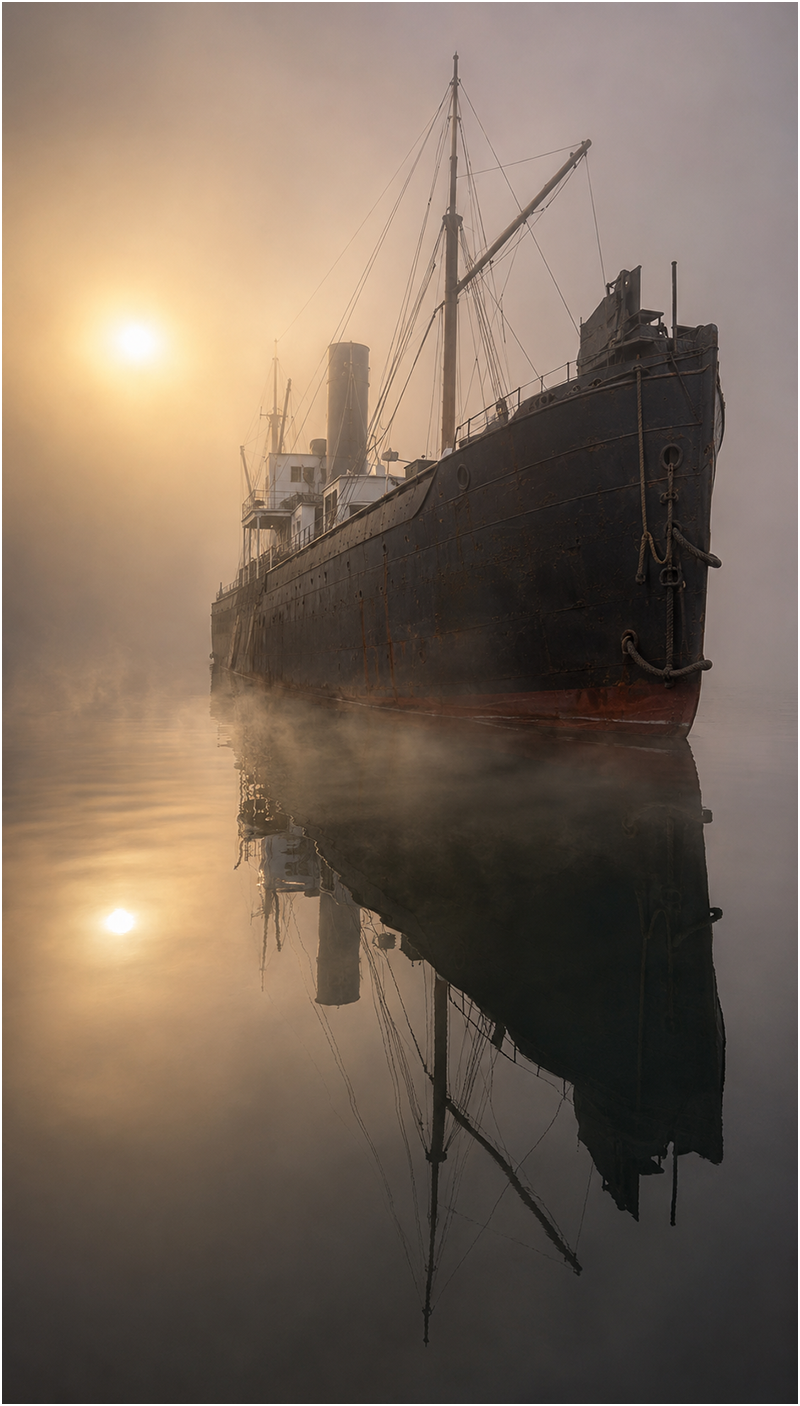
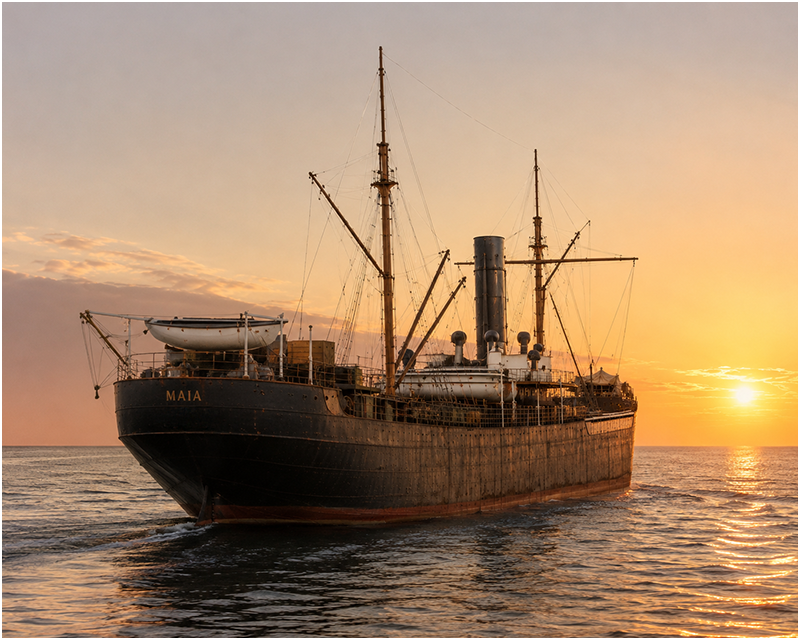
The Baltic Sea was calm on the evening of September 30, 1901. As darkness settled over the water, the German steamship Maia steamed steadily westward carrying a cargo of timber from Riga bound for Grangemouth, Scotland. There was little to suggest that this voyage would be any different from the countless others she had completed during her seventeen years of service. The sea was smooth, the machinery was running well, and the crew settled into the familiar routine of another night passage across northern Europe.
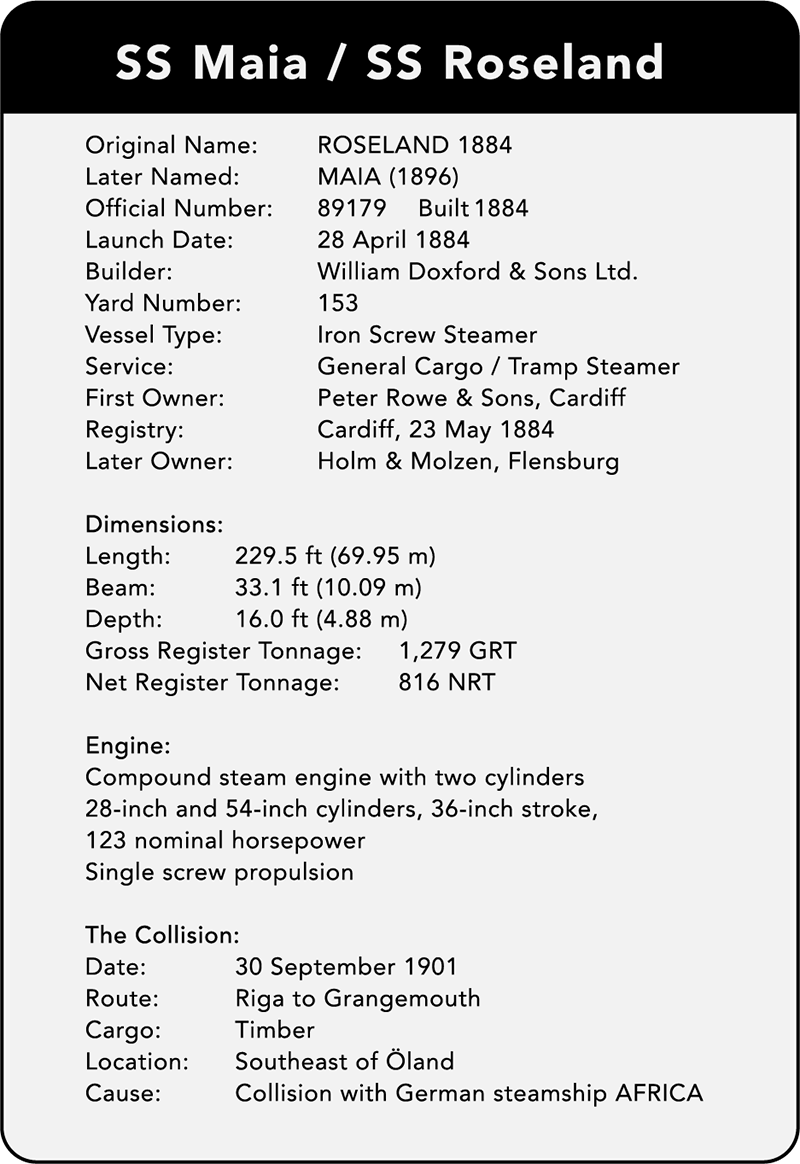
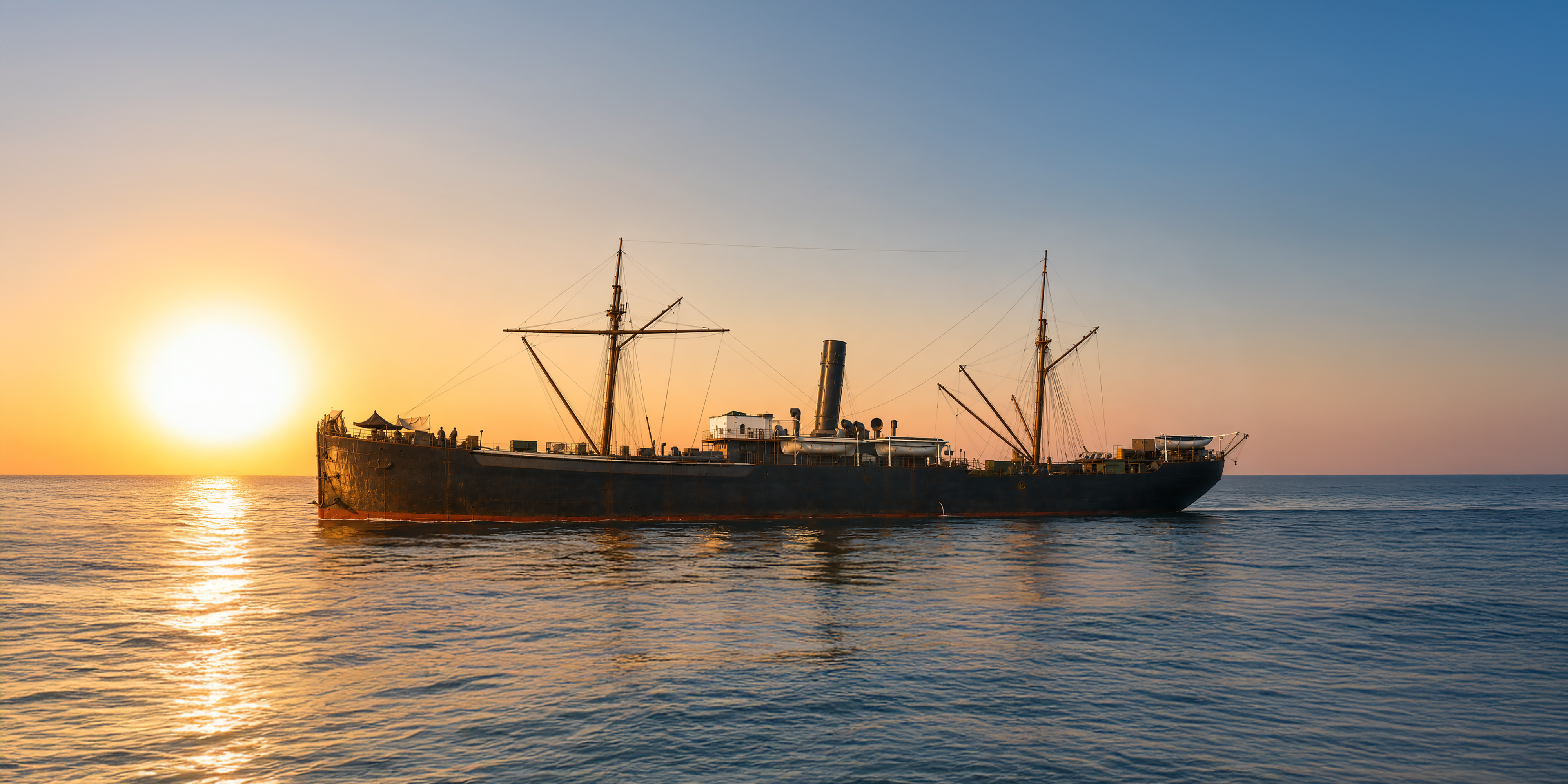
The ship herself had lived a quiet but productive life. Built by William Doxford & Sons at Sunderland and launched on April 28, 1884, she had entered service as the British cargo steamer Roseland. Owned by Peter Rowe & Sons of Cardiff, she spent her early years carrying coal and general cargo around the British Isles and continental Europe. Like thousands of tramp steamers operating during the late Victorian era, she went wherever cargo could be found. There was nothing glamorous about her existence, but she was a reliable workhorse, earning her owners a living one voyage at a time.
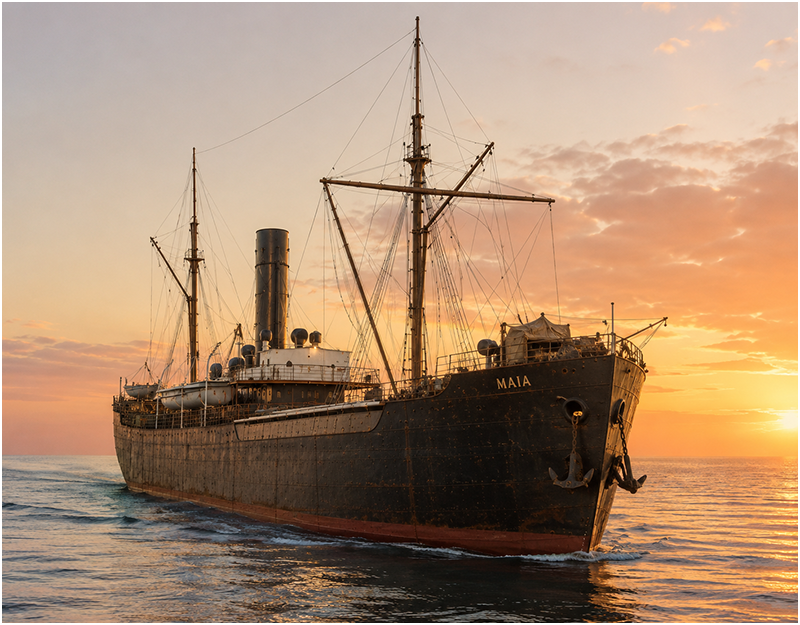
In 1896, the vessel was purchased by the German firm Holm & Molzen of Flensburg and renamed Maia. The company's growing coal business required ships capable of moving cargo between ports throughout the Baltic and North Sea, and Maia fit the role perfectly. Measuring nearly seventy metres in length and powered by a compound steam engine built by Doxford, she represented the dependable merchant steamship that had become the backbone of European commerce during the closing decades of the nineteenth century.
The voyage from Riga had begun routinely enough. After discharging coal, Maia loaded a cargo of timber destined for Scotland. The lumber filled her holds and was carefully secured for the crossing. By late September she was underway once again, steaming westward through familiar waters. The crew had no reason to believe that this voyage would be their last aboard the vessel.
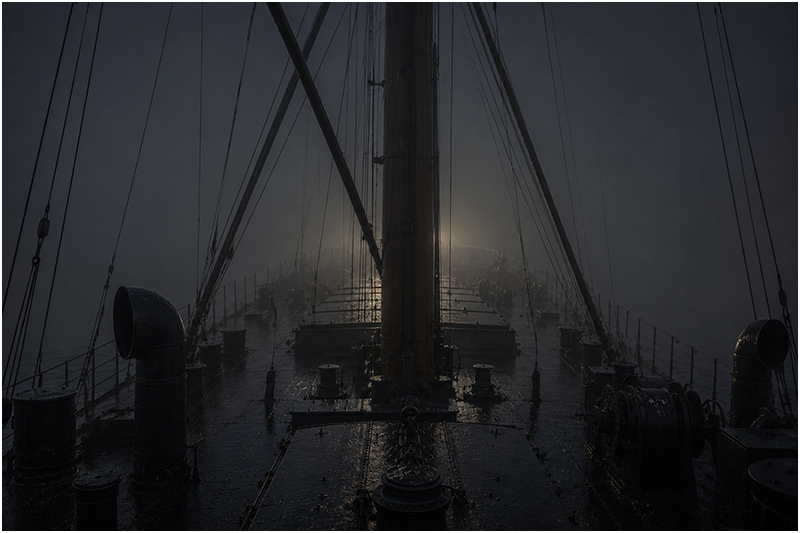
As evening progressed, however, a dense fog settled over the Baltic. Visibility diminished steadily until the horizon disappeared completely. Soon the fog became so thick that it was difficult to see beyond the bow of the ship. In an age before radar, such conditions were among the greatest dangers faced by mariners. Captains depended upon lookouts, whistles, dead reckoning, and experience. Even in well-traveled waters, a ship could emerge from the fog with almost no warning.
Aboard Maia, extra attention was paid to the darkness surrounding the vessel. The captain and officers remained vigilant on the bridge while the ship's whistle sounded periodically into the fog. The crew listened carefully for any response. The sea itself remained calm and deceptively peaceful. There were no breaking waves and no storm clouds overhead. Only the fog created danger, transforming familiar shipping lanes into a featureless gray void.
Sometime during the night, another whistle was heard ahead. It was faint at first, little more than a distant sound carried through the damp air. The officers on Maia immediately recognized its significance. Another vessel was nearby. The captain ordered a response from Maia's whistle and listened carefully for the reply. It came back quickly and, to everyone's concern, seemed much closer than expected.
The crew strained their eyes into the darkness, searching for any sign of the approaching ship. For several tense moments there was nothing to see. Then a shape began to emerge from the fog directly ahead. What had first appeared as a shadow rapidly took form. An entire steamship was materializing out of the mist.
The vessel was the German steamer Africa.
The distance separating the two ships was alarmingly small. Orders were shouted immediately. The helm was put over and engine-room telegraphs rang as both vessels attempted to avoid disaster. Yet steamships of the era were not capable of sudden manoeuvres. Their momentum carried them forward, and within moments it became obvious that neither ship would clear the other.
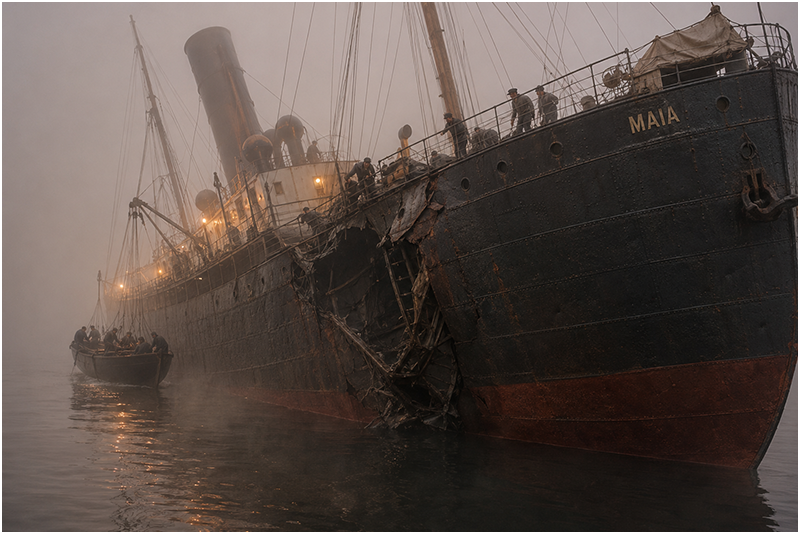
Africa struck Maia amidships on the starboard side.
The collision was devastating. Africa's bow tore into the iron hull with tremendous force, crushing plating and opening a fatal breach near the centre of the vessel. The impact reverberated throughout the ship, throwing men off balance and sending shockwaves through every compartment. For a brief moment the two vessels remained in contact before separating again in the darkness.
The extent of the damage quickly became apparent. Water rushed through the torn hull and flooded the compartments around the machinery spaces and cargo holds. Pumps were started immediately, and crew members rushed to assess the damage. Despite their efforts, it soon became clear that the inflow of water was overwhelming. The sea was entering the ship faster than it could be removed.
Unlike many maritime disasters, panic never took hold aboard Maia. The crew understood their situation and responded with professionalism. Lifeboats were prepared while officers continued evaluating the condition of the vessel. The captain watched carefully as the ship settled lower in the water. Although the sea remained calm, the damage inflicted by the collision was simply too severe. Every passing minute brought more flooding, and with it the realization that the vessel could not be saved.
Eventually the captain gave the order to abandon ship.
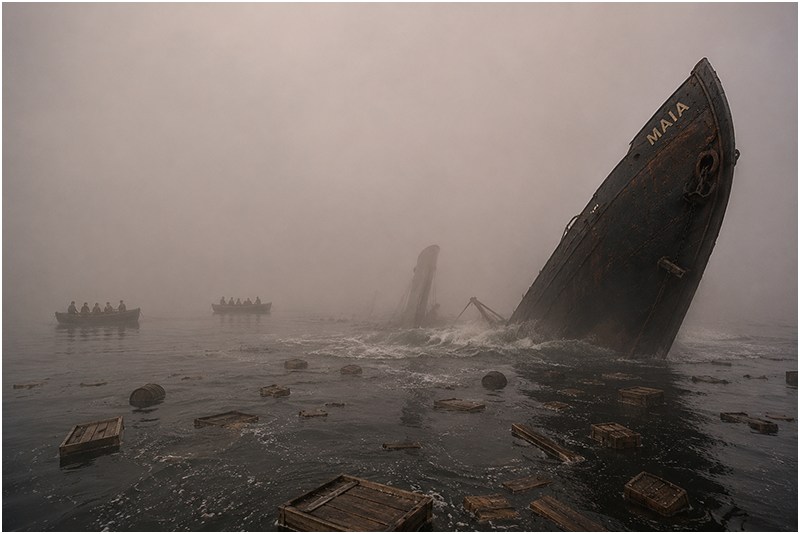
The evacuation proceeded in an orderly fashion. The calm conditions that had done nothing to prevent the collision now aided the crew's escape. One by one, the seventeen men aboard descended into the lifeboats and pulled away from the sinking vessel. From a safe distance they watched as their ship fought a losing battle against the Baltic Sea.
There was no dramatic storm and no towering waves crashing over the decks. Instead, the final moments unfolded in near silence. The fog continued to drift across the water while Maia slowly settled deeper beneath the surface. Her cargo holds filled completely. The bridge descended toward the sea. Steam escaped from vents and machinery spaces as water reached areas never intended to flood.
For sailors who had spent months or years aboard her, the sight must have been heartbreaking. A ship was more than steel and machinery. It was a workplace, a home, and often a source of pride. Every deck, every hatch, every cabin held memories of voyages completed and hardships endured. Now those familiar spaces were disappearing forever beneath the water.
Gradually the bow submerged. The bridge followed. The funnel and masts remained visible for a few final moments before they too vanished into the fog. Then, sometime during the night of September 30, 1901, the Baltic Sea closed over Maia completely.
The ship had disappeared, but her story was far from over.
When Maia settled on the seabed approximately sixty metres below the surface, she entered one of the most effective preservation environments in the world. The cold, low-salinity waters of the Baltic would protect the vessel in a way few shipwrecks are ever protected. While generations passed above, the ship remained remarkably intact below.
More than a century later, divers descending onto the wreck would discover a vessel frozen in time. The timber loaded in Riga still filled the holds. The wooden wheel remained on the bridge. A second helm survived at the stern. Inside the wreck, furniture, bottles, lanterns, dishes, and personal possessions continued to occupy spaces abandoned during those final moments in 1901.
Today, SS Maia is regarded as one of the finest preserved merchant shipwrecks in the Baltic Sea. Ironically, she has become far more famous in death than she ever was in life. During her years of service she was simply another hardworking cargo steamer carrying ordinary goods between ordinary ports. Yet because of a single night of fog and a chance encounter with another vessel, she became a perfectly preserved window into the age of steam.
The images in this article are CGI-generated historical reconstructions created to accurately depict a documented historical event based on available evidence and historical records.
Photography by Mirko Bevenja
(Click on Images to Enlarge)
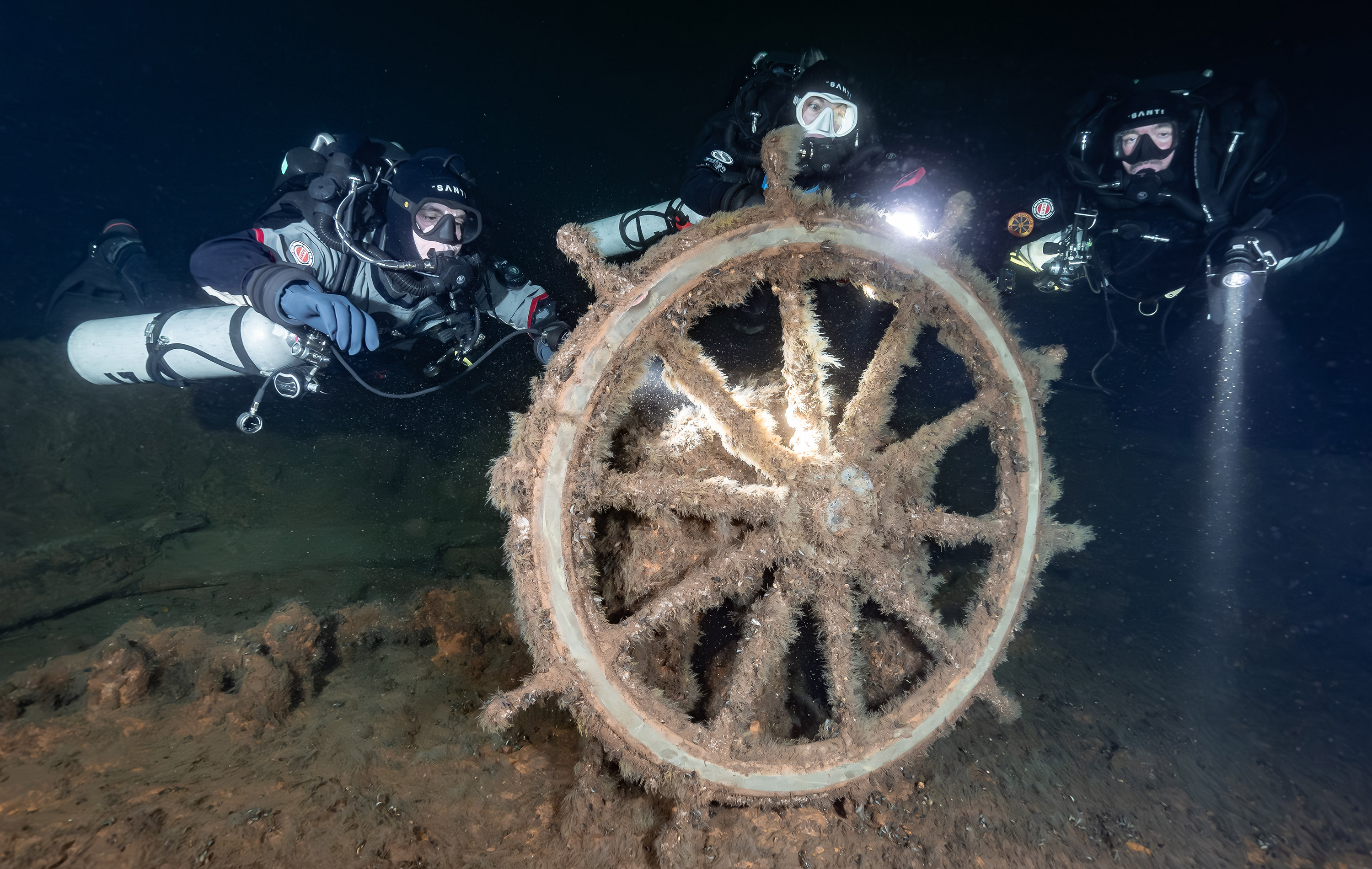
Above: The beautifully preserved wooden stern wheel remains one of SS Maia's most remarkable features, standing exactly where it served the ship more than 120 years ago. Marko Bulat and Goce admiring the stern wheelhouse, a rare and haunting reminder of the craftsmanship of nineteenth-century merchant steamships preserved beneath the cold waters of the Baltic Sea.
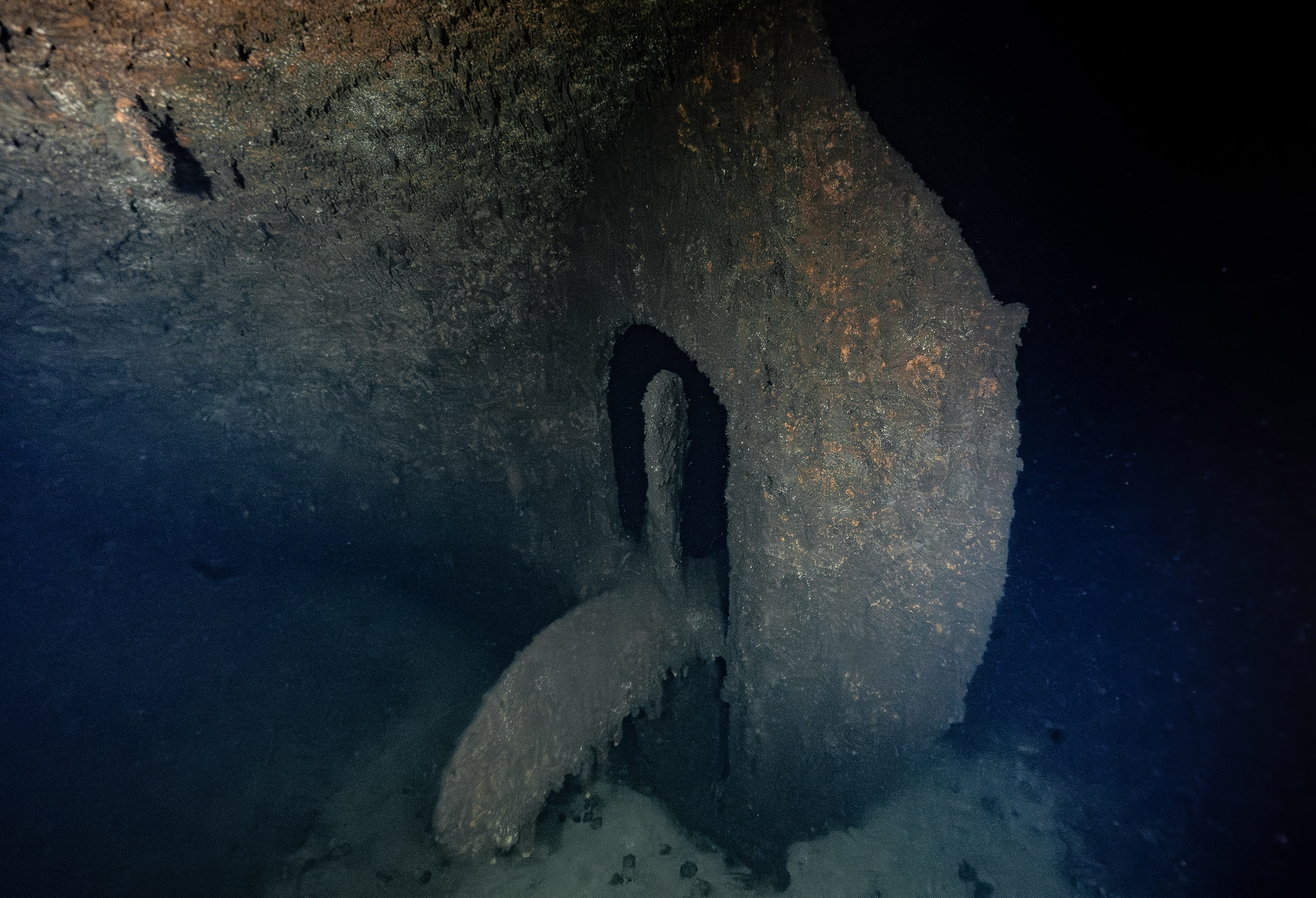
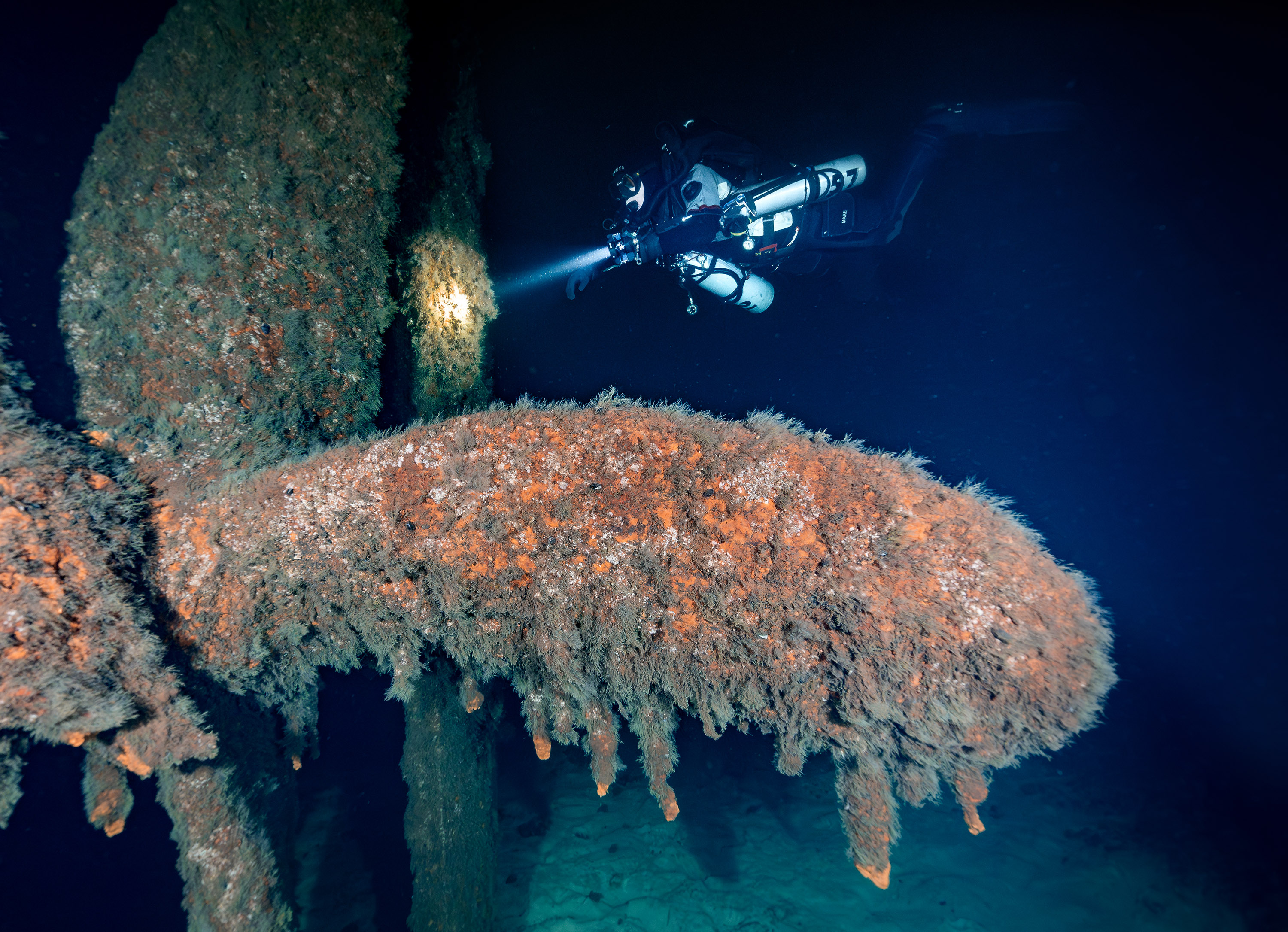
Above: The ship's well-preserved three-bladed propeller offers a striking glimpse into the propulsion system that faithfully served SS Maia throughout her seventeen-year merchant career.
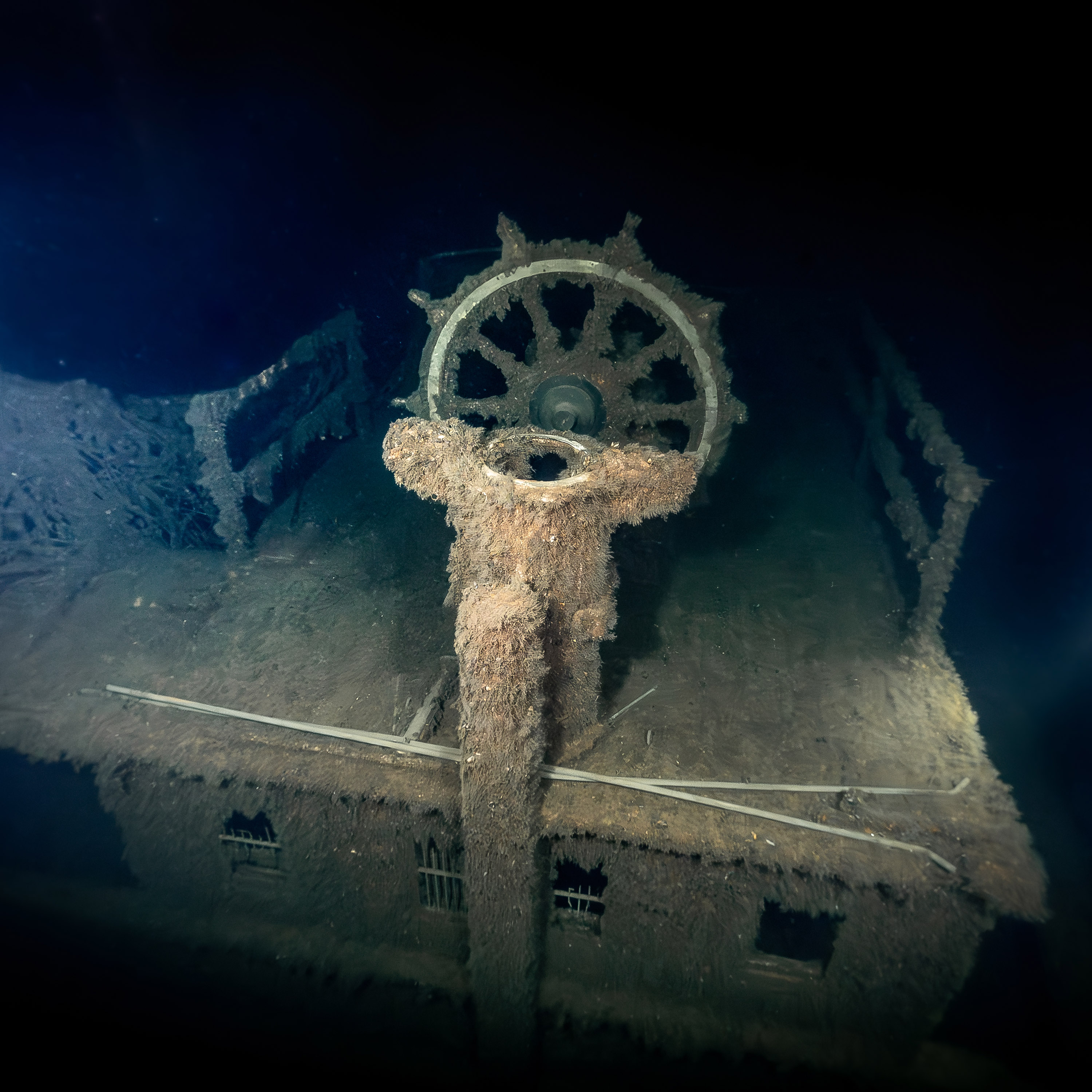
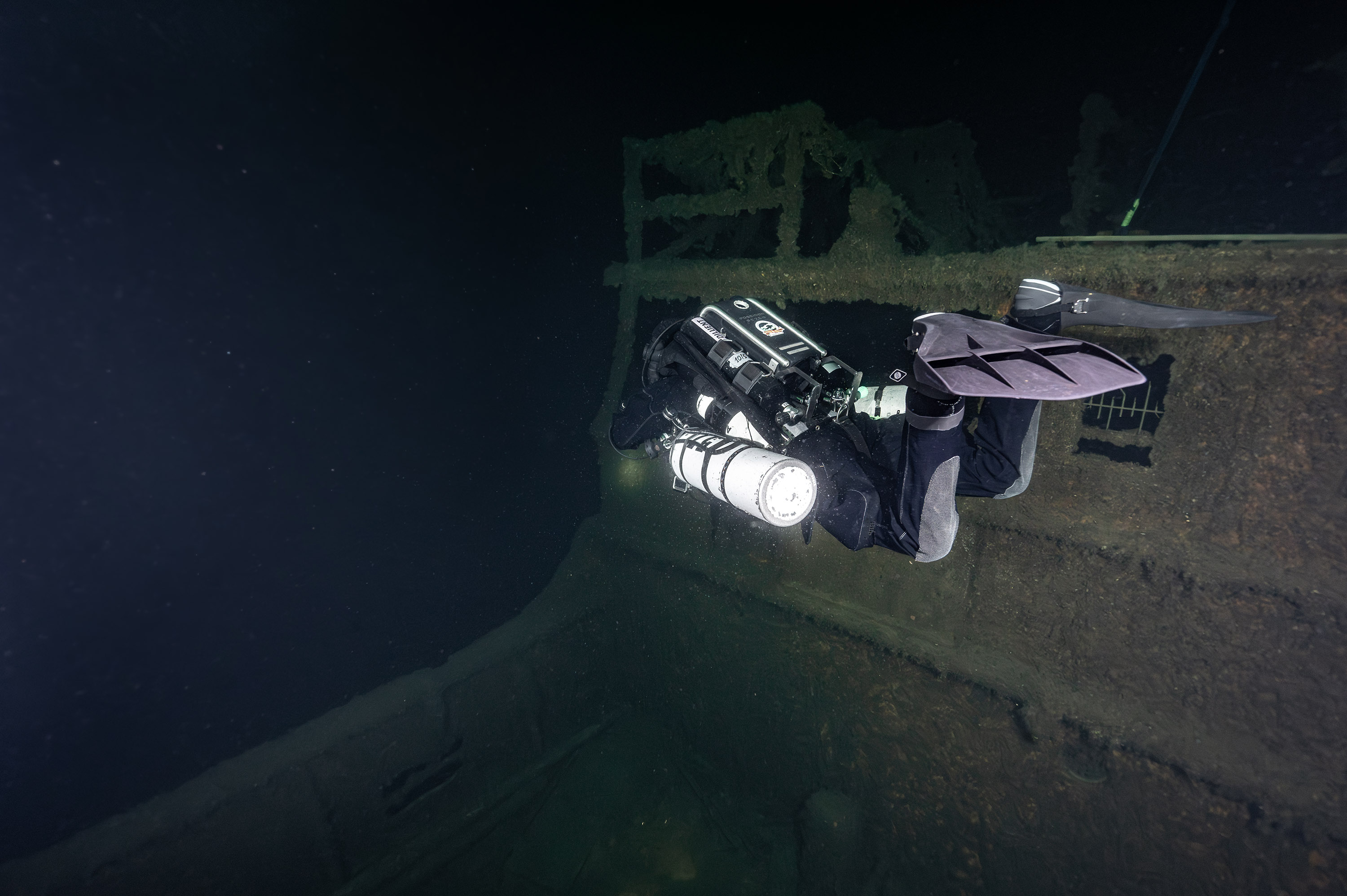
Above: The open bridge of SS Maia remains remarkably intact, offering divers a rare glimpse into the command center of a nineteenth-century merchant steamship. Beneath the preserved overhead structure, the helm, engine controls, and surrounding deck layout provide a haunting snapshot of the ship exactly as she appeared on her final voyage in 1901.
Above: The beautifully preserved main wheelhouse stands as the centerpiece of SS Maia. More than a century after the ship's final voyage, the ship's original wooden helm remains mounted atop the bridge, offering an extraordinary glimpse into the command station where generations of merchant captains guided the vessel safely across the waters of Northern Europe.
Above: The missing funnel leaves a dramatic opening into SS Maia's engine room. Once the base of the ship's smokestack, this circular aperture now offers divers a unique view into the machinery space that powered the Victorian cargo steamer throughout her seventeen years of service.
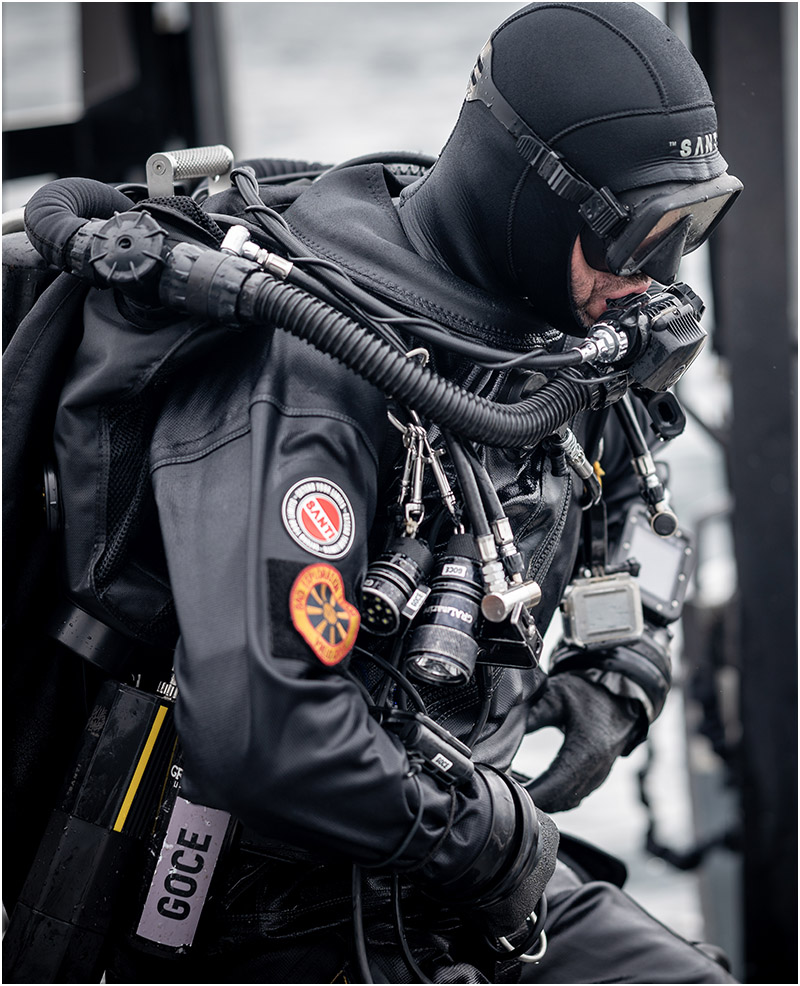
Above: CCR diver Goce Dimitrievski inspects the exposed engine room of SS Maia. With the deck plating long since disappeared, the ship's compact compound steam engine and surrounding machinery remain clearly visible, offering a rare glimpse into the heart of this remarkably preserved Victorian cargo steamer.
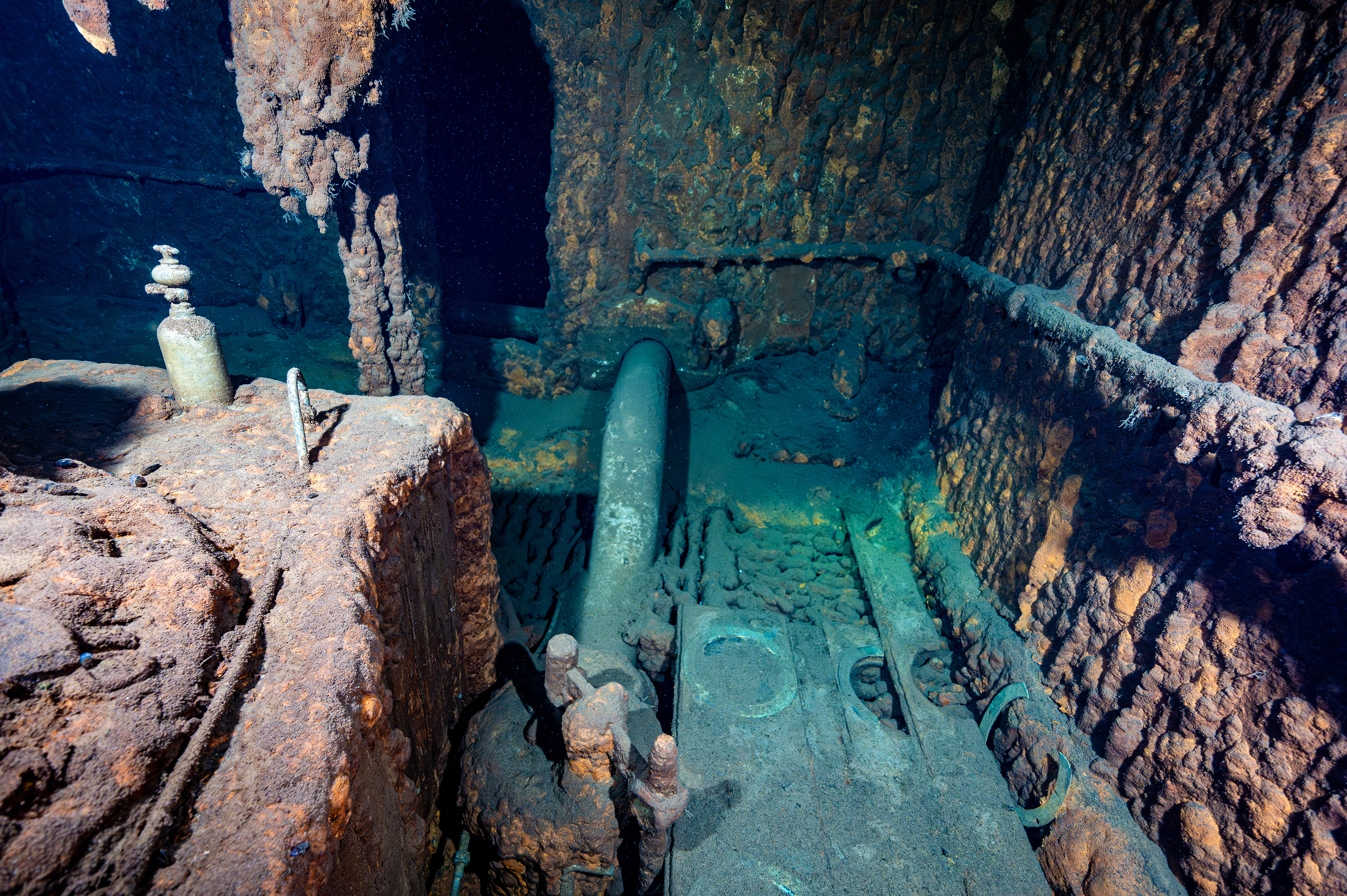
Above: The remarkably preserved engine room contains SS Maia's original William Doxford & Sons compound steam engine. Designed with high- and low-pressure cylinders measuring 28 and 54 inches in diameter and a 36-inch stroke, the engine transmitted 123 nominal horsepower through a single screw, representing the efficient engineering that defined late nineteenth-century merchant shipping.
Above: The engine room floor is blanketed by fallen wooden window frames and structural debris that collapsed into the machinery space as the superstructure deteriorated over time. Beneath the timbers, portions of the original engine controls, piping, and machinery remain remarkably intact.
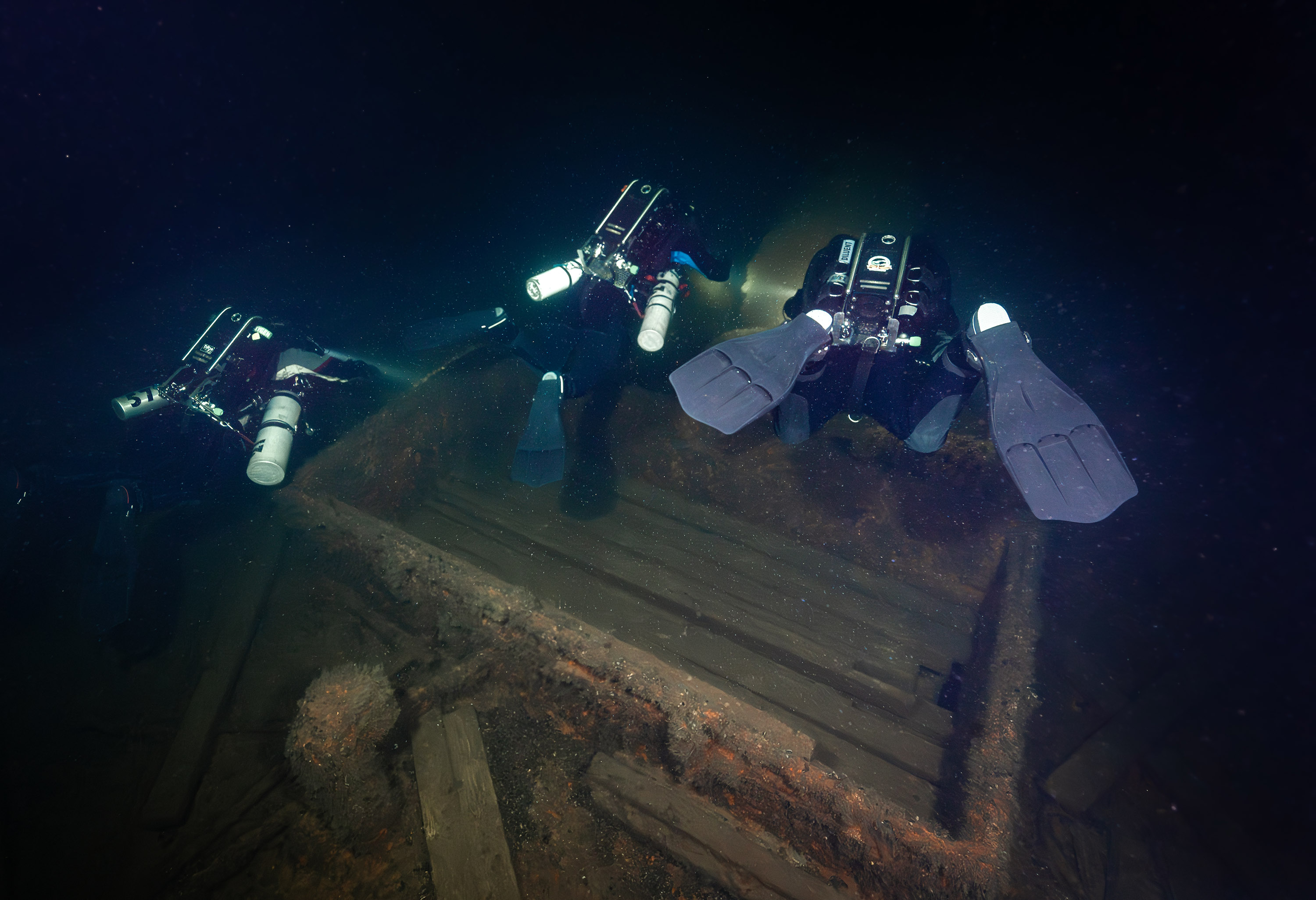
Above: Marko Bulat, Dr. Dubravka Vejnovic, and Goce Dimitrievski swim above SS Maia's remarkably preserved main deck as it leads toward the forward cargo hold. The neatly stacked timber, loaded in Riga before the vessel's final voyage, remains in place within the hold, making this one of the Baltic Sea's most exceptionally preserved merchant shipwrecks.
Above: Marko Bulat hovers beside SS Maia's massive three-bladed propeller, still firmly attached to the propeller shaft after more than a century on the seabed. The propeller was driven by the ship's original William Doxford & Sons two-cylinder compound steam engine, delivering 123 nominal horsepower through a single screw.
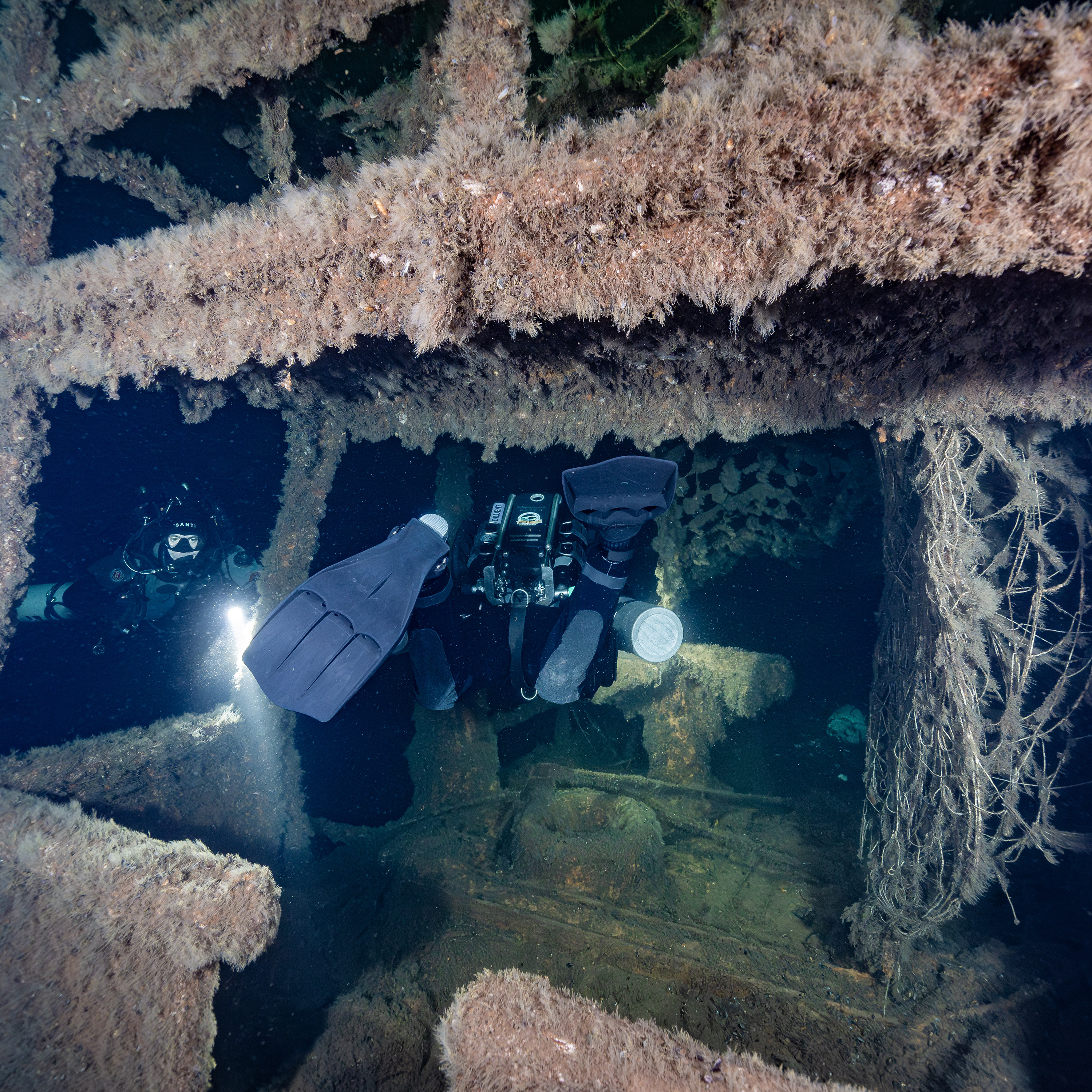
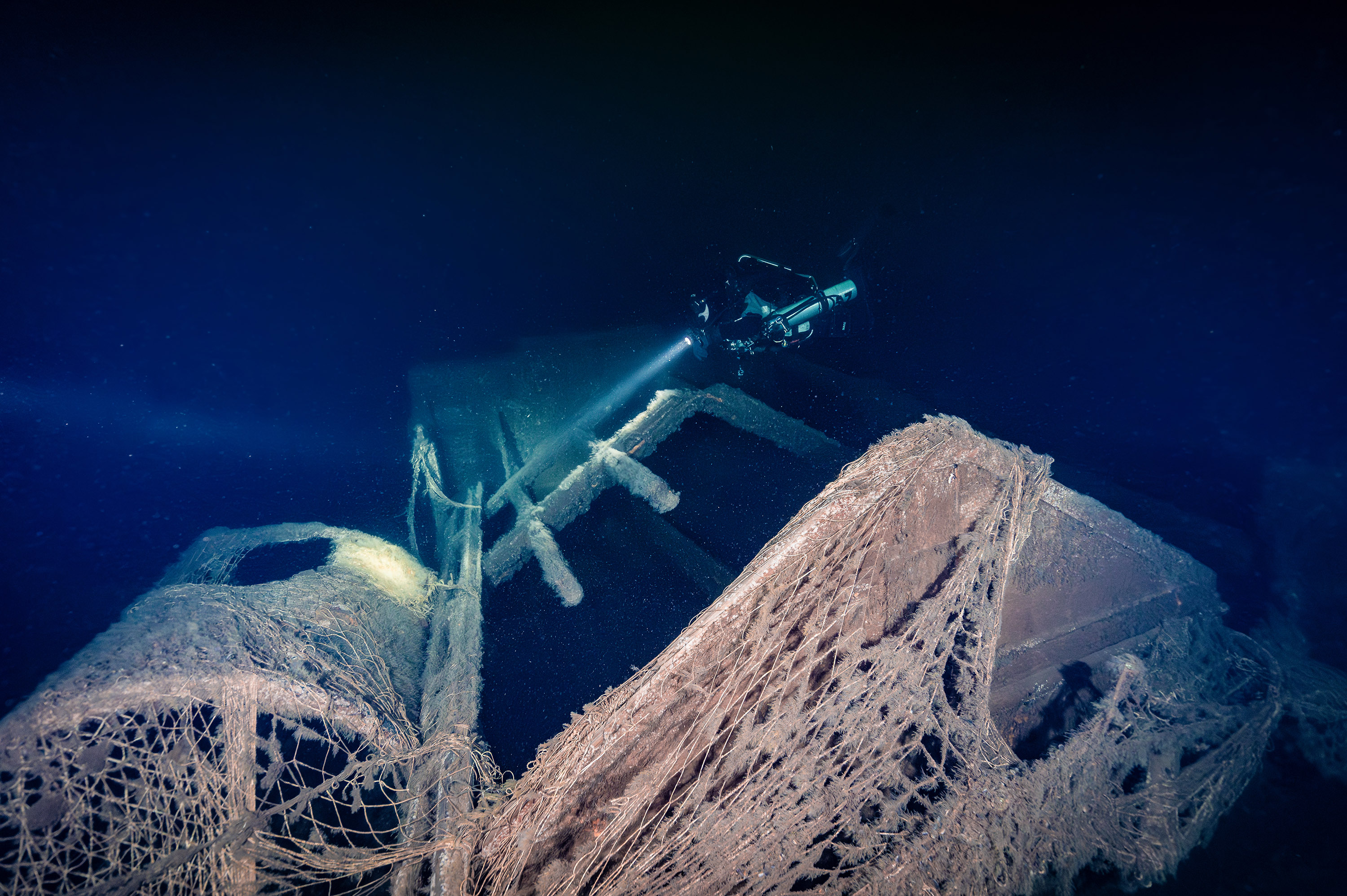
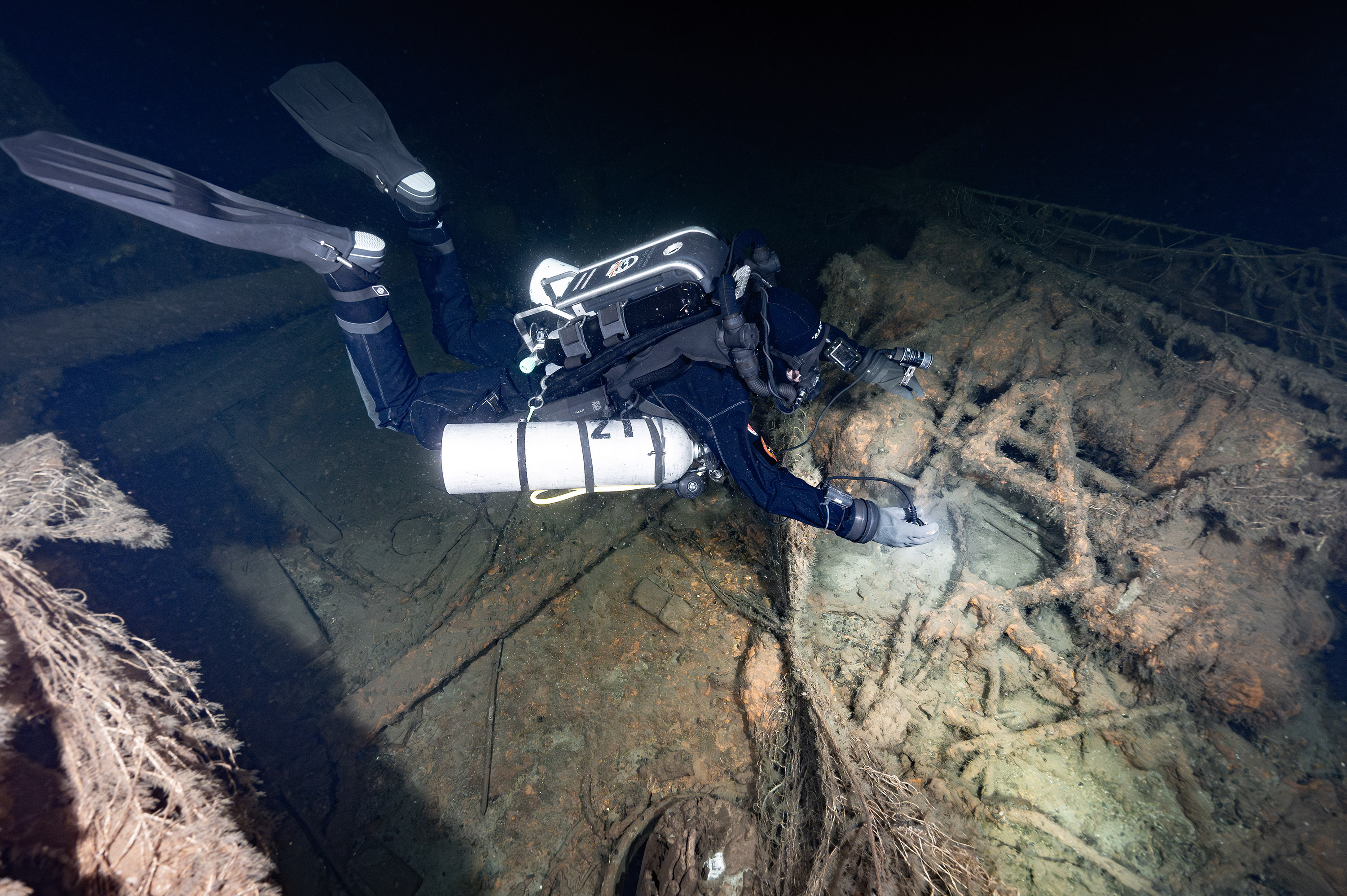
Above: Marko Bulat explores the shattered remains of SS Maia's superstructure, where decades of lost fishing nets have become entangled across the wreck.
Above: Goce Dimitrievski examines a collection of artifacts resting on SS Maia's deck. Scattered among the wreckage are remnants of the ship's daily life, preserved by the cold Baltic waters and left undisturbed.
Above: CCR diver Goce Dimitrievski glides above SS Maia's open bridge.
VIDEO HERE
The Dive Team
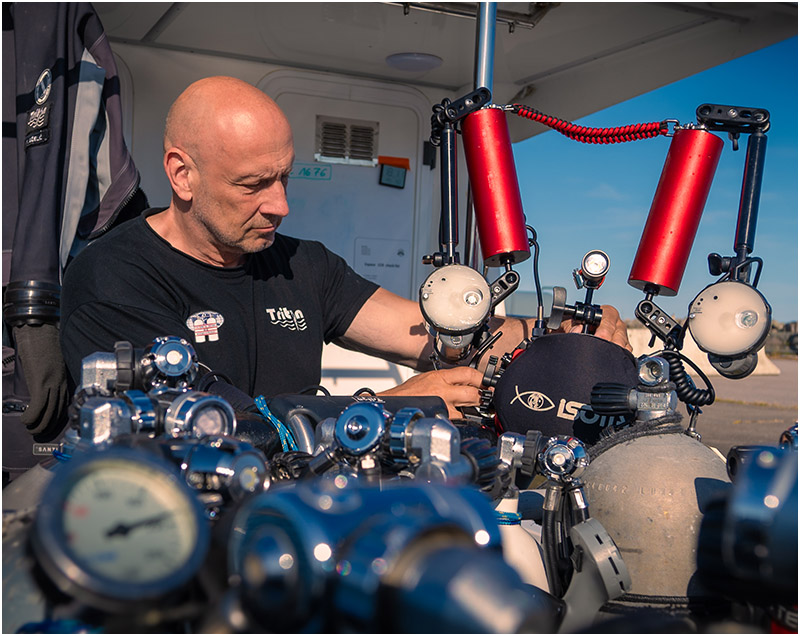
Mirko Bevenja is the leader of the Triton Tec Team, a TDI Instructor Trainer, explorer, and underwater photographer.
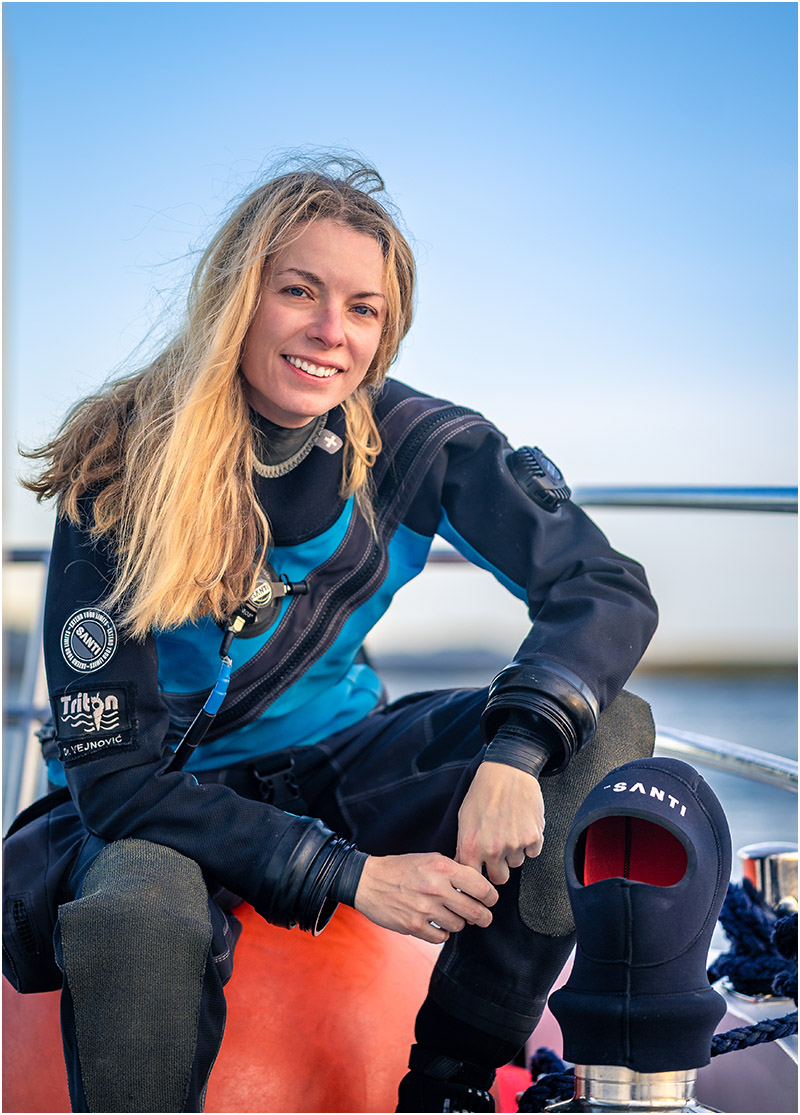
Dr. Dubravka Vejnovic – Experienced CCR Trimix diver and ambassador for SANTI, DAN, and TDI
Goce, Du and Marko chilling after a long cold dive
Top Row: Aleksandar Novakovic, Nemanja Jekic, Goce Dimitrievski, Dr.Dubravka Vejnovic, Ivan Filipovic, Captain Darek
Bottom Row: Damir Dzelic, Mirko Bevenja, Danilo Pusica Marko Bulat
CONTACT
Special Thanks
Supported by
Suggested Reading
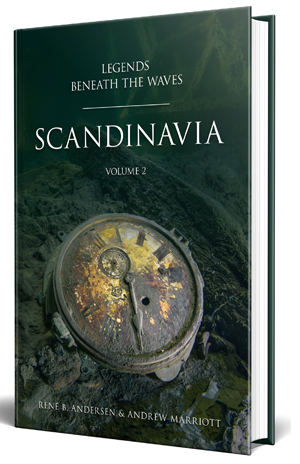
Legends Beneath the Waves: Scandinavia Vol. 1
Legends Beneath the Waves - Scandinavia is a two-volume collection of extraordinary underwater wreck photography from the cold, challenging waters of Scandinavia. Each image is backed by years of research, uncovering the dramatic histories behind these lost ships.
Strong currents, low visibility, and deep dive sites make this some of the most demanding wreck photography in the world. Capturing these images required advanced technical diving, rebreathers, and long decompression dives.
From Viking-era vessels to wartime casualties, Scandinavia’s seas hold centuries of maritime history. Preserved in dark, cold waters, these wrecks remain hauntingly intact - silent witnesses to battle, disaster, and survival.
Legends Beneath the Waves: Scandinavia Vol. 2
Legends Beneath the Waves - Scandinavia is a two-volume collection of extraordinary underwater wreck photography from the cold, challenging waters of Scandinavia. Each image is backed by years of research, uncovering the dramatic histories behind these lost ships.
Strong currents, low visibility, and deep dive sites make this some of the most demanding wreck photography in the world. Capturing these images required advanced technical diving, rebreathers, and long decompression dives.
From Viking-era vessels to wartime casualties, Scandinavia’s seas hold centuries of maritime history. Preserved in dark, cold waters, these wrecks remain hauntingly intact - silent witnesses to battle, disaster, and survival.
This book reveals a hidden world beneath the surface and brings Scandinavia’s underwater legends back to life.




 The ship herself had lived a quiet but productive life. Built by William Doxford & Sons at Sunderland and launched on April 28, 1884, she had entered service as the British cargo steamer Roseland. Owned by Peter Rowe & Sons of Cardiff, she spent her early years carrying coal and general cargo around the British Isles and continental Europe. Like thousands of tramp steamers operating during the late Victorian era, she went wherever cargo could be found. There was nothing glamorous about her existence, but she was a reliable workhorse, earning her owners a living one voyage at a time.