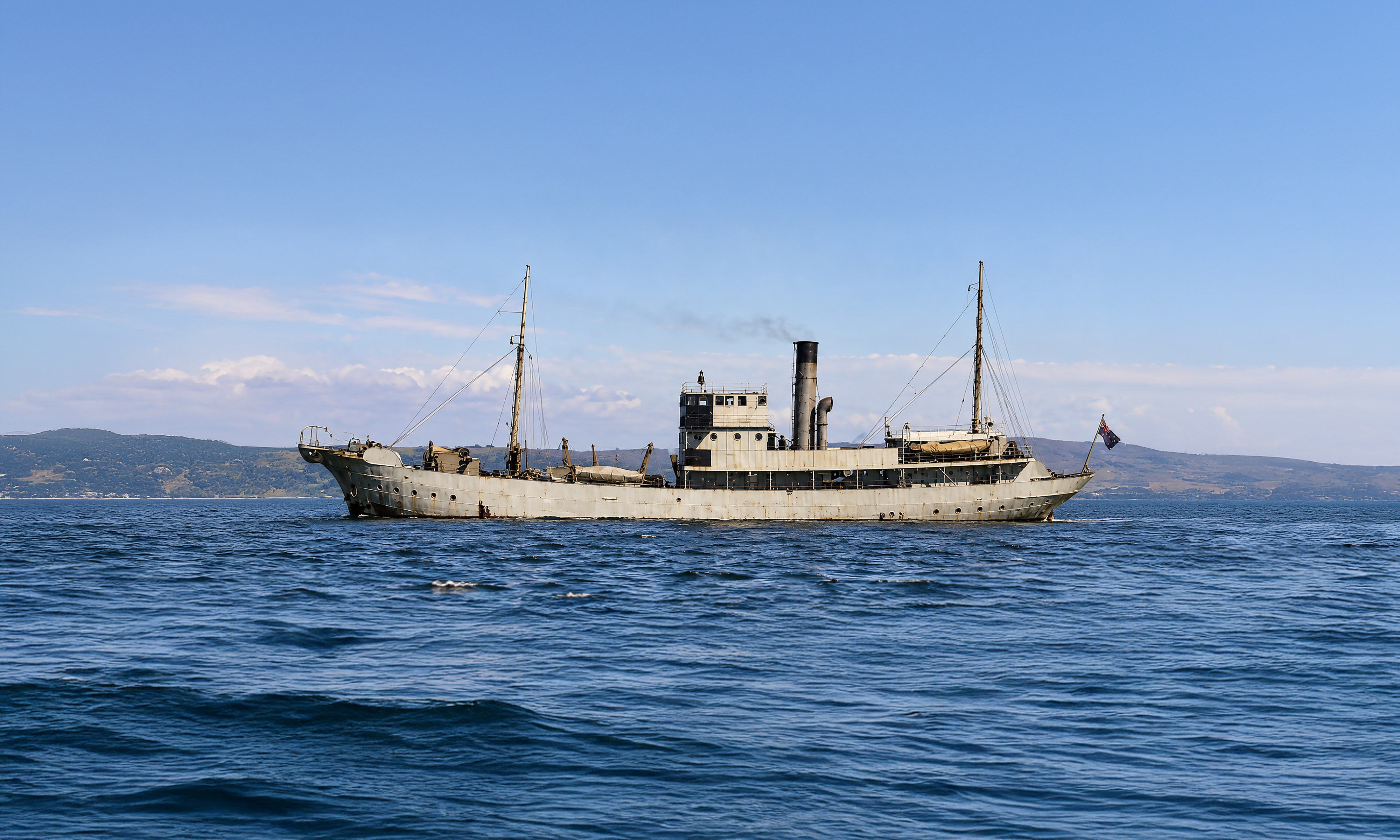
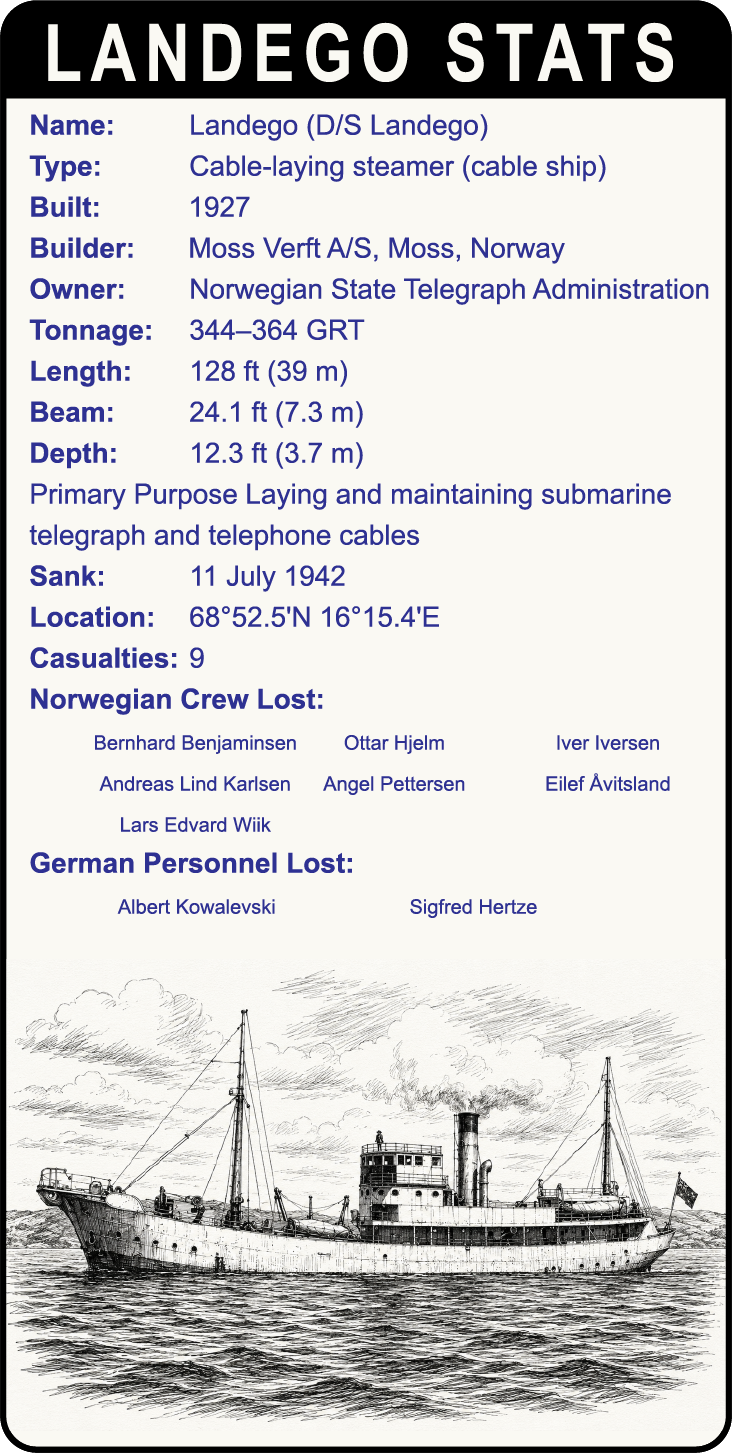
DS Landego was a Norwegian cable-laying vessel requisitioned by German forces during the Second World War. In July 1942, the ship was assigned to lay communication cables across Toppsundet in Kasfjorden, northern Norway. Unknown to the crew, the Germans had ordered the operation to take place in waters containing a minefield.
 On 10 July 1942, Landego arrived in Harstad to load provisions and equipment before beginning the mission. Four German naval personnel boarded the vessel to supervise the operation and ensure German military orders were followed. Before departure, the ship’s officers informed the German harbour authorities of their planned movements and were assured that the route was safe. On 10 July 1942, Landego arrived in Harstad to load provisions and equipment before beginning the mission. Four German naval personnel boarded the vessel to supervise the operation and ensure German military orders were followed. Before departure, the ship’s officers informed the German harbour authorities of their planned movements and were assured that the route was safe.
The following day, on 11 July, Landego sailed first to Grøtavær, where German officers determined the cable landing points. The vessel then continued toward Ytre Elgsnes and Kasfjorden. During the crossing, discussions took place between the captain and the German overseer regarding known minefields outside the fjord. Both believed the waters between Elgsnes and Bremnes were clear because cables were to be laid there.
Only minutes after altering course toward Kasfjord, a violent explosion struck the vessel amidships. The ship had most likely hit a mine directly beneath the hull. Survivors later described how Landego was destroyed and sank almost immediately, approximately 300 metres off Indre Elgsnes.
The crew had no warning and little chance to react. Captain Sverdrup Bernhard Johannesen was thrown into the sea by the explosion and survived, while several crew members disappeared with the ship. Of the 14-man Norwegian crew, seven were lost, along with two German naval personnel.
At the time of the sinking, Landego carried around 100 tons of telegraph cable and was equipped with lifeboats, rafts, and workboats. Despite this, the rapid sinking left little opportunity for evacuation. The tragedy later became an example of the dangers faced by civilian and requisitioned vessels operating in wartime northern waters.
Diving:
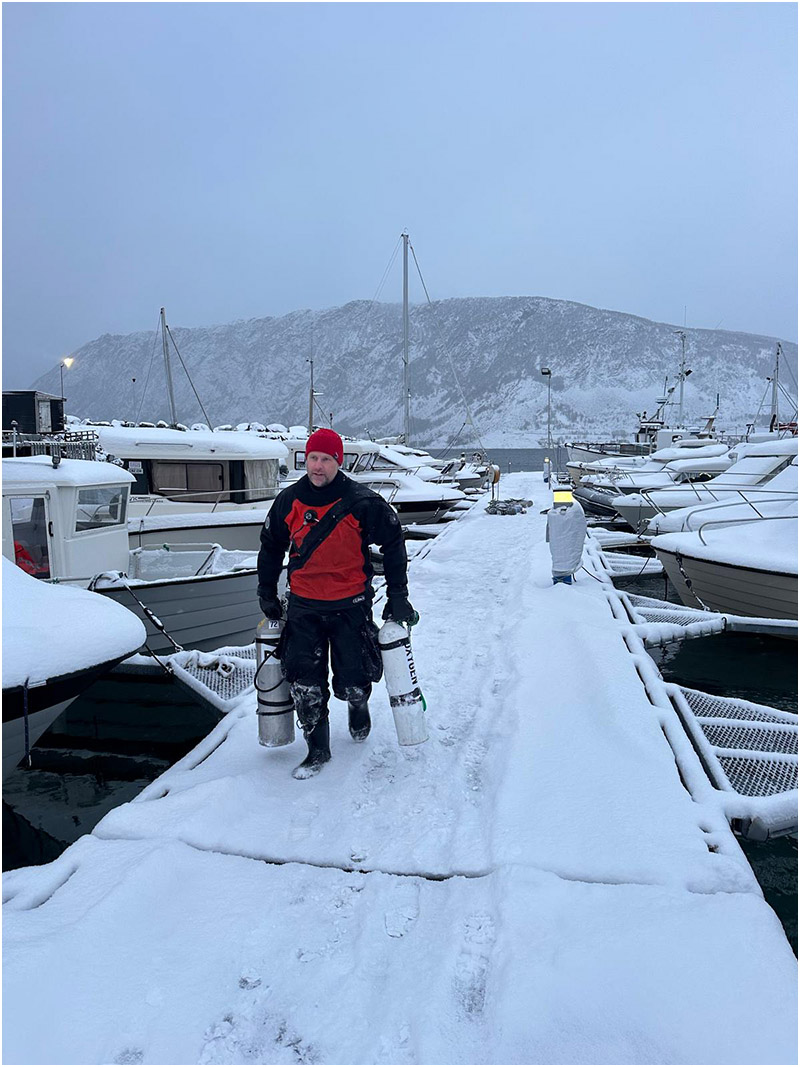
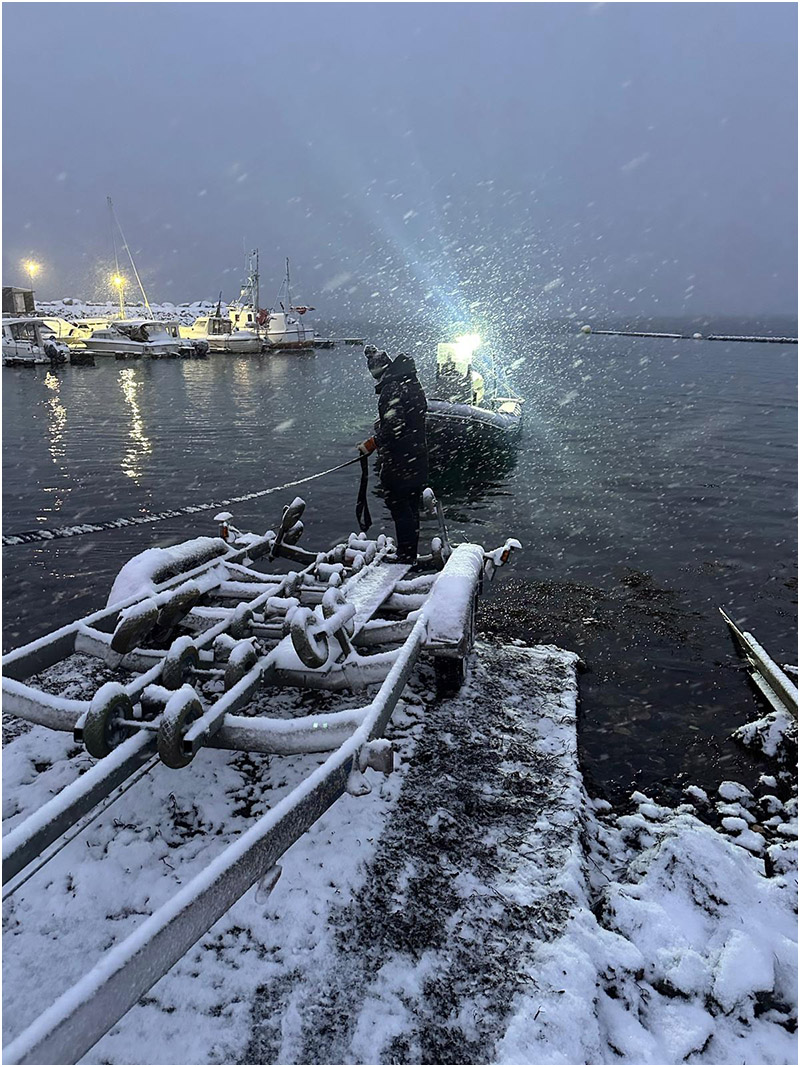
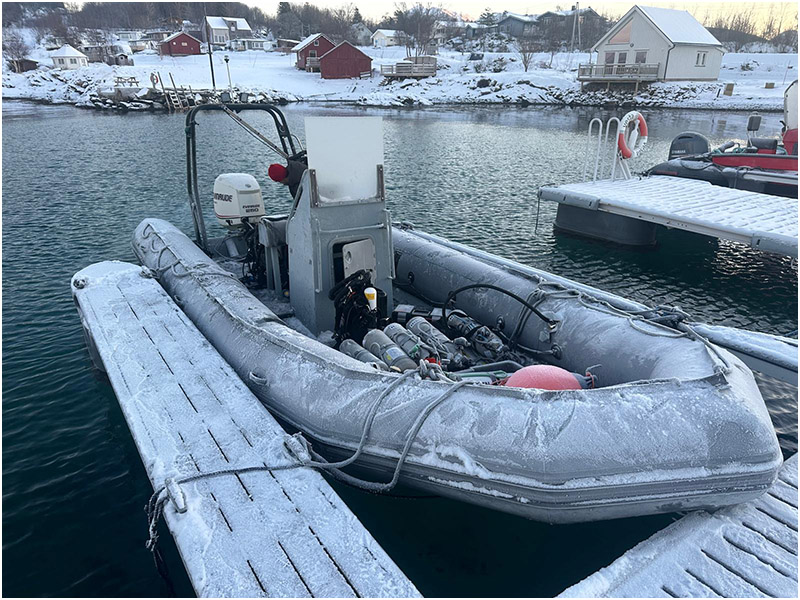
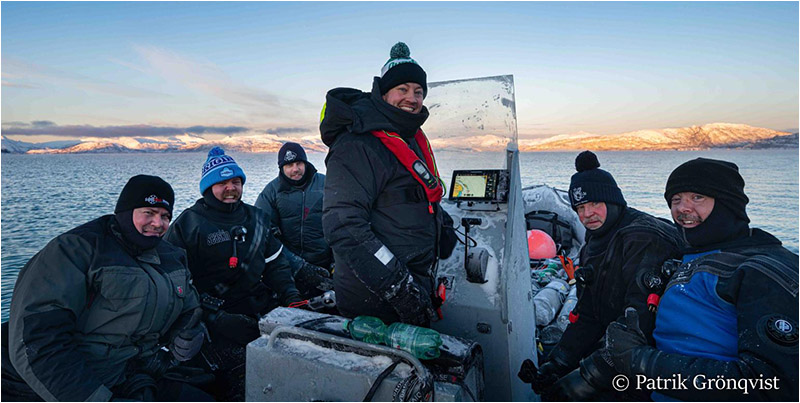
There is generally good visibility in the area around Landego, but if you want to experience truly exceptional visibility, you should dive in winter. Winter diving in northern Norway presents many challenges, including snow, cold, darkness, and wind, but the reward can be magnificent visibility of 40–50 m.
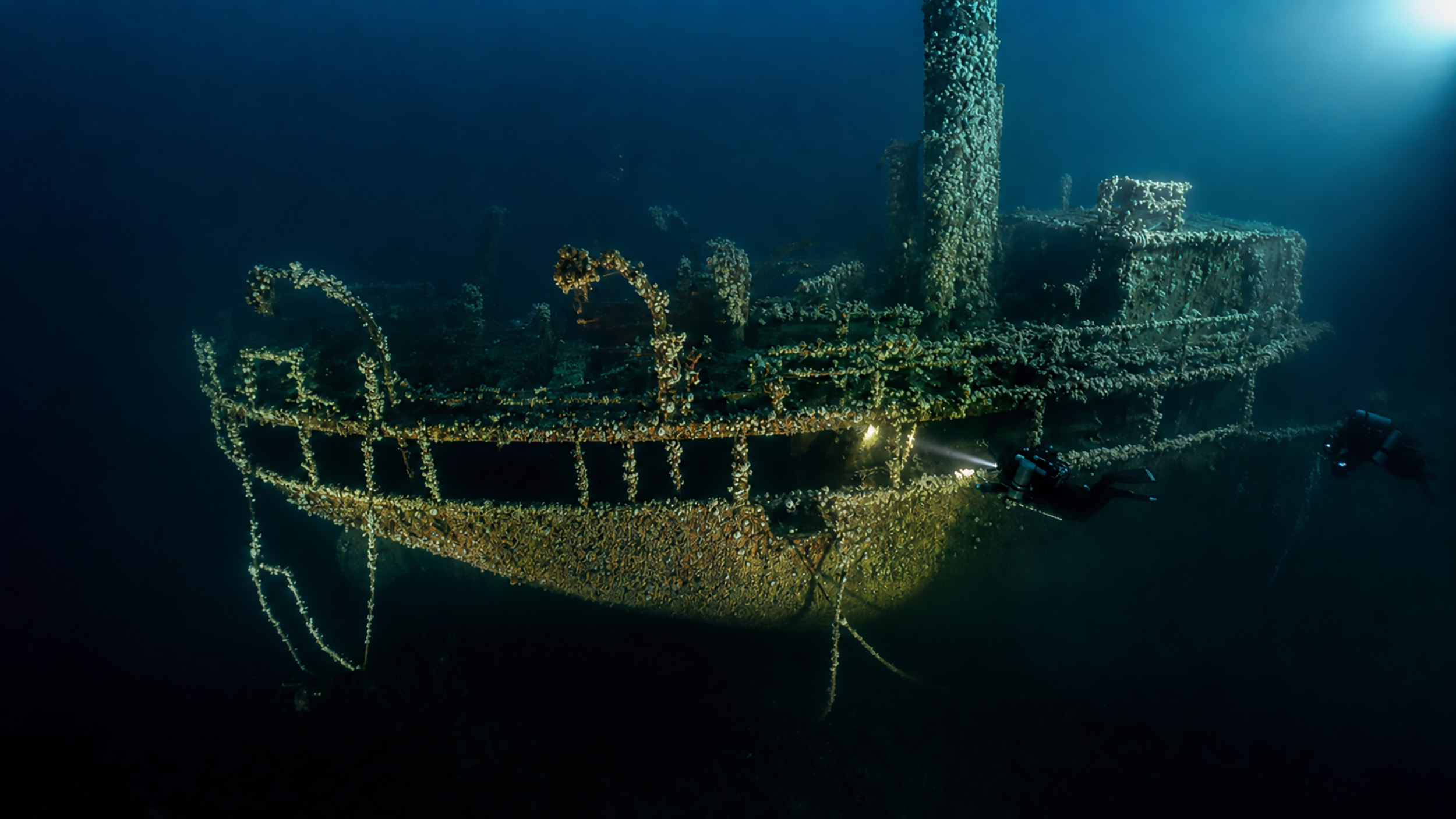
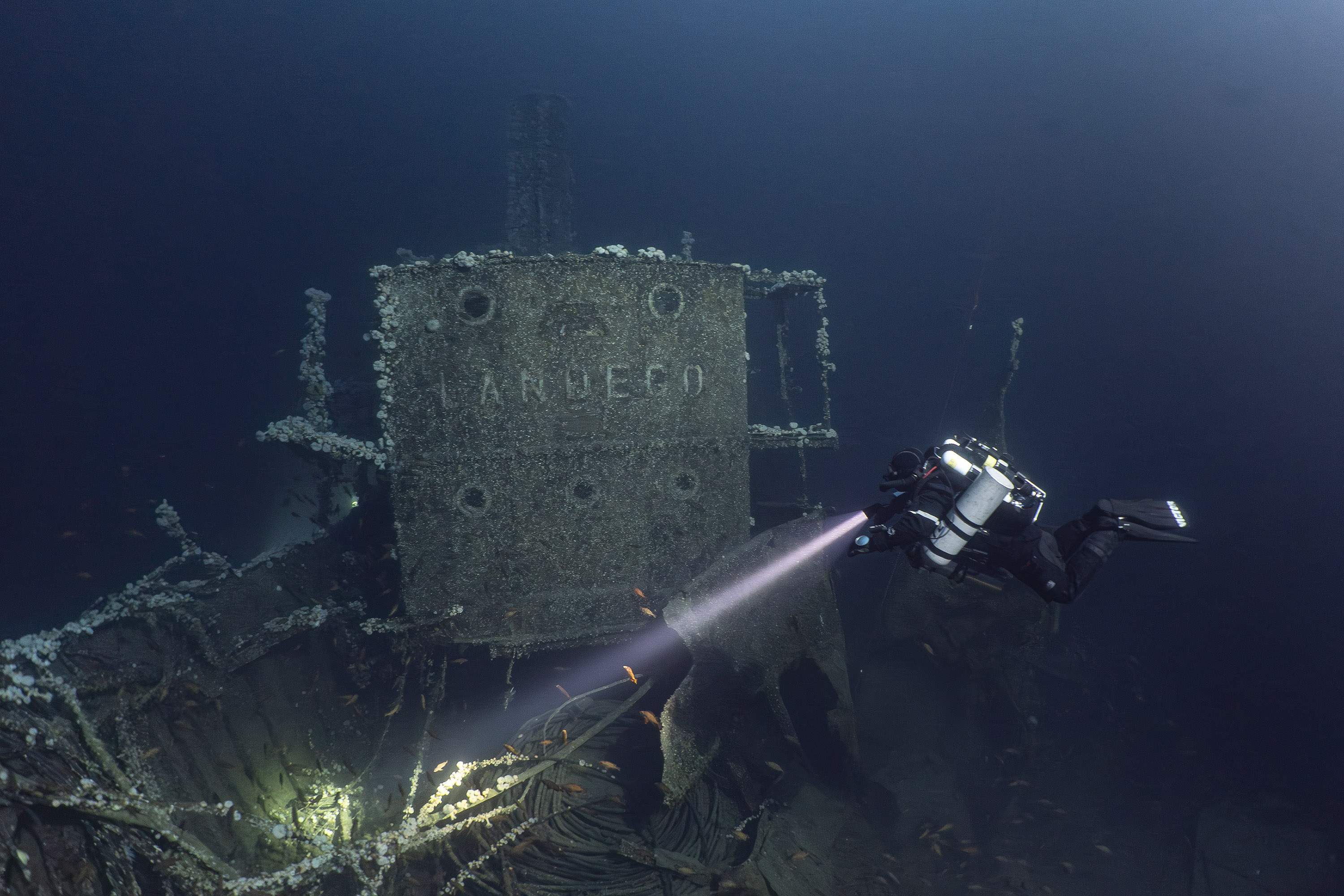
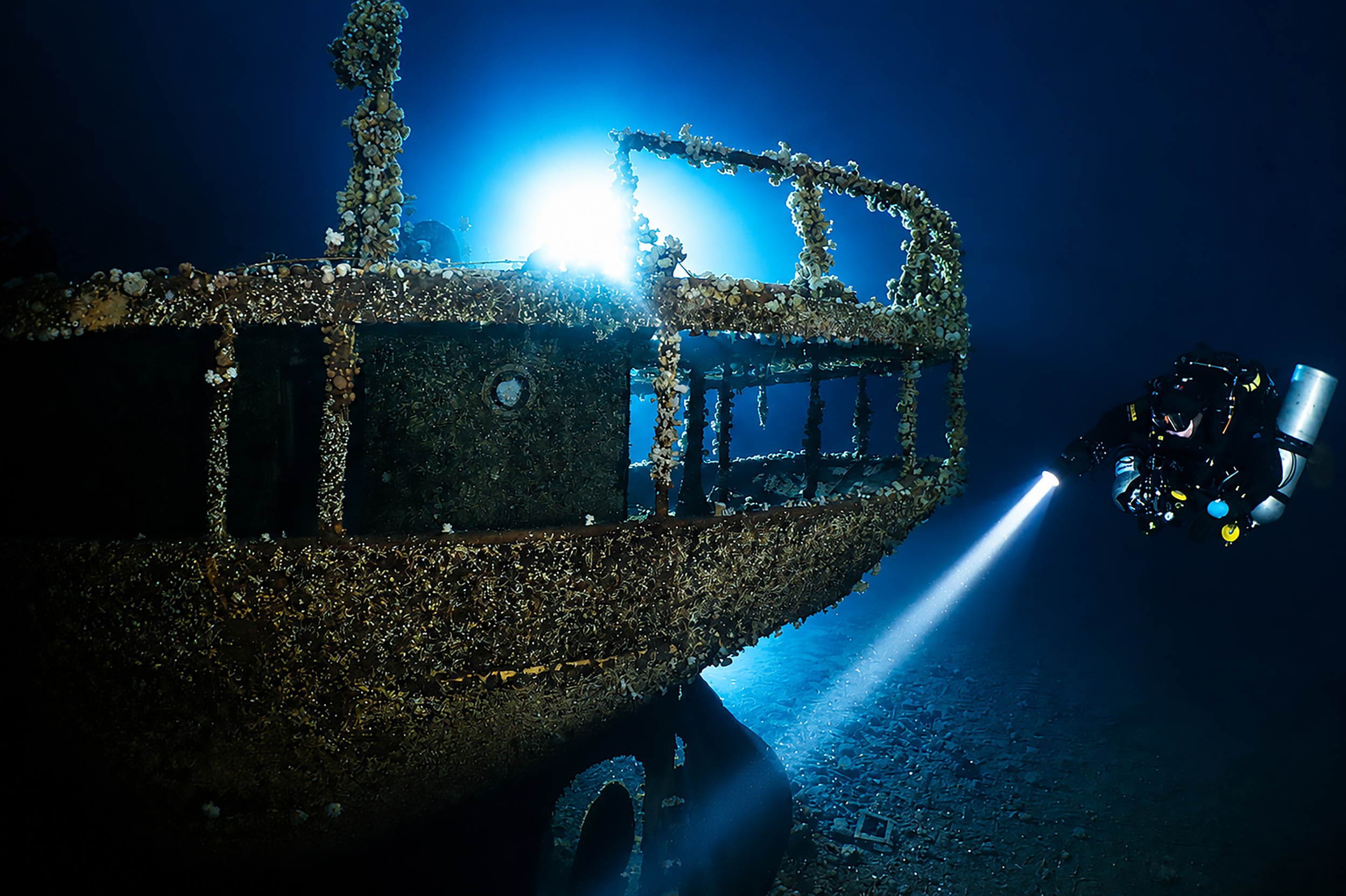
The wreck lies upright on an even keel at a depth of 68 m. The bow, which struck the mine, was blown off and now rests a short distance forward of the bridge. There is not much to see on the detached bow; however, the bridge and stern sections offer plenty of interesting features to explore.
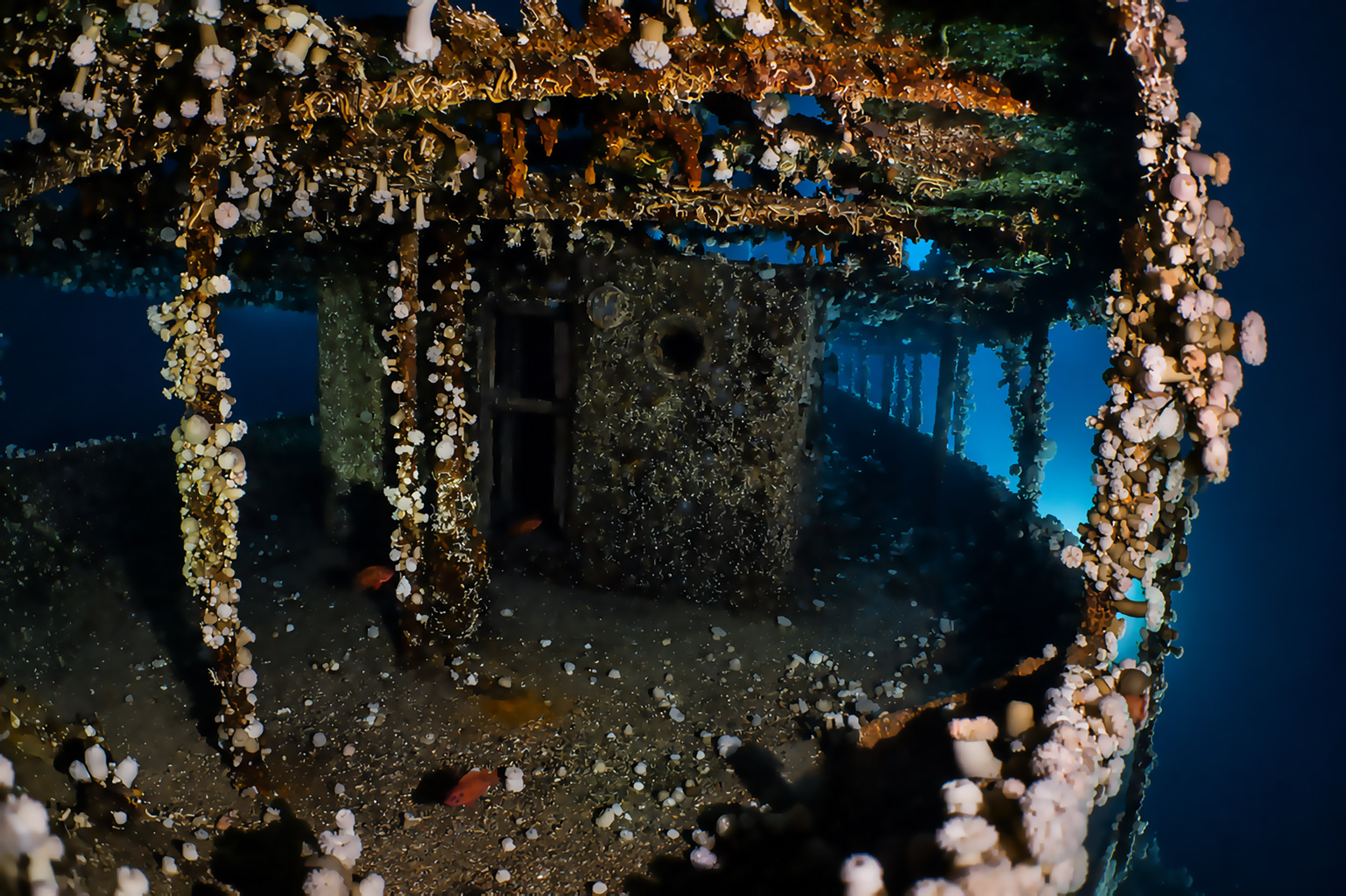
The entire wreck is covered with beautiful anemones. You can look into the galley, where stacks of porcelain remain. The toilet door has deteriorated to the point that you can now see directly inside. On the bridge, the name "Landego" is still visible, and a look into the engine room reveals the ship's engine telegraph still in place.
Landego is an excellent dive on a relatively compact wreck, allowing ample time to examine and photograph the site before beginning the long ascent. |