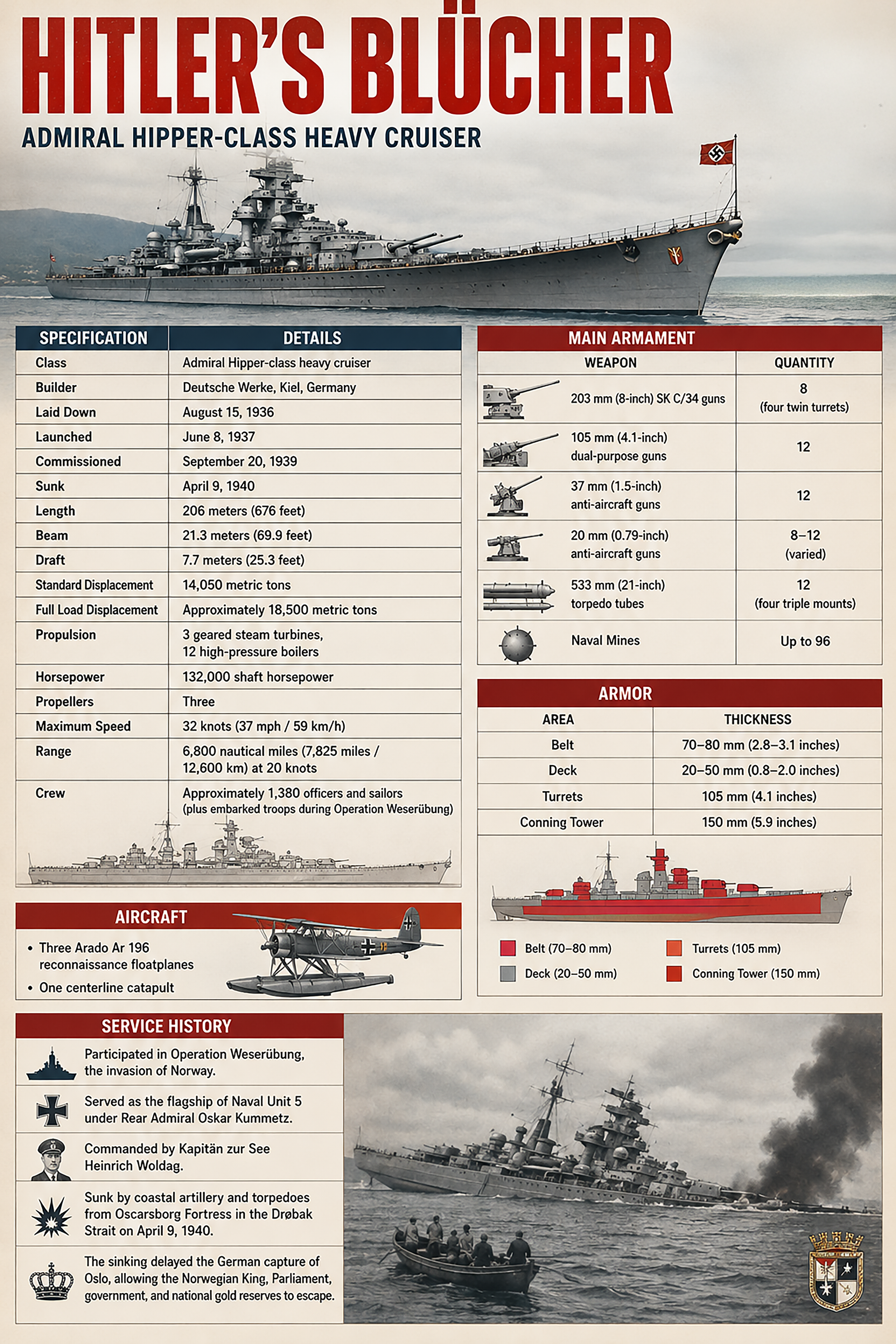
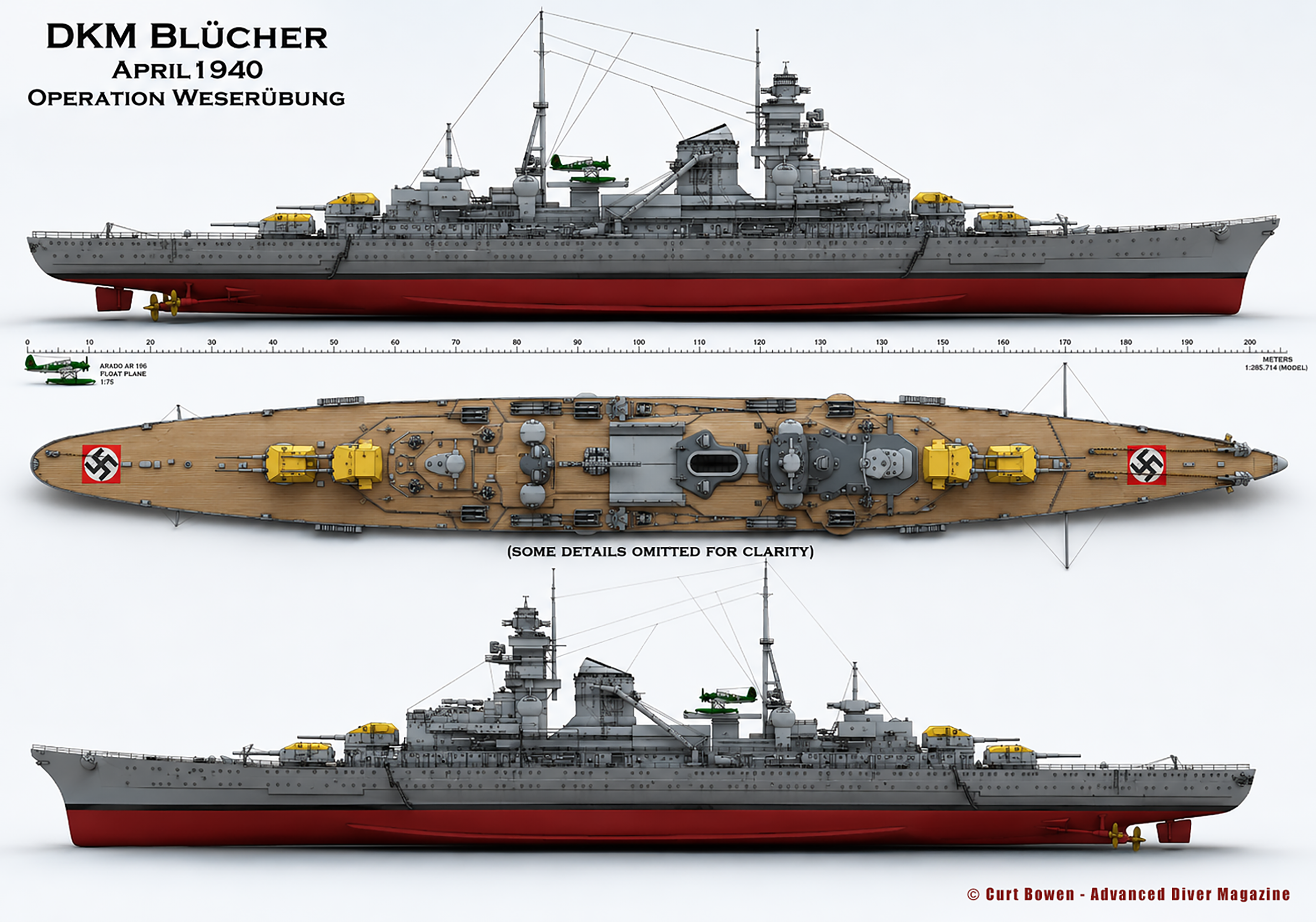
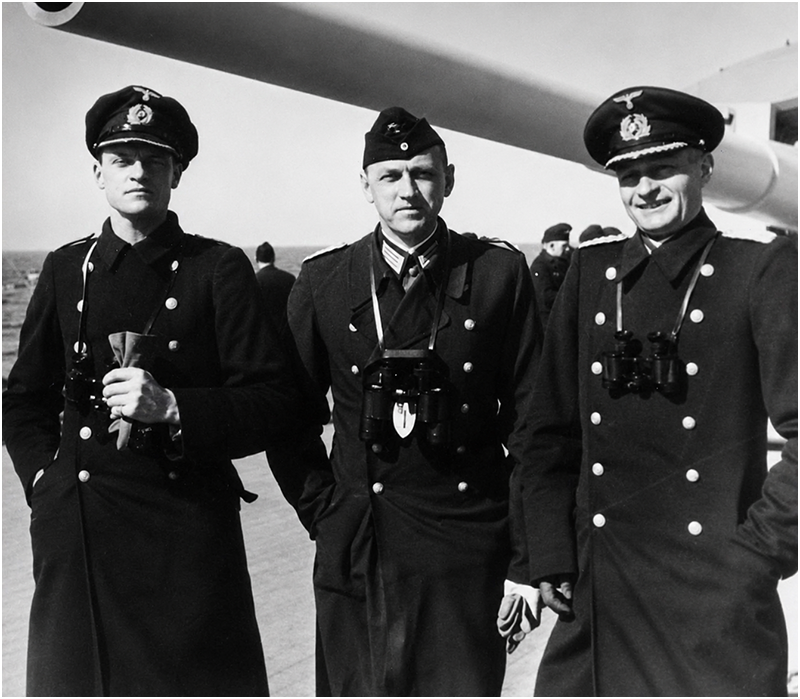
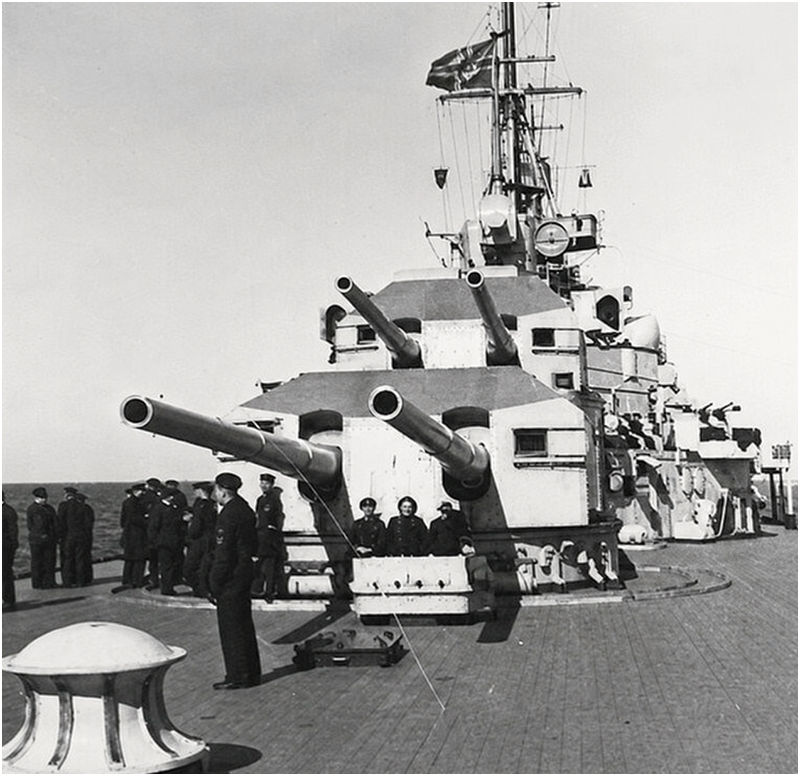
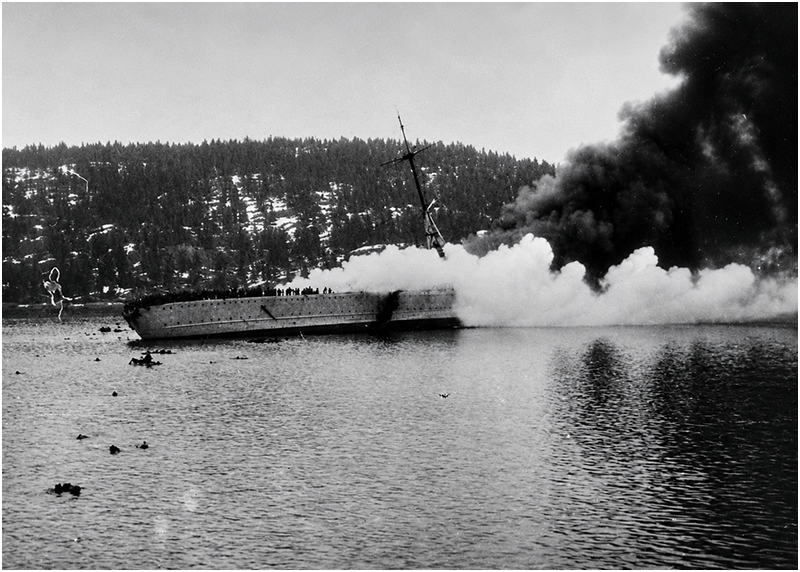
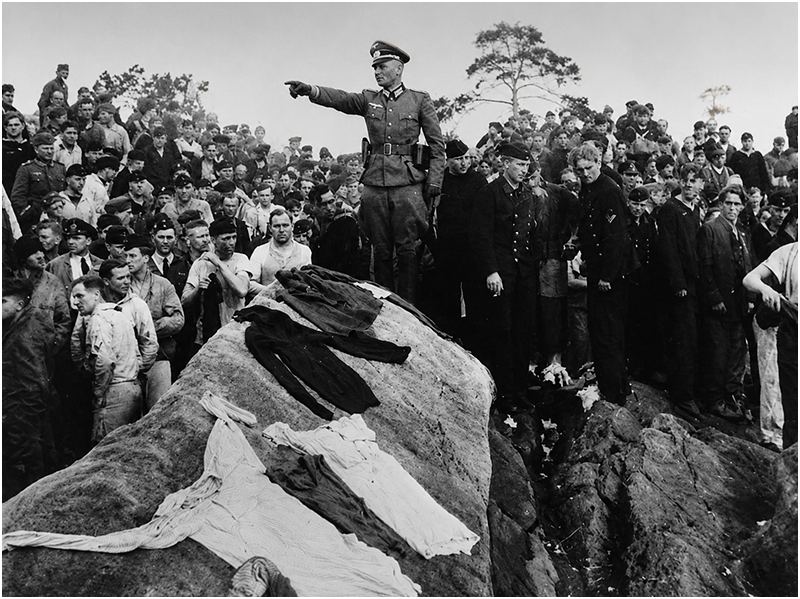
During the early morning hours of April 9, 1940, the mighty 206-meter (676-foot) heavy cruiser Blücher entered the Oslo Fjord. The vessel was part of Naval Unit 5, commanded by Rear Admiral Oskar Kummetz, whose mission was to occupy the Norwegian capital. In addition to Blücher, Naval Unit 5 consisted of the heavy cruiser Lützow, the light cruiser Emden, the torpedo boats Albatross, Kondor, and Möwe, as well as eight vessels from the minesweeping flotilla. Together, the ships transported an occupation force of approximately 2,000 infantry soldiers, 800 of whom were aboard Blücher.
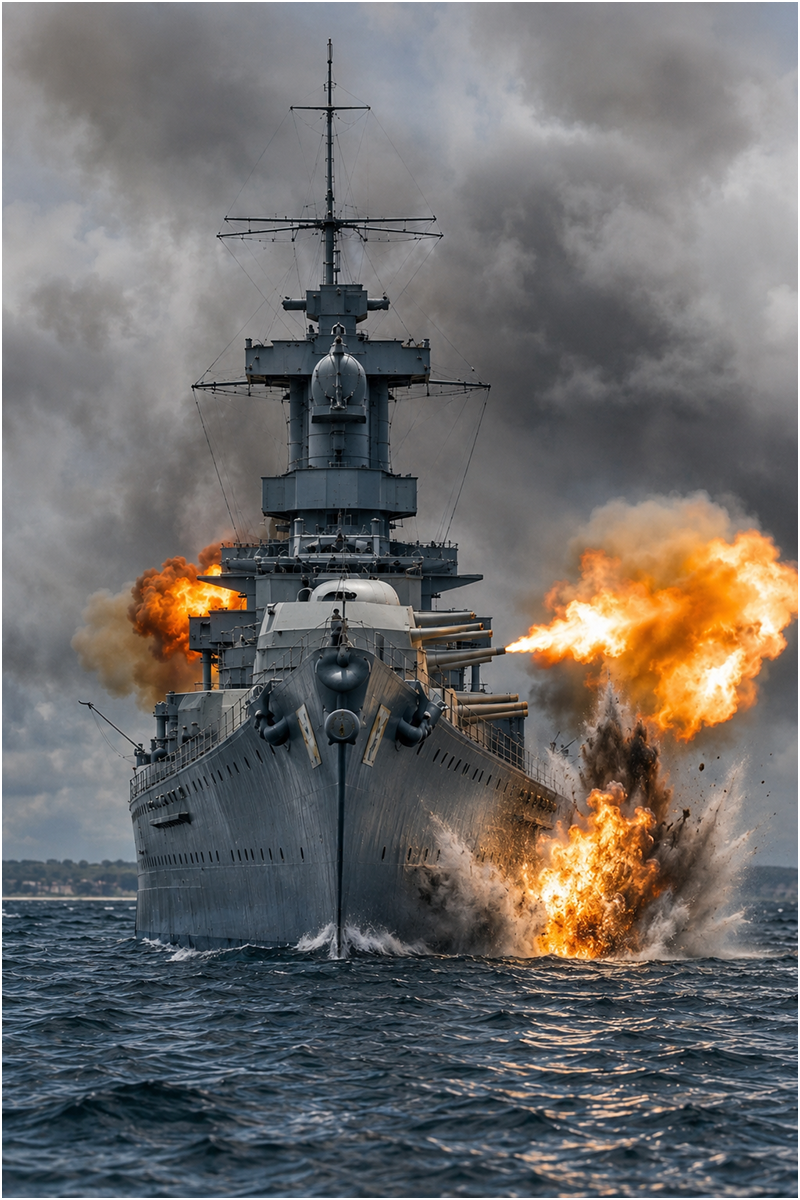
The Drøbak Strait was reached at 5:00 a.m. Ahead, in the middle of the narrow channel, lay the Norwegian fortress Oscarsborg. The commander of the fortress, Colonel Birger K. Eriksen, had already been awaiting the approaching German fleet for several hours when the silhouette of the flagship Blücher finally came into view. Knowing that his guns were outdated and that his crew was inexperienced, Eriksen allowed the ship to come closer before giving the order to fire. The vessels were already frighteningly close when he finally commanded, "Fire!"
With a tremendous explosion, two 280 mm (11-inch) shells slammed into Blücher. The old guns Aaron and Moses had spoken.
The first shell struck above the bridge, directly into the artillery command station, killing the artillery commander and everyone nearby. The second shell hit the aircraft hangar, where aviation fuel and ammunition for the embarked infantry had been stored, igniting a fierce fire.
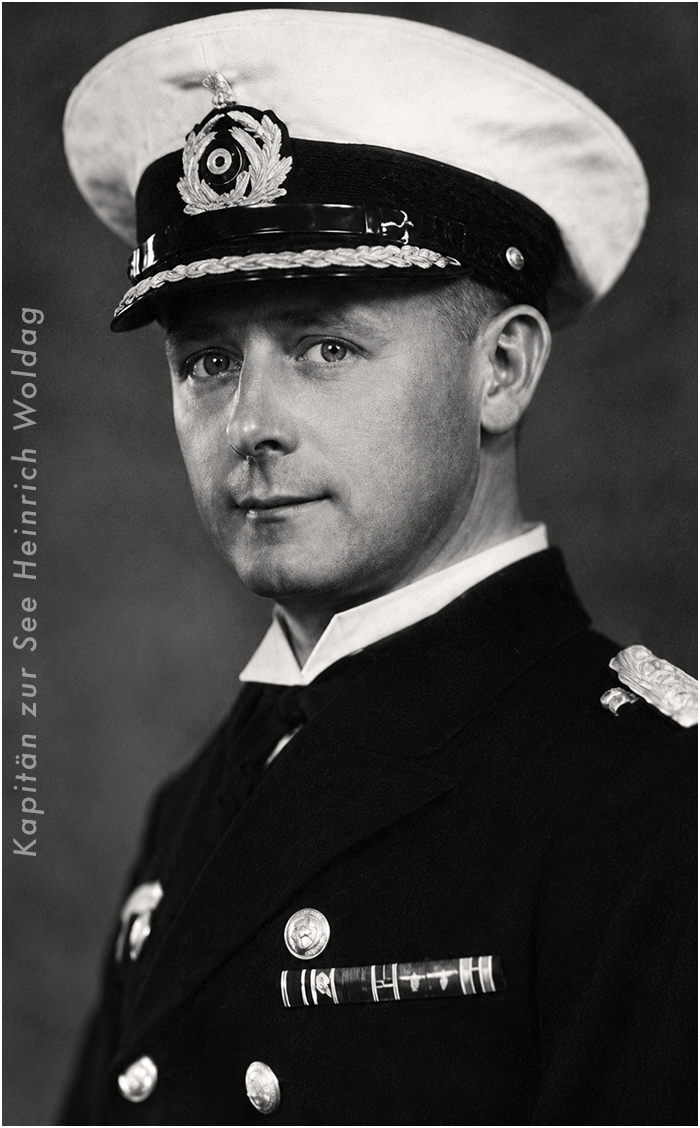
At the same time, the Kopås and Husvik batteries opened fire with their 150 mm (5.9-inch) and 57 mm (2.2-inch) guns. Blücher's commander, Heinrich Woldag, ordered, "Fire free!" The heavy and light anti-aircraft guns immediately opened fire, but without clear targets they had little effect. Unable to identify the concealed Norwegian gun positions, the ship's main batteries remained silent.
A few minutes later, two torpedoes slammed into Blücher's side. Fired from the Norwegian underwater torpedo battery, these hits proved to be the final blows. The vessel drifted helplessly, unable to maneuver while rapidly taking on water as a fierce fire raged amidships.
Hoping to avoid drifting onto a reef and believing the engines might still be restarted, Commander Woldag ordered the anchors dropped. As the ship's list continued to increase, it became painfully clear that Blücher was beyond saving, and Woldag gave the order to abandon ship.
The sailors and soldiers who jumped into the 3°C (37°F) water faced a 400-meter (1,312-foot) swim to shore, most without life jackets. At 7:32 a.m., it was over. Blücher slowly rolled onto her side before capsizing and sinking, taking approximately 1,500 men into the depths. Only 1,023 survived.
Oscarsborg's massive 280 mm (11-inch) guns had been purchased from Krupp in 1892. During transportation to the fortress, one of the giant guns fell into the sea and was given the name Moses. Soon afterward, the remaining guns were named Aaron and Joshua. Ironically, the pride of the German Navy—the brand-new heavy cruiser Blücher—was ultimately sunk by German-built guns bearing Jewish names.
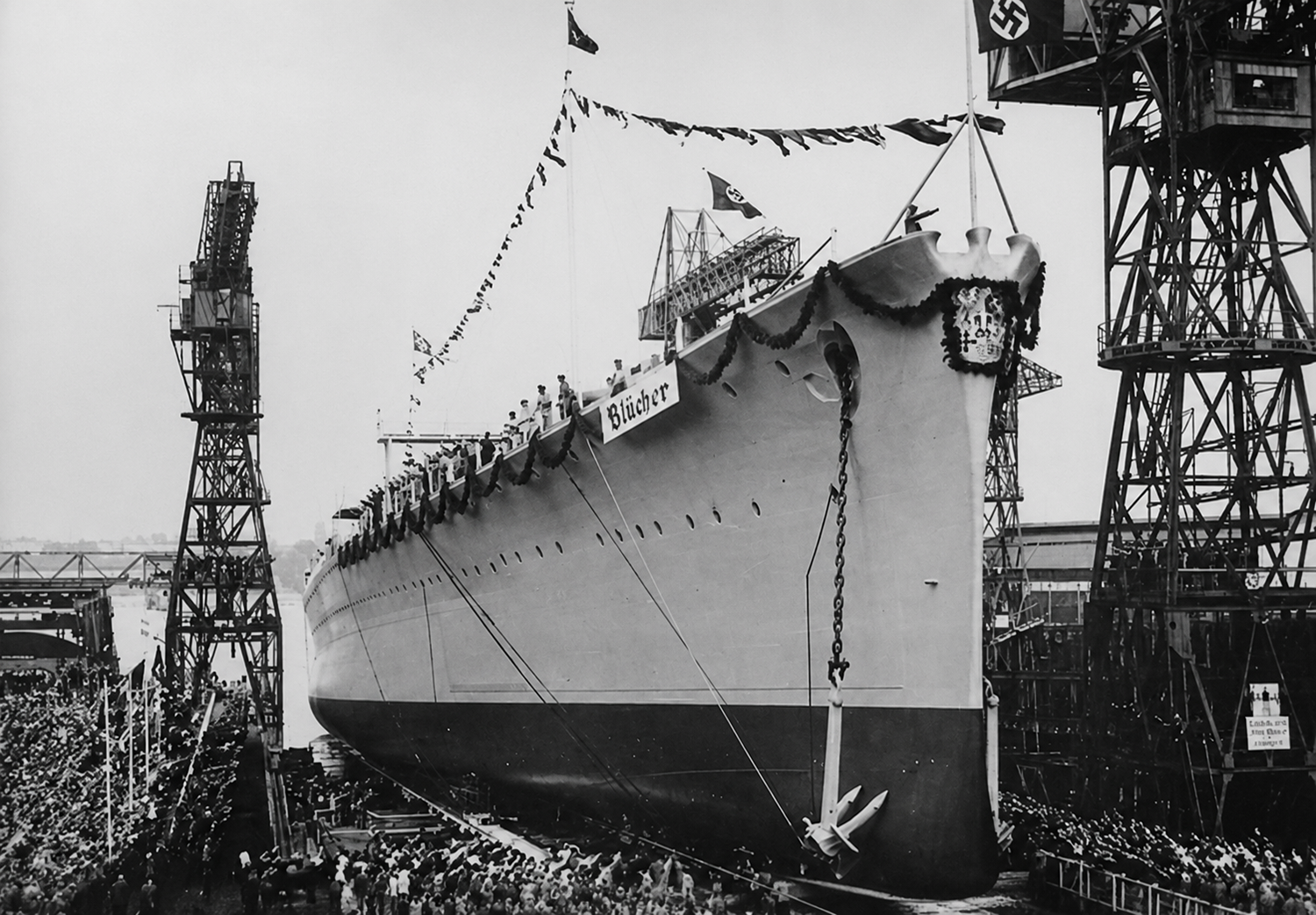
The heavy cruiser Blücher was built at the Deutsche Werke shipyard in Kiel and launched in June 1939. She was commissioned on September 20, 1939, and was considered by the German Naval Command to be too inexperienced to participate in Operation Weserübung. The Führer, however, had a different opinion.
The objective of Operation Weserübung was to seize the major ports along the Norwegian coast. The invasion force was transported by six naval task groups assigned to Narvik, Trondheim, Bergen, Kristiansand, Oslo, and Egersund, while German paratroopers were tasked with capturing the country's principal airfields. The success of the operation depended heavily on the rapid capture of Oslo.
As a direct result of Blücher's sinking, Oslo was not captured until several hours after the planned invasion. The delay allowed the Norwegian royal family, Parliament, and government to escape. In addition, Norway's gold reserves were successfully evacuated beyond the reach of the invading forces and were eventually shipped to the Allies, where they helped finance the Norwegian government-in-exile throughout the remainder of the war.
The Blücher lies at a depth of 92 meters (302 feet) in the Oslo Fjord and, because of the prevailing conditions, is an extremely demanding dive. In addition to the depth, the vessel rests upside down, and the strong tidal currents make diving possible only during brief periods of slack water. Heavy shipping traffic through the strait presents another significant hazard. Virtually all of Oslo's maritime traffic passes through this narrow waterway, including large cargo ships and passenger ferries bound for England. A VHF radio and a skilled, experienced surface support crew are essential. Because of these challenges, Blücher is visited by divers only a few times each year. Previously explored by Norwegian, Swedish, and Danish teams, we had the honor of becoming the first Finnish divers to visit the wreck.
The morning begins early as we launch our RIBs and prepare our equipment. Two dive teams are entering the water today—one Norwegian team and ourselves. We are using three RIBs. One serves as the dive platform, another supports the decompression station, and the third remains ready to intercept any approaching cargo ship or transport a diver to shore in the event of an emergency. On land, a portable recompression chamber stands ready, just in case.
The decompression station consists of three "hang bars" positioned at depths of 12 meters (39 feet), 9 meters (30 feet), and 6 meters (20 feet). In addition, the Norwegian team has access to surface-supplied oxygen from one of the support boats. For safety reasons, however, we choose to carry all of our decompression gases with us throughout the dive.
It is a calm, overcast morning—ideal conditions for gearing up. We sit quietly while the Norwegian team completes its final preparations. Because of the narrow slack-water window, we will begin our descent three minutes after they do.
After our final pre-dive checks, we are dropped into the water approximately 30 meters (98 feet) from the descent line. The surface current is so strong that after entering the water I barely have enough time to clear my mask and switch on my light before we are already at the descent line.
The water still carries a distinct taste of oil that continues to seep from the wreck despite repeated attempts over the years to remove it.
I give my buddy, Timo, an OK signal, and we begin our descent. Because of the current, we cannot simply free-fall. Instead, we must pull ourselves down the descent line until the current gradually weakens. Soon it disappears completely, allowing us to begin the long free-fall toward the seabed 92 meters (302 feet) below.
We are breathing Trimix 12/60, providing an equivalent narcotic depth of approximately 30 meters (98 feet) while diving at 90 meters (295 feet).
At around 70 meters (230 feet), darkness closes in around us, and before long we can make out the lights of the Norwegian team below. After five minutes, we finally reach the bottom at 90 meters (295 feet).
Visibility is fair, although not quite as good as expected—approximately 10 meters (33 feet). The seabed is littered with ammunition and military boots. We arrive amidships and follow Blücher's fallen mast toward the aircraft hangar. Unfortunately, the ship's Arado floatplane is no longer there, having been recovered and transferred to the Stavanger Aviation Museum in 1994.
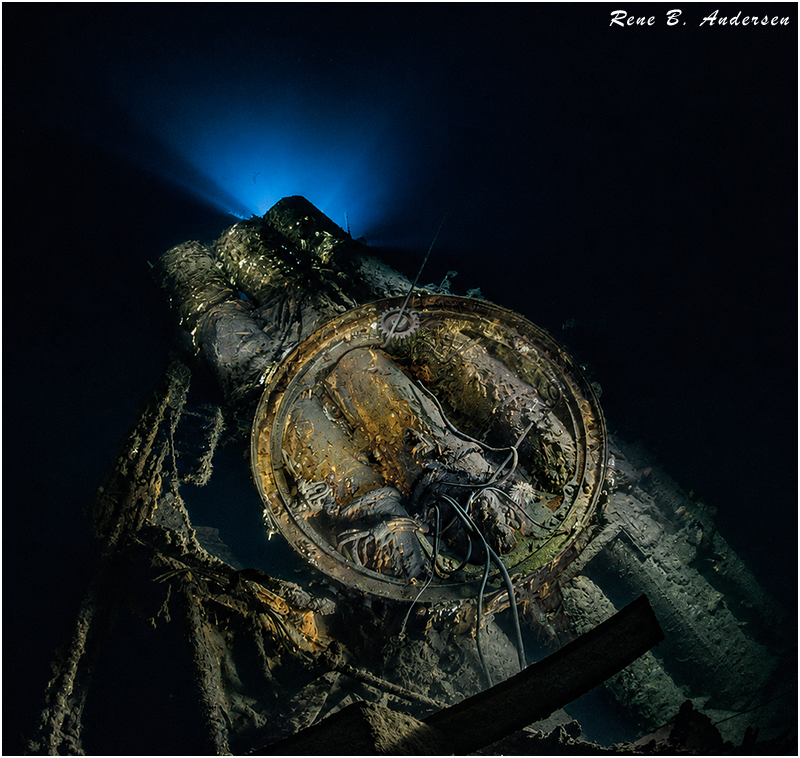
We spend time examining the heavily damaged midship section before slowly making our way toward the bow. Along the route we admire the distinctive Wackeltopf anti-aircraft sighting towers with their characteristic spherical shape.
Twenty minutes pass far too quickly, and it is already time to return to the ascent line.
We begin our ascent carrying three stage cylinders for decompression. Our first gas switch takes place at 60 meters (197 feet). From there, we complete decompression stops every 3 meters (10 feet). I find the seconds display on my Suunto, when operating in gauge mode, particularly useful for controlling my ascent rate and accurately timing each stop.
A safety diver arrives to check that everything is proceeding as planned. He is greeted with two broad smiles and matching OK signals in return.
The decompression passes surprisingly quickly as we replay the dive in our minds and exchange a few notes on an underwater slate. Exactly 95 minutes after beginning the dive, we slowly break the surface.
During our time underwater, the overcast skies have cleared, and the warm sunshine welcomes us back after an unforgettable dive to one of history's most famous warships.
The dive was planned using DecoPlanner with GF 20/95 gradient factor settings. We extended the stops at 57 meters (187 feet) and 21 meters (69 feet) and incorporated oxygen gas breaks during the final decompression. Our final ascent to the surface was made at a rate of 1 meter (3.3 feet) per minute.
The decompression schedule was somewhat aggressive, but with a fully equipped support team and a recompression chamber standing by nearby, we considered the risk of decompression illness to be lower than the risk of drifting into a busy shipping lane should we lose the ascent line. For that reason, we carried all of our decompression gases throughout the dive.
Our equipment consisted of twin 15-liter back-gas cylinders, a 10-liter stage cylinder containing Trimix 21/35, a 7-liter oxygen cylinder, and a 7-liter cylinder of EAN50.
The descent to 90 meters (295 feet) took almost five minutes, as the strong surface current slowed our progress during the initial part of the descent. Overall, it was an outstanding dive, and everything went exactly as planned.
Above: Deck-mounted triple 53.3 cm (21-inch) torpedo tubes that have fallen from Blücher's starboard side. The cruiser carried twelve torpedo tubes in four triple launchers.
Above: 3.7 cm (1.46-inch) SK C/30 anti-aircraft gun. Ammunition still lies scattered around the gun. The weapon was one of Blücher's medium anti-aircraft defenses.
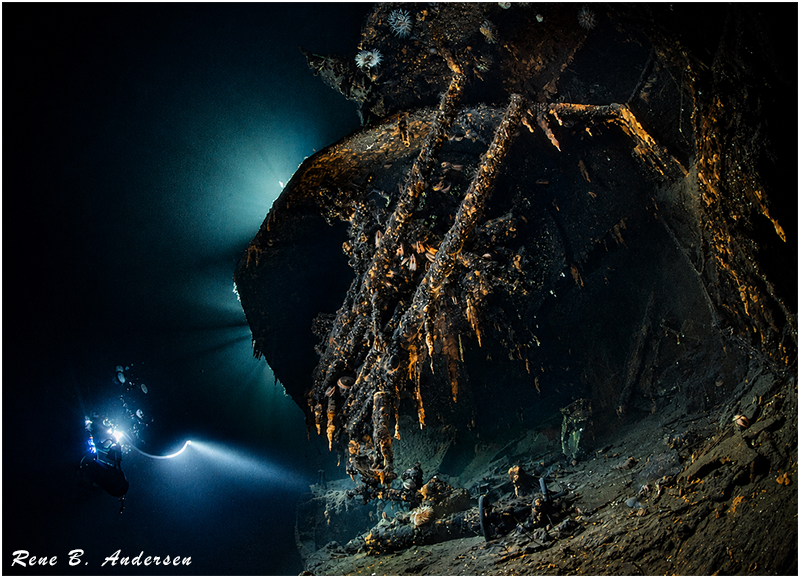
Above: Triple 53.3 cm (21-inch) torpedo tubes with a torpedo still loaded after more than 85 years on the seabed.
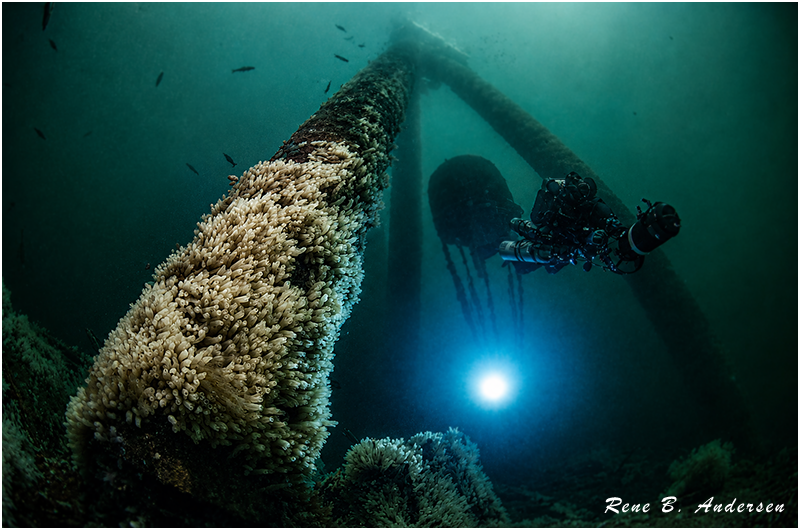
Above: Beneath the lighthouse shown in the drone photograph, a descent line leads to the wreck at a depth of approximately 92 meters (302 feet). A simple two-person decompression station can be seen behind the diver.
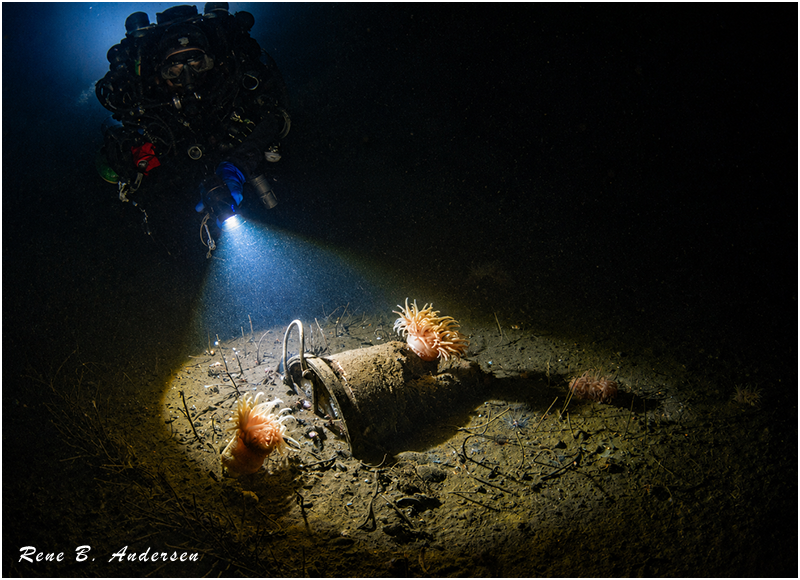
Above: 10.5 cm (4.1-inch) Flak 38 anti-aircraft ammunition container lying on the seabed near the stern. These containers once held ready-service ammunition for Blücher's heavy anti-aircraft battery.
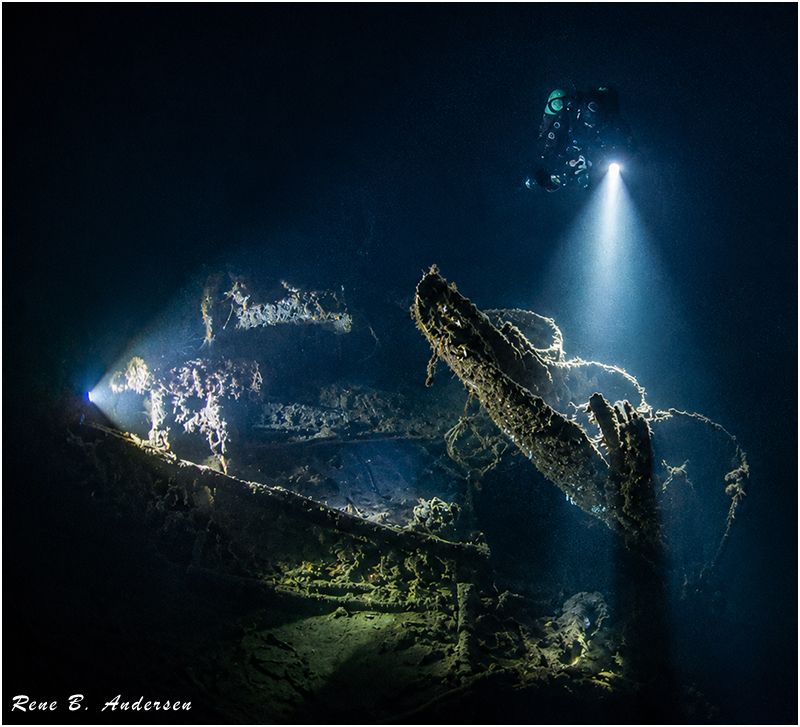
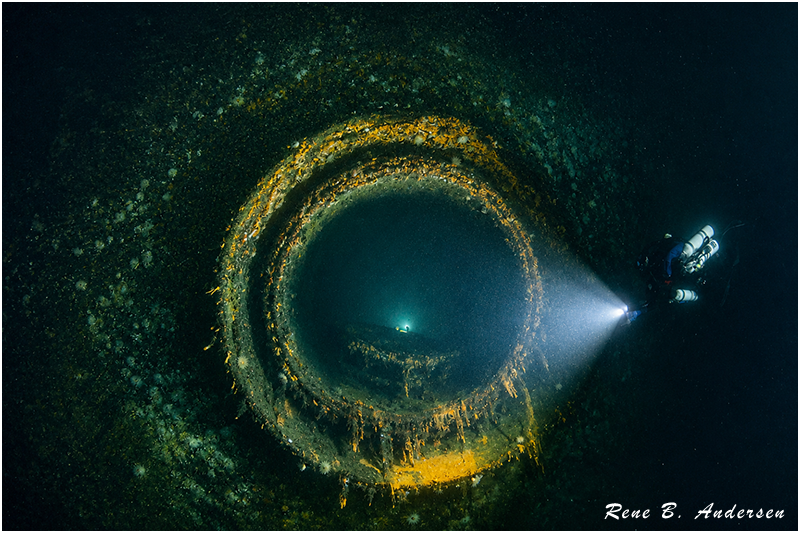
Above: Here I am swimming inside the barbette of one of the stern's 20.3 cm (8-inch) SK C/34 main guns, placing a light inside. While positioning the light, I noticed several large 20.3 cm (8-inch) shells still stored along the sides of the barbette.
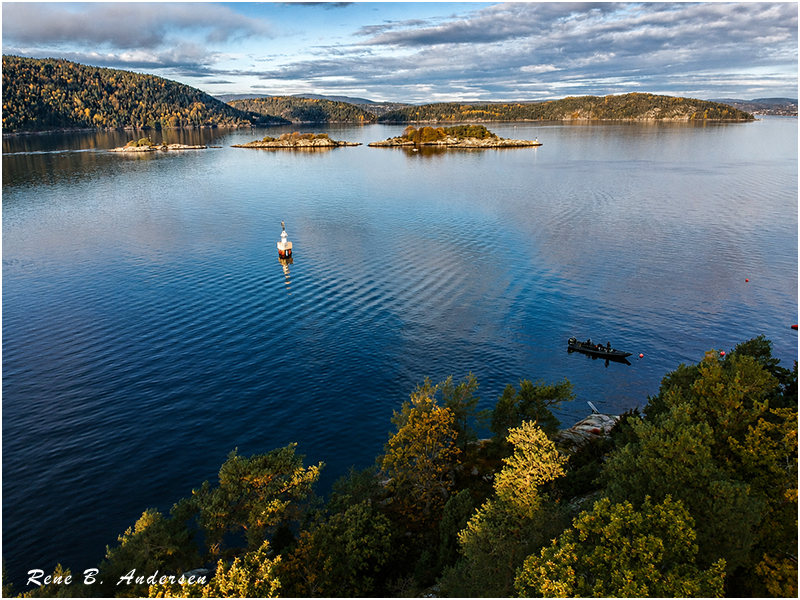
Above: Drone photograph showing our anchorage. From there, we traveled by DPV (diver propulsion vehicle) to the lighthouse and followed the descent line to the wreck, which lies at approximately 92 meters (302 feet) near the three islands visible at the top of the photograph. Divers must be aware of strong tidal currents and heavy commercial shipping traffic entering and leaving Oslo Fjord.
(click chart below to enlarge)
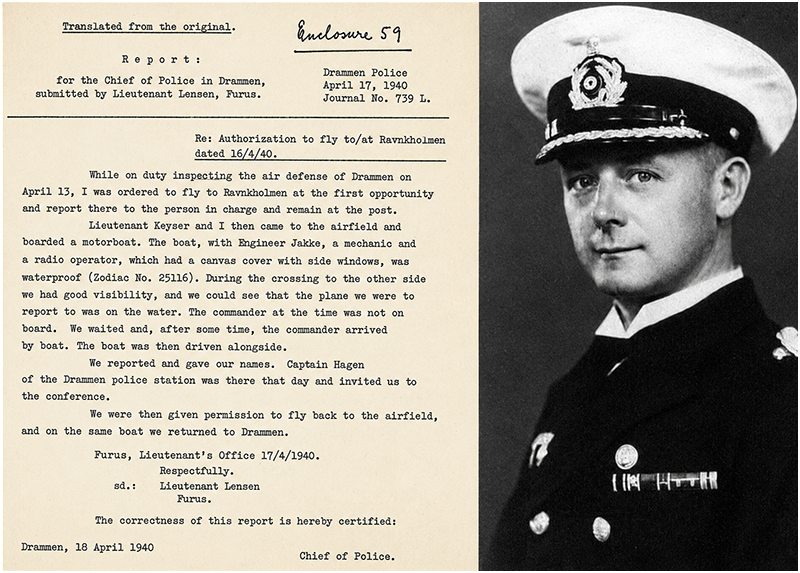
Heinrich Woldag was a German naval officer who served in the Kriegsmarine during the Second World War. He is best remembered as the commanding officer of the heavy cruiser Blücher during Germany's invasion of Norway in April 1940, a mission that ended with the ship's destruction in the Oslofjord and Woldag's death a week later.
Career:
Woldag was born on 19 October 1892 in Rohrsheim, in what is now Saxony-Anhalt, Germany. He pursued a career in the German Navy, serving through the Imperial German Navy, the interwar Reichsmarine, and later the Kriegsmarine. Over the course of his career he rose to the rank of Kapitän zur See (Captain at Sea), a senior naval rank roughly equivalent to a navy captain.
Command of Blücher:
In 1940, Woldag commanded the heavy cruiser Blücher, one of the newest ships of the Admiral Hipper class. During Operation Weserübung, Germany's invasion of Norway, Blücher led the naval force assigned to seize Oslo by transporting troops and officials intended to secure the Norwegian capital quickly.
As the task force entered the narrow Oslofjord before dawn on 9 April 1940, Blücher came under fire from the Norwegian coastal defenses at Oscarsborg Fortress. Heavy gunfire and torpedoes inflicted catastrophic damage, causing the cruiser to sink. The loss delayed the German capture of Oslo, allowing the Norwegian government, royal family, and national gold reserves additional time to evacuate. This made the sinking of Blücher one of the most consequential naval actions of the Norwegian campaign.
Death:
Woldag survived the sinking of Blücher. However, while traveling back toward Germany several days later aboard a Junkers Ju 52 transport aircraft, he was killed when the aircraft crashed near the Oslofjord on 16 April 1940.
( click image to enlarge )
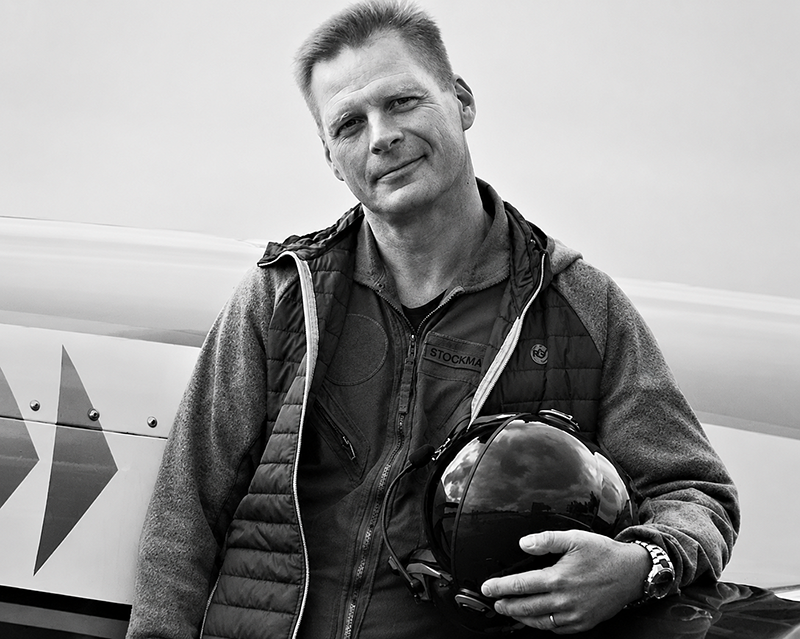
Sten Stockmann passed away on July 15, 2023, following an aerobatic aircraft accident during an airshow in Kouvola, Finland. (RIP)
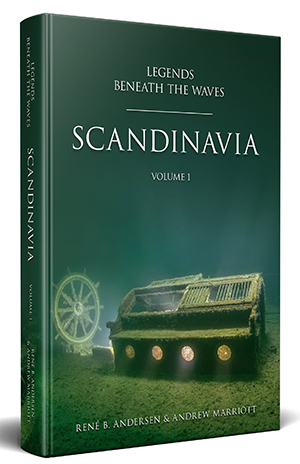
Legends Beneath the Waves: Scandinavia Vol. 1
Legends Beneath the Waves - Scandinavia is a two-volume collection of extraordinary underwater wreck photography from the cold, challenging waters of Scandinavia. Each image is backed by years of research, uncovering the dramatic histories behind these lost ships.
Strong currents, low visibility, and deep dive sites make this some of the most demanding wreck photography in the world. Capturing these images required advanced technical diving, rebreathers, and long decompression dives.
From Viking-era vessels to wartime casualties, Scandinavia’s seas hold centuries of maritime history. Preserved in dark, cold waters, these wrecks remain hauntingly intact - silent witnesses to battle, disaster, and survival.
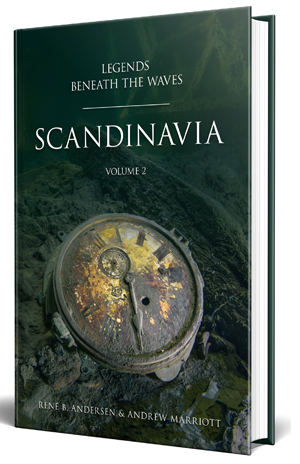
Legends Beneath the Waves: Scandinavia Vol. 2
Legends Beneath the Waves - Scandinavia is a two-volume collection of extraordinary underwater wreck photography from the cold, challenging waters of Scandinavia. Each image is backed by years of research, uncovering the dramatic histories behind these lost ships.
Strong currents, low visibility, and deep dive sites make this some of the most demanding wreck photography in the world. Capturing these images required advanced technical diving, rebreathers, and long decompression dives.
From Viking-era vessels to wartime casualties, Scandinavia’s seas hold centuries of maritime history. Preserved in dark, cold waters, these wrecks remain hauntingly intact - silent witnesses to battle, disaster, and survival.
This book reveals a hidden world beneath the surface and brings Scandinavia’s underwater legends back to life.







 The Drøbak Strait was reached at 5:00 a.m. Ahead, in the middle of the narrow channel, lay the Norwegian fortress Oscarsborg. The commander of the fortress, Colonel Birger K. Eriksen, had already been awaiting the approaching German fleet for several hours when the silhouette of the flagship Blücher finally came into view. Knowing that his guns were outdated and that his crew was inexperienced, Eriksen allowed the ship to come closer before giving the order to fire. The vessels were already frighteningly close when he finally commanded, "Fire!"