For Aldo Ferrucci, the camera has never been the destination—it has always been the natural extension of a lifetime spent exploring the underwater world.
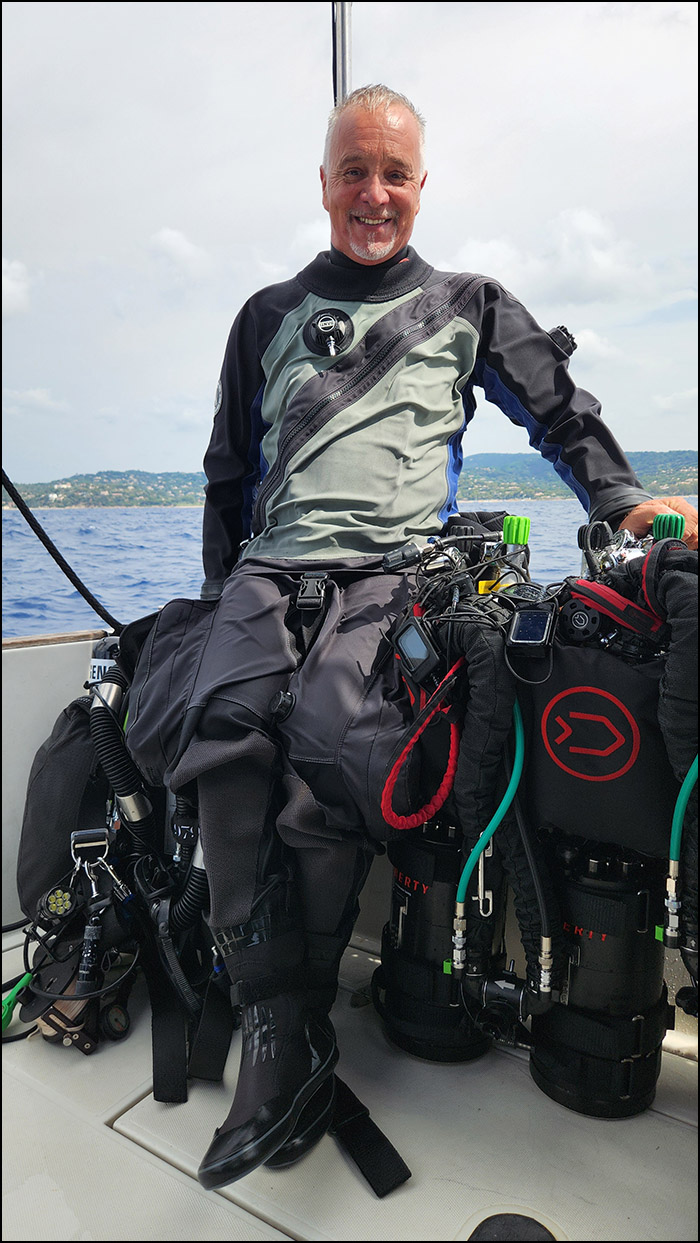
Widely respected throughout the technical diving community as an instructor, expedition leader, and rebreather specialist, Ferrucci has dedicated decades to advancing diver education while encouraging others to safely explore some of the world's most extraordinary underwater environments. His photographs are not simply beautiful images; they are authentic moments captured by someone who has spent a lifetime immersed in the places most people will never experience.
Aldo's journey beneath the surface began at an early age and eventually evolved into a career that has influenced countless divers around the world. Through years of exploration, training, and international expeditions, he has become known for his calm professionalism, extensive experience, and passion for sharing the underwater world with others.
As Aldo explains:
"I have been diving practically all my life and have been a technical and rebreather instructor for 30 years. I organize diving expeditions around the world, primarily for rebreather divers. While I am not a professional underwater photographer, capturing underwater scenes and documenting my travels is a passion that allows me to effectively share my love for the underwater environment—and the importance of protecting it—with as many people as possible, whether they are divers or not."
That philosophy is evident throughout every image featured in this collection. Rather than seeking dramatic effects or heavily manipulated compositions, Ferrucci creates photographs that tell honest stories about exploration. Whether documenting a historic shipwreck, an untouched cave, vibrant marine life, or the subtle beauty found in clear blue water, each photograph reflects the perspective of an explorer first and a photographer second.
His work reminds us that underwater photography is about far more than technical perfection. It is about preserving fleeting moments, inspiring curiosity, and encouraging respect for environments that remain largely unseen by the world above the surface.
Over the course of thousands of dives, Ferrucci has explored some of the planet's most remarkable dive destinations, leading expeditions that combine adventure, education, and conservation. His images serve as both a visual record of those experiences and an invitation for others to discover the incredible diversity of the underwater world responsibly.
( Click Image to Enlarge )
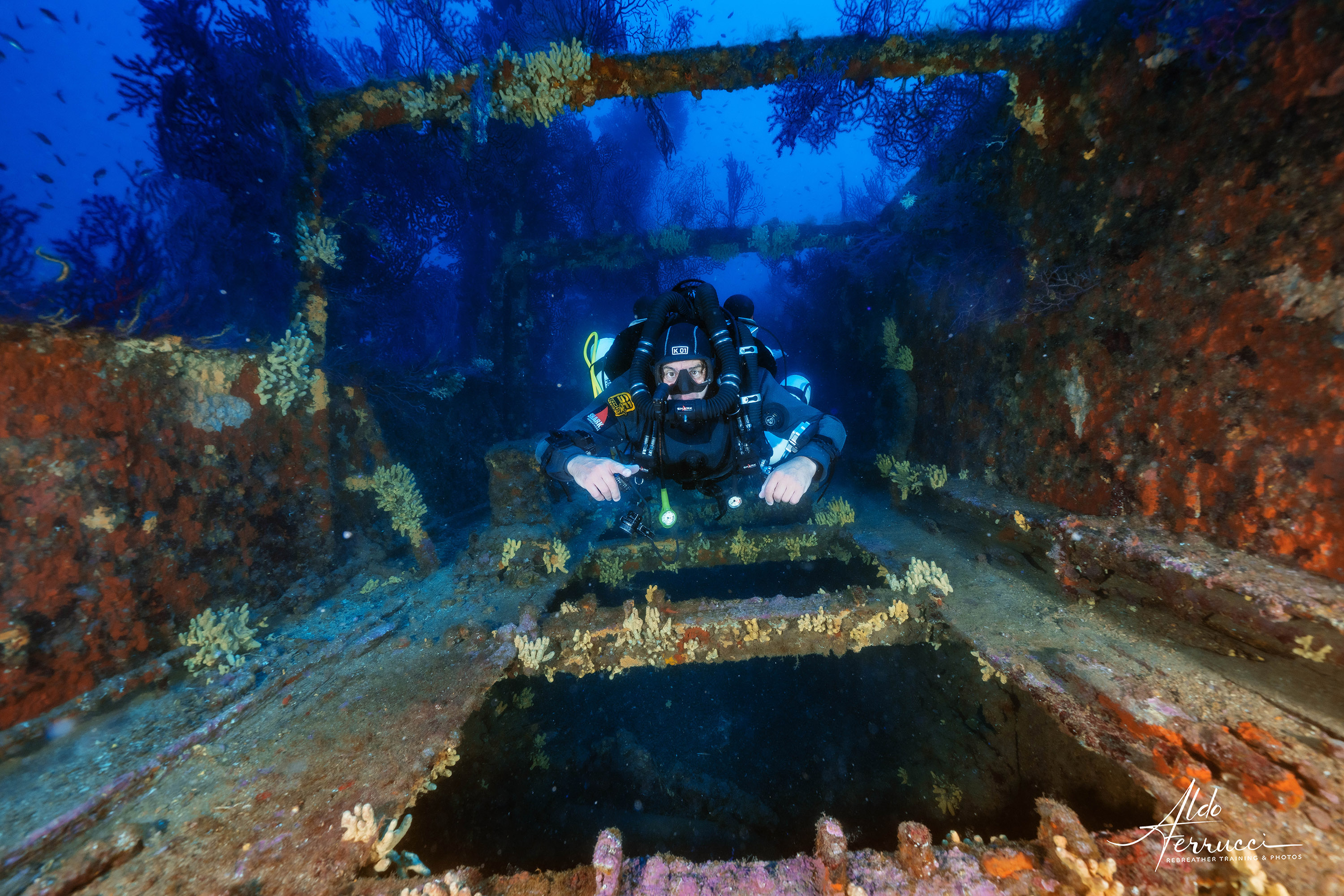
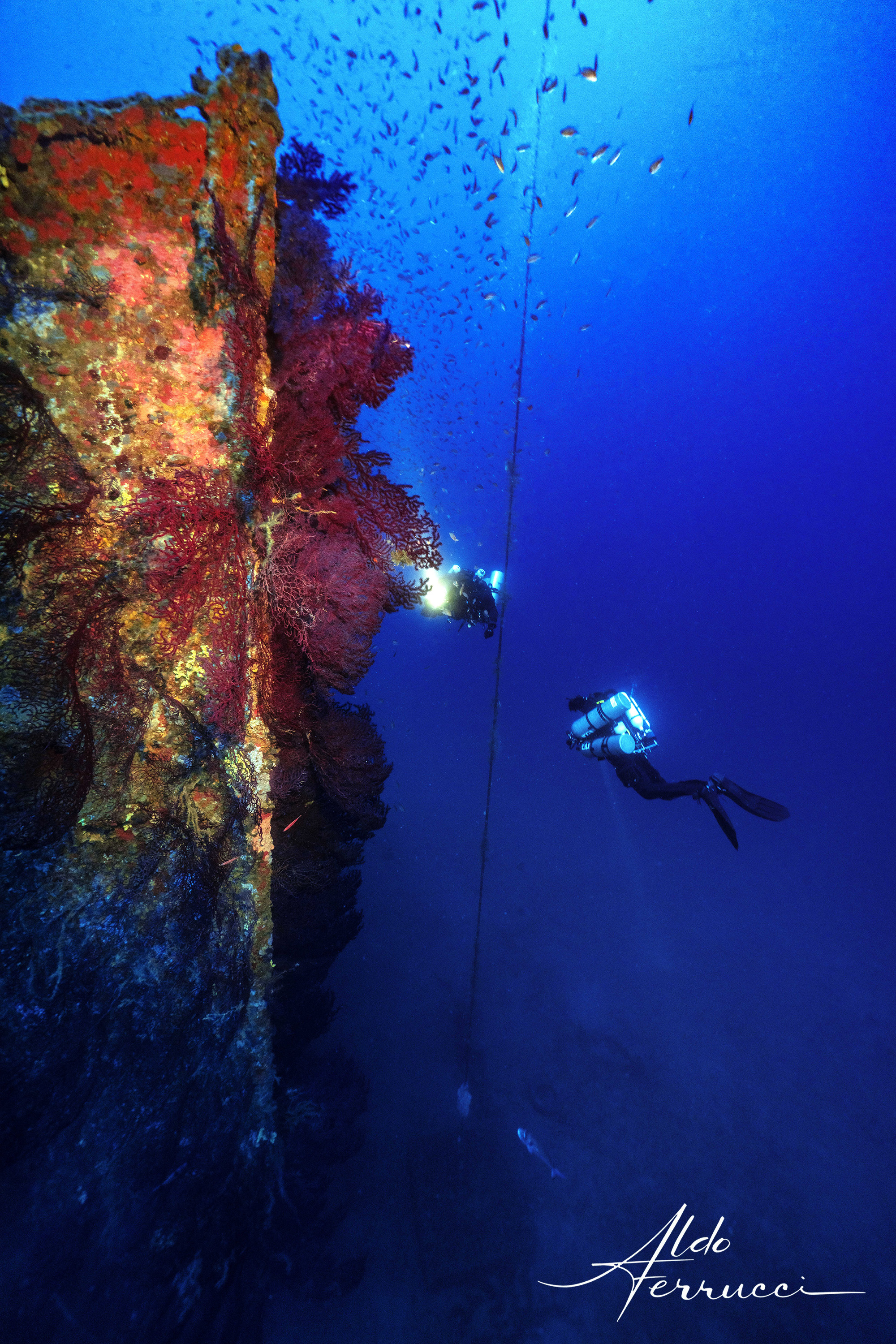
Togo Wreck, Cavalaire-sur-Mer, France — Technical diver Michael Fineschi hovers above the deck of the Togo, a 78-meter (256-foot) steamship that struck a German mine and sank on May 12, 1918. Resting in 42 to 68 meters (138–223 feet) of water, the wreck is now draped in colorful red gorgonian sea fans, making it one of the Mediterranean's most iconic deep wreck dives.
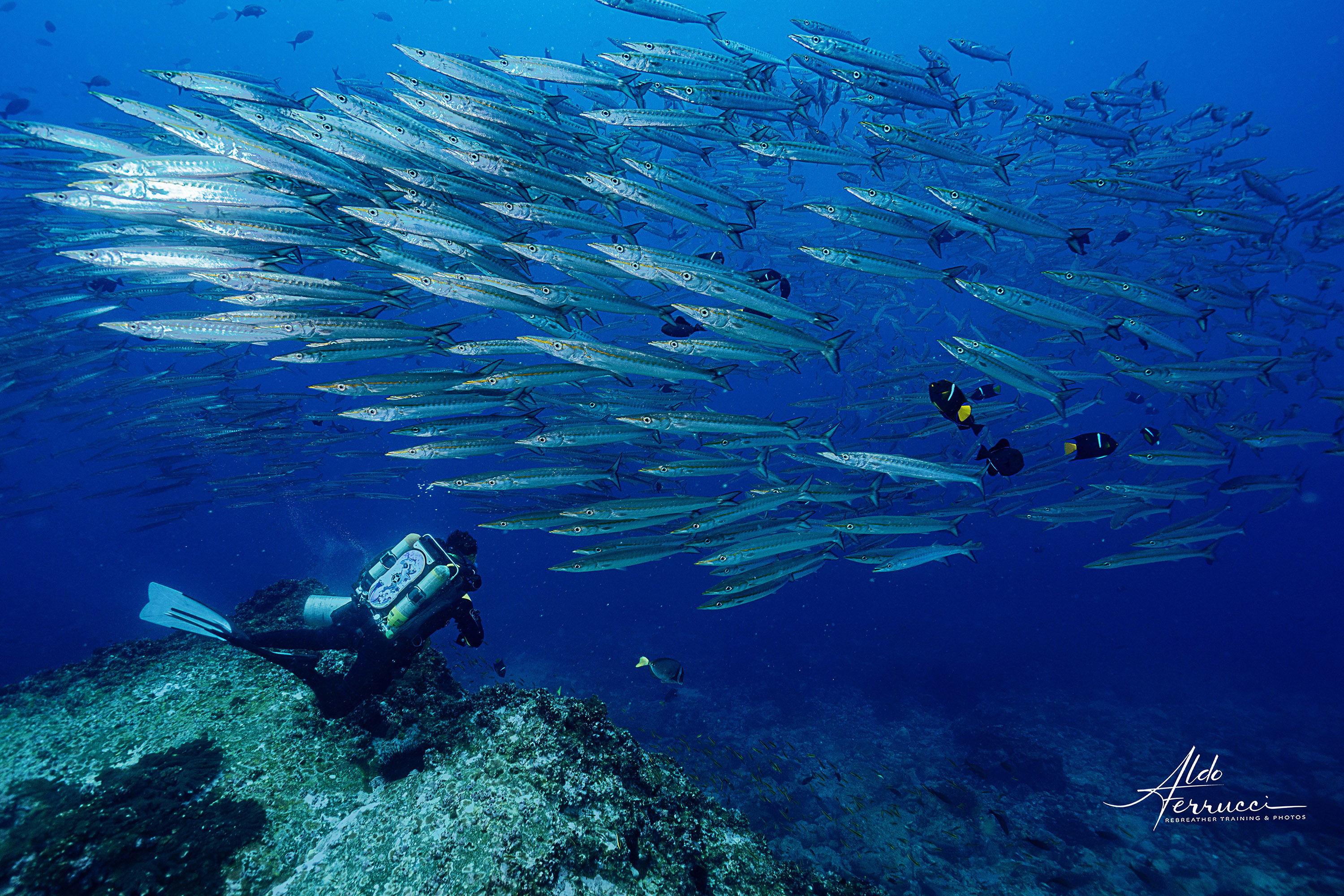
Isla Malpelo, Colombia — CCR diver Silvia Sotgia pauses on the volcanic reef beneath a swirling school of barracuda at Isla Malpelo, one of the world's most celebrated shark-diving destinations. Located more than 300 miles (500 km) off Colombia's Pacific coast, the UNESCO World Heritage Site is renowned for its dramatic underwater cliffs, powerful currents, and extraordinary concentrations of pelagic marine life.
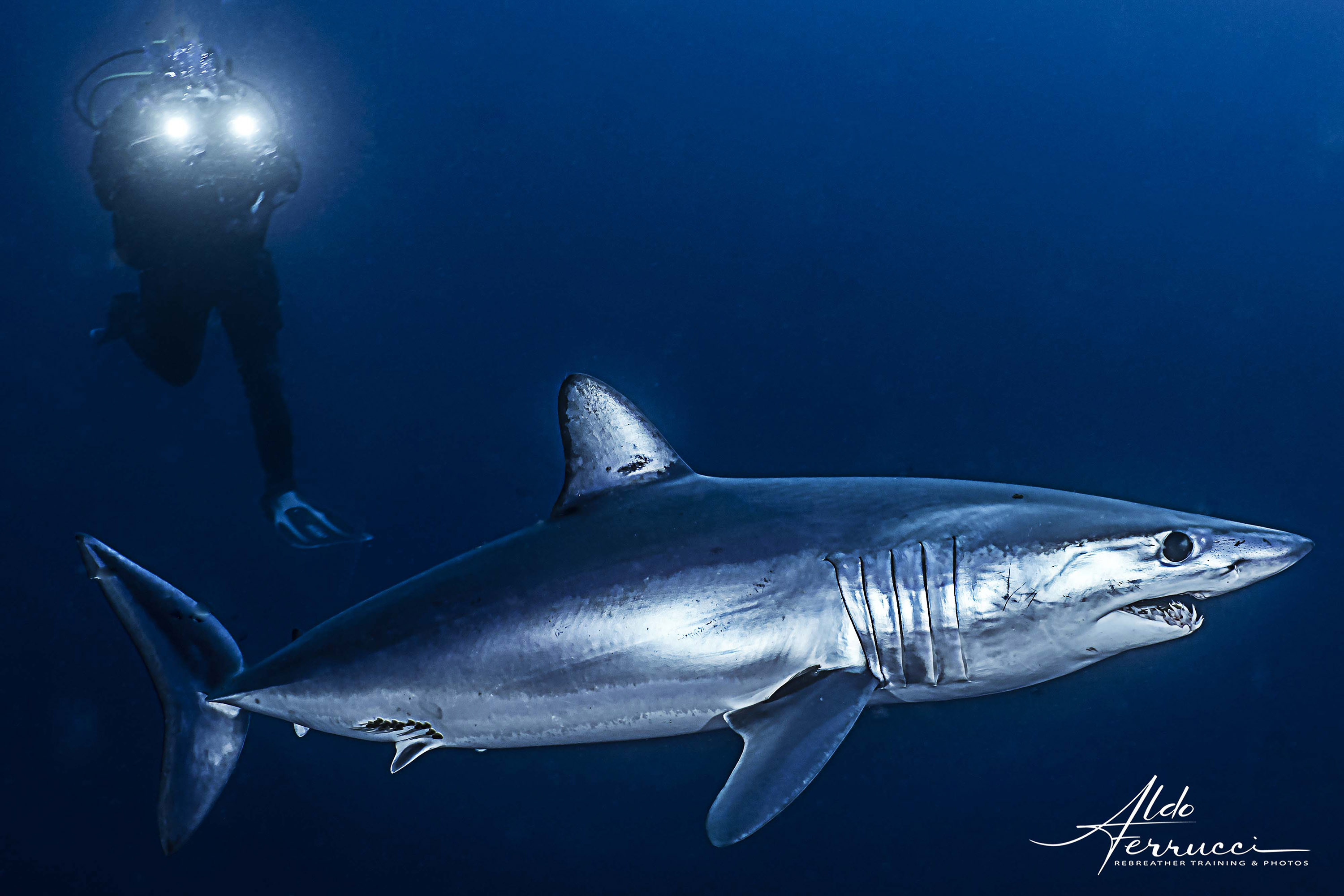
Shortfin Mako Shark (Isurus oxyrinchus) — A sleek shortfin mako glides effortlessly through the blue waters off Cape Town, South Africa, while a diver observes from a respectful distance. Capable of bursts exceeding 45 mph (72 km/h), the shortfin mako is considered the fastest shark in the ocean and one of its most powerful pelagic predators.
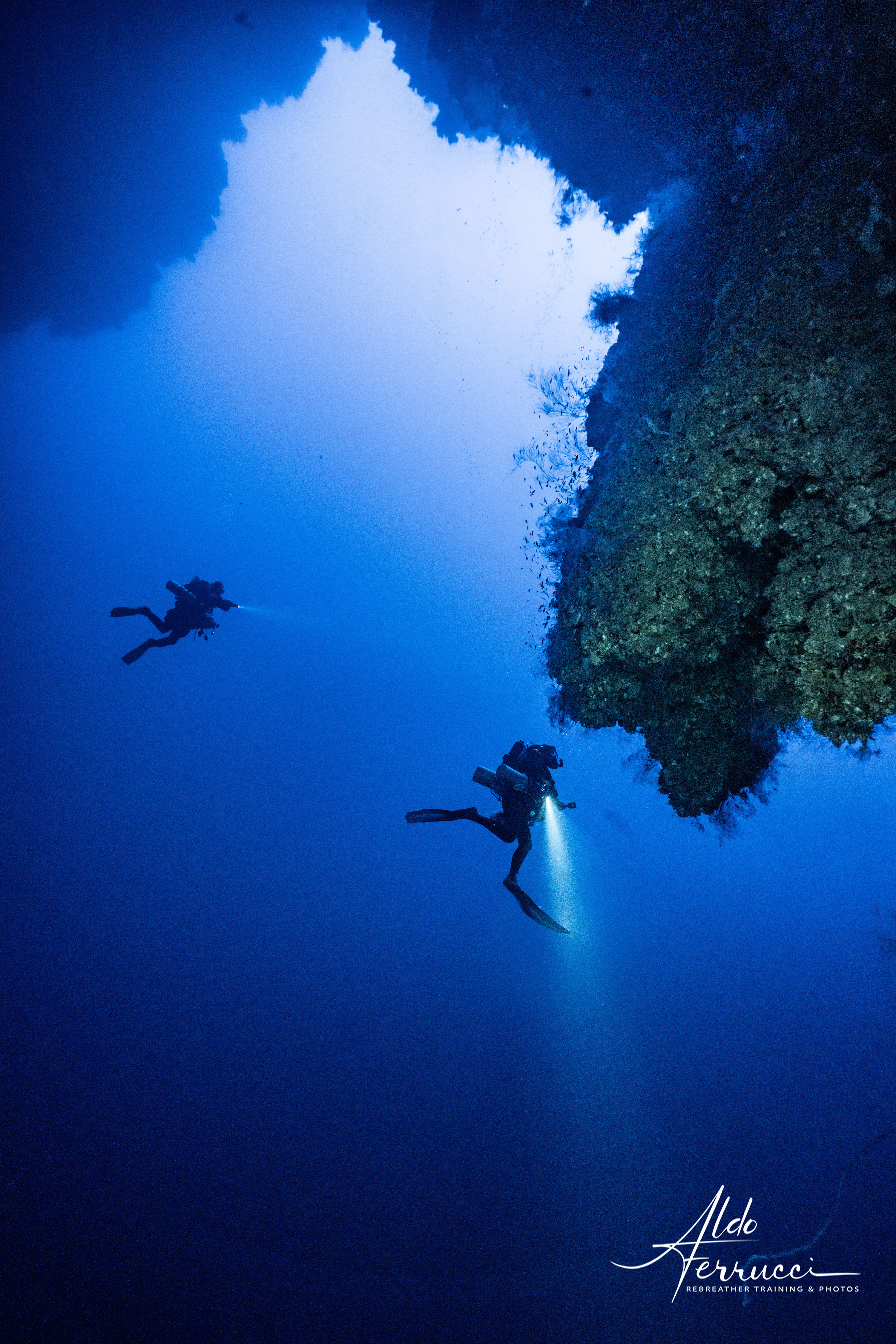
Blue Hole, Dahab, Egypt — Technical divers Silvia Sotgia and Niko Ismael descend along the dramatic vertical walls of the Blue Hole in Dahab, one of the world's most iconic deep diving destinations. This spectacular marine sinkhole, plunging to more than 120 meters (394 feet), is renowned for its crystal-clear visibility, towering limestone walls, and the legendary Arch that has made it a mecca for experienced technical divers.
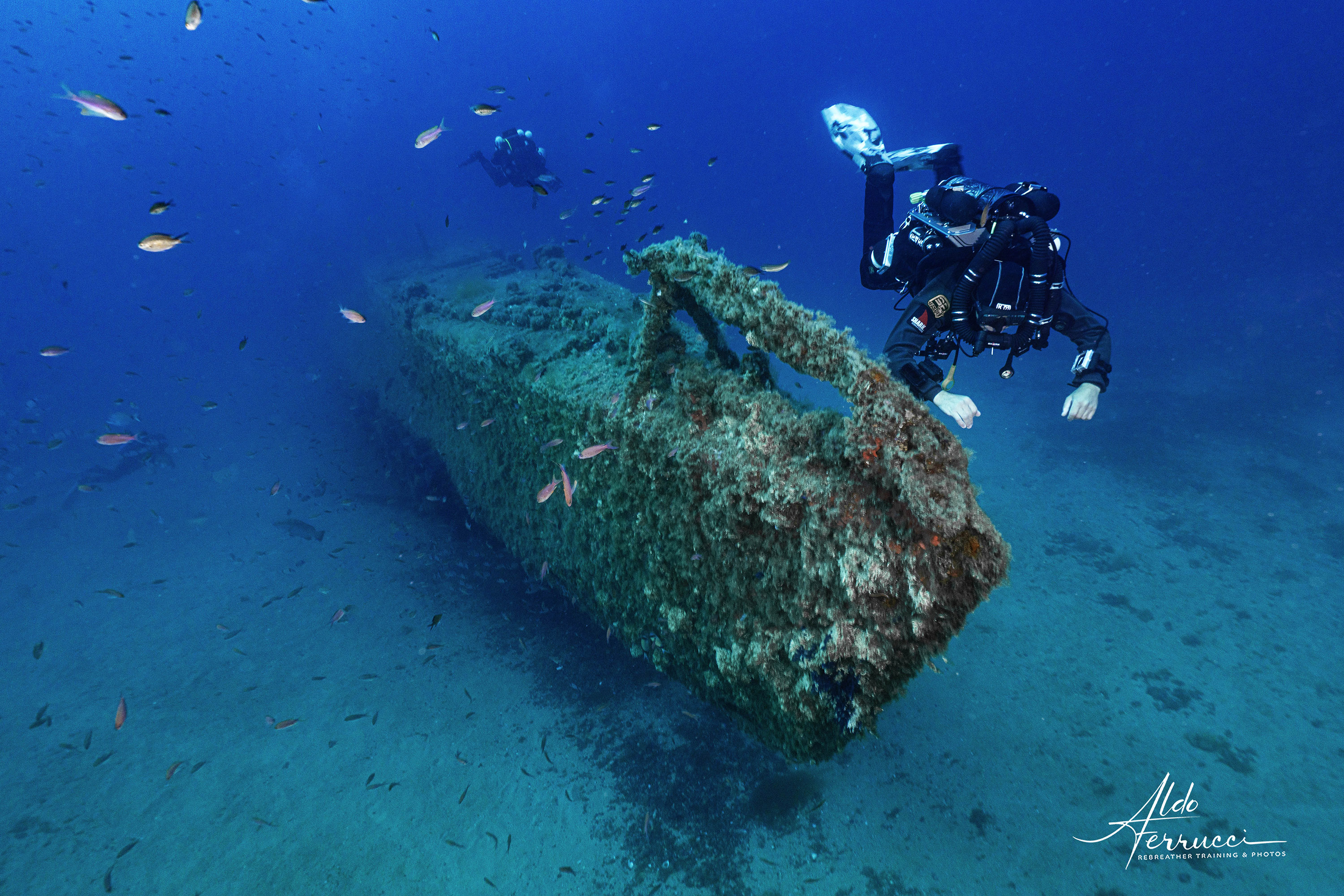
Rubis Submarine Wreck, Cavalaire-sur-Mer, France — A CCR diver explores the remarkably preserved wreck of the Rubis, the legendary French Saphir-class minelaying submarine that became the most successful submarine of the Free French Navy during World War II. Deliberately scuttled in 1958 after an extraordinary combat career, the 66-meter (217-foot) submarine now rests upright in approximately 40 meters (131 feet) of water, where it has evolved into one of the Mediterranean's most iconic wreck dives.
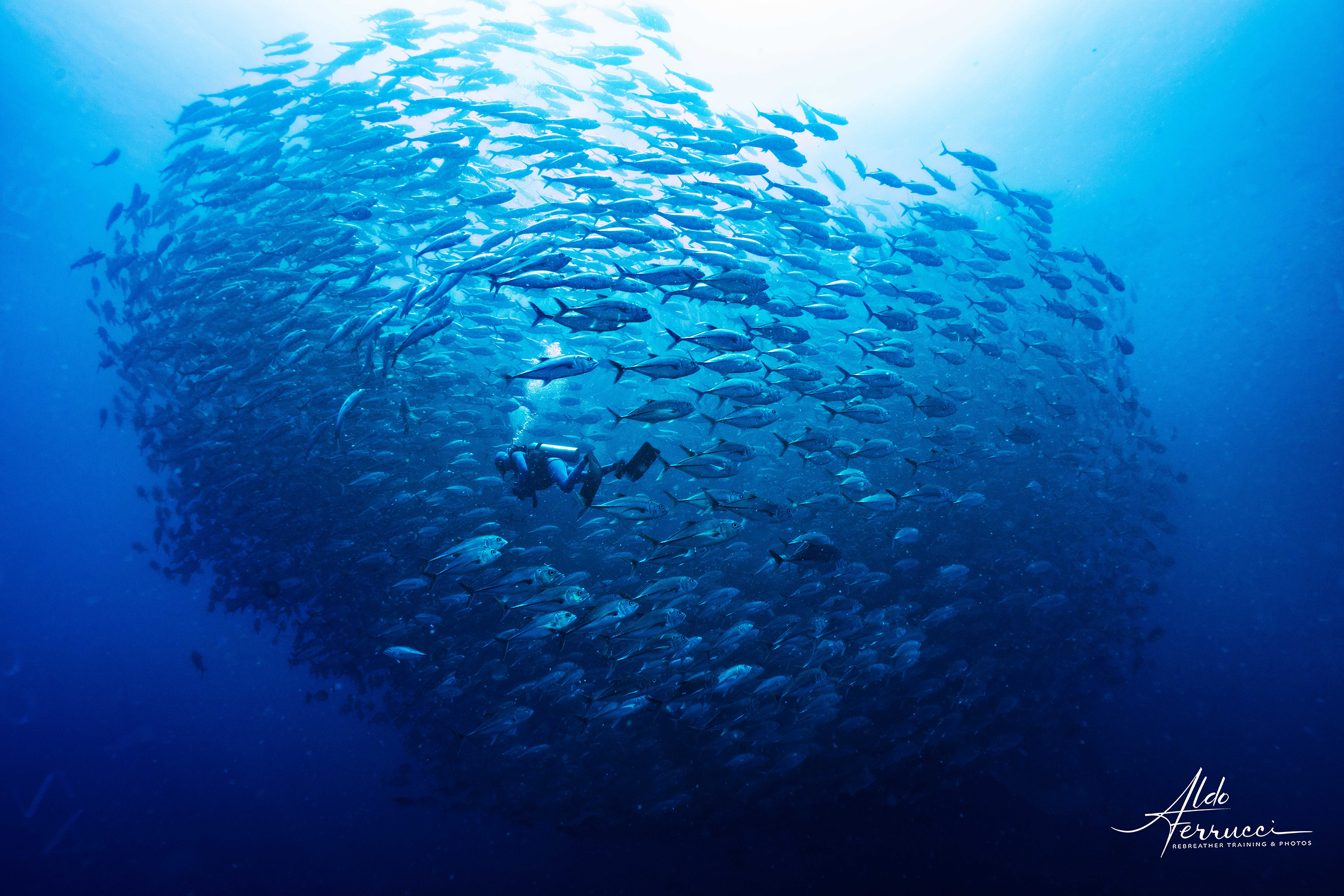
Isla Malpelo, Colombia — Diver Sandra Bessudo swims through a massive swirling school of jacks at Isla Malpelo, Colombia, one of the world's most remote and celebrated pelagic diving destinations. More than 500 kilometers (310 miles) off Colombia's Pacific coast, this UNESCO World Heritage Site is renowned for its powerful currents, volcanic seamounts, and extraordinary concentrations of sharks and schooling fish.
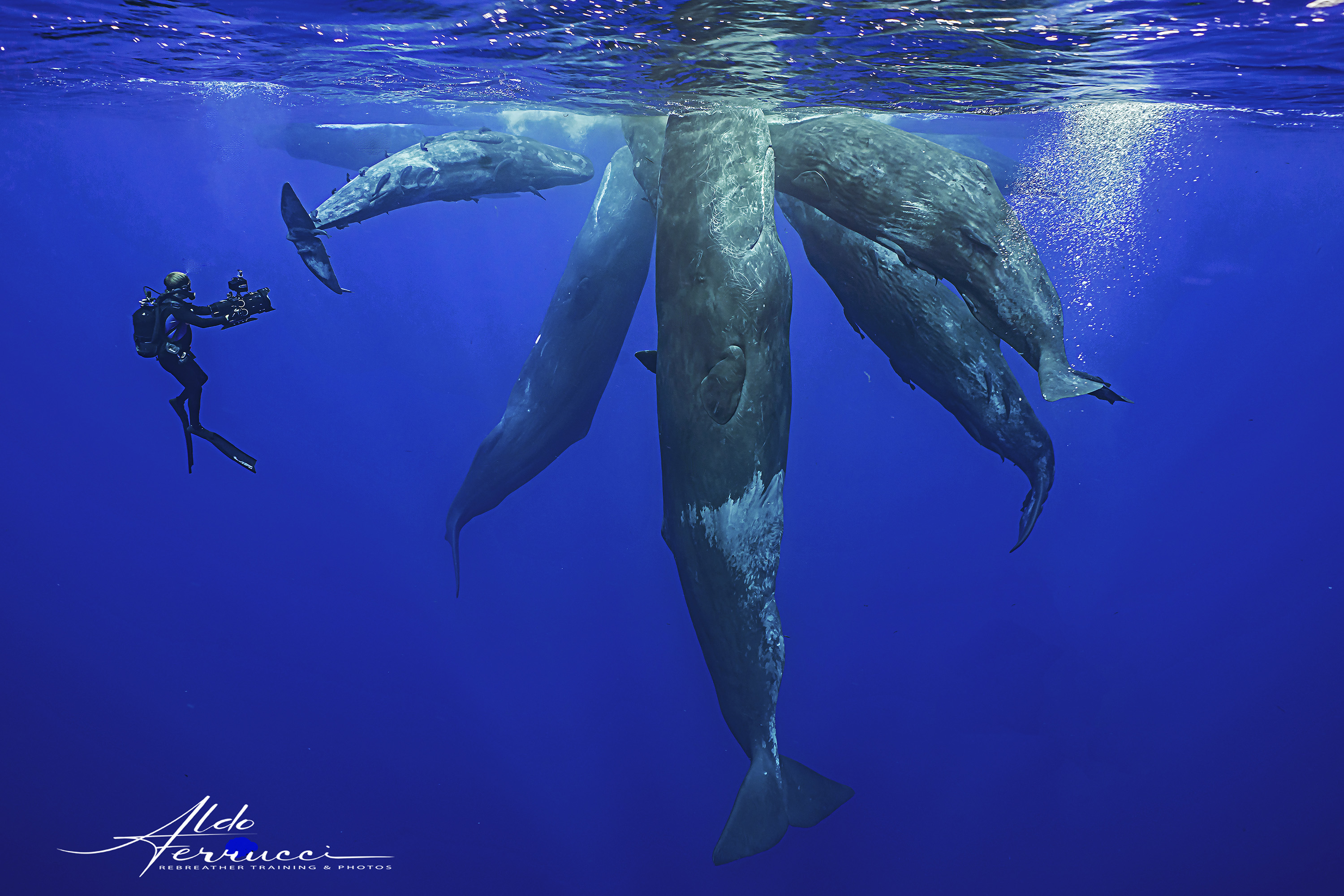
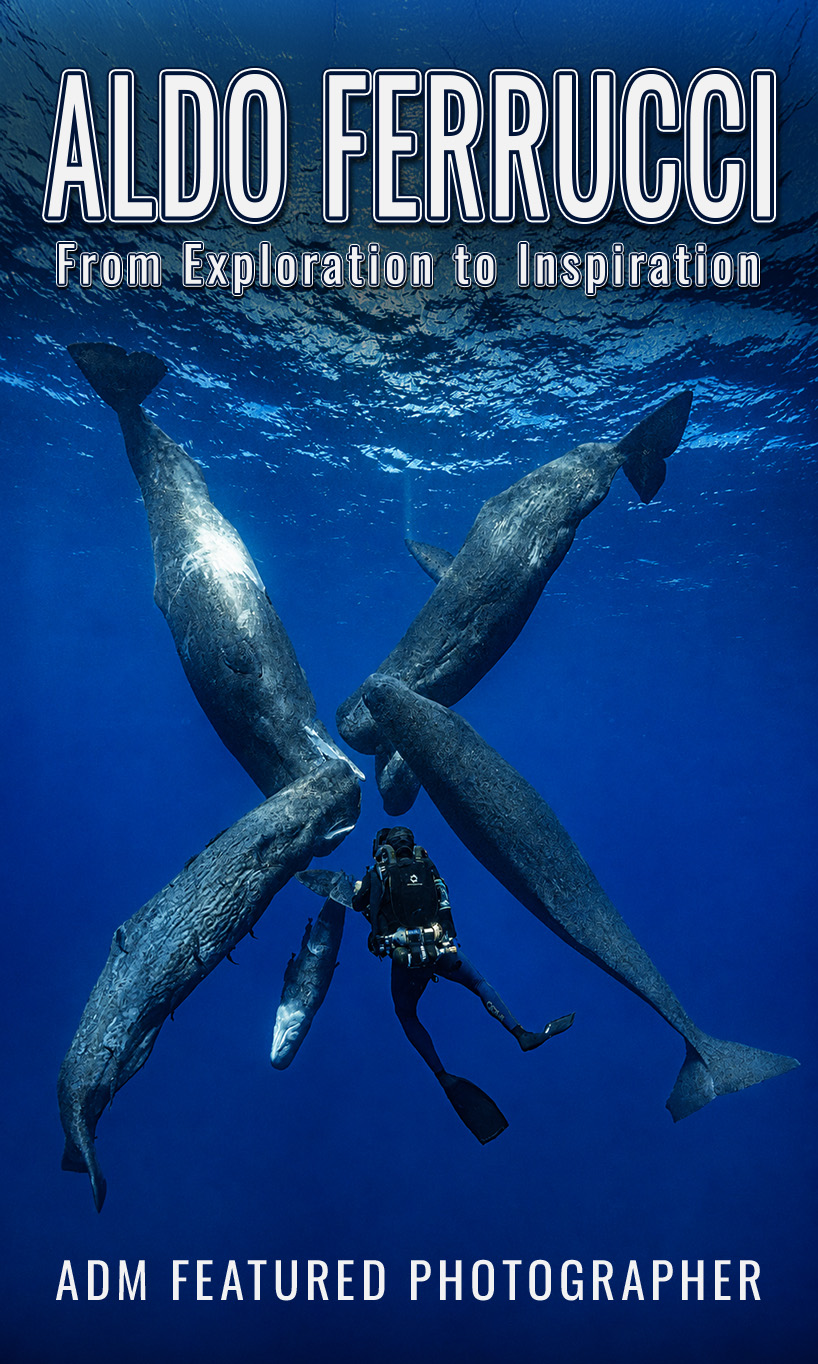
Mauritius — Wildlife filmmaker and diver René Heuzey documents an extraordinary gathering of sperm whales (Physeter macrocephalus) in the deep blue waters off Mauritius. Social by nature, sperm whales often rest, communicate, and care for their young in tightly knit family groups near the surface before descending together on deep foraging dives that can exceed 1,000 meters (3,280 feet).
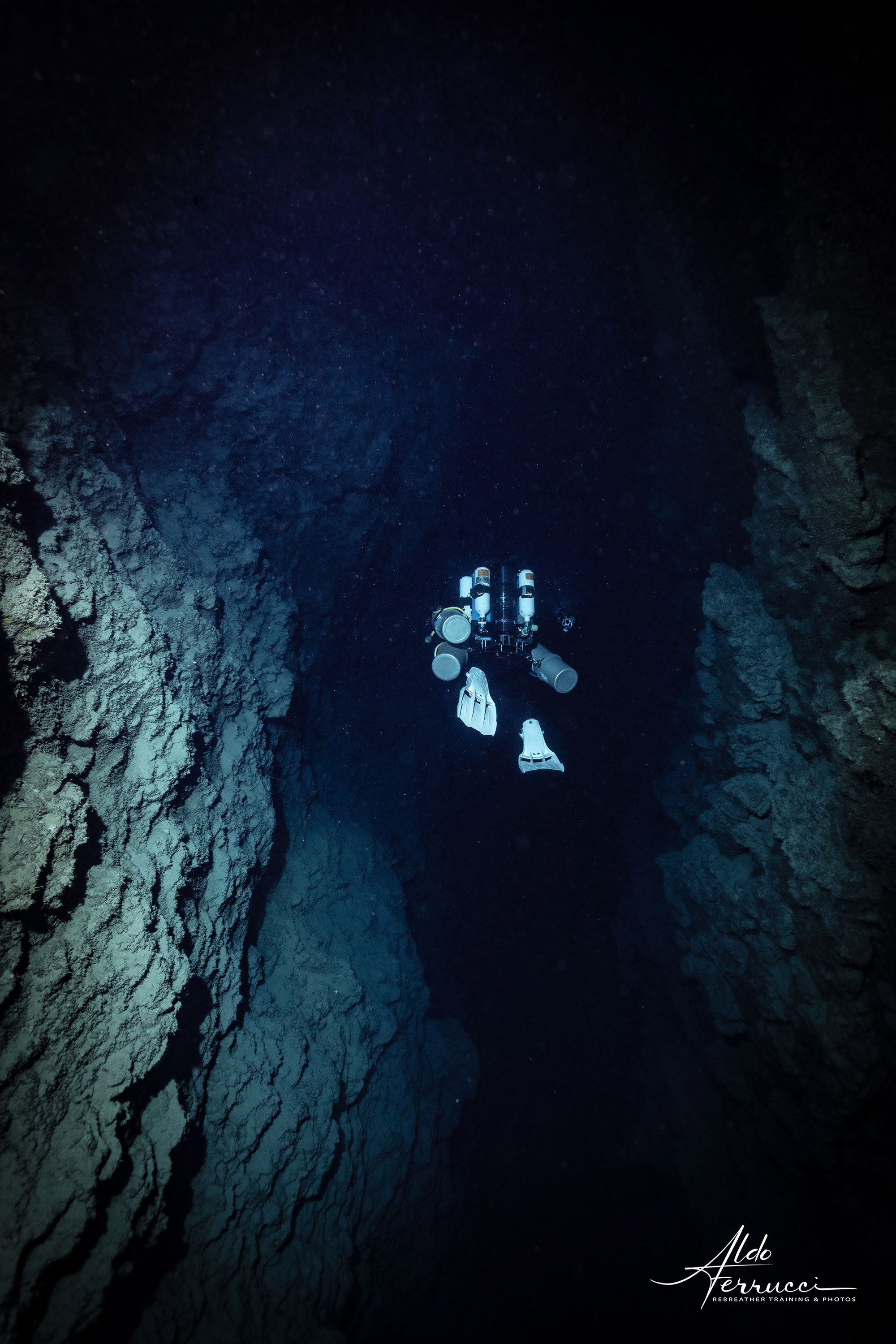
Devil's Doors, Abu Soma, Egypt — CCR diver Thomas Marchand descends into the dramatic volcanic fissures of Devil's Doors in the Abu Soma region of Egypt's Red Sea. A labyrinth of towering walls, narrow passages, and natural swim-throughs, the site is renowned for its exceptional visibility, striking geological formations, and opportunities for advanced exploration beneath one of the Red Sea's healthiest coral reef systems.
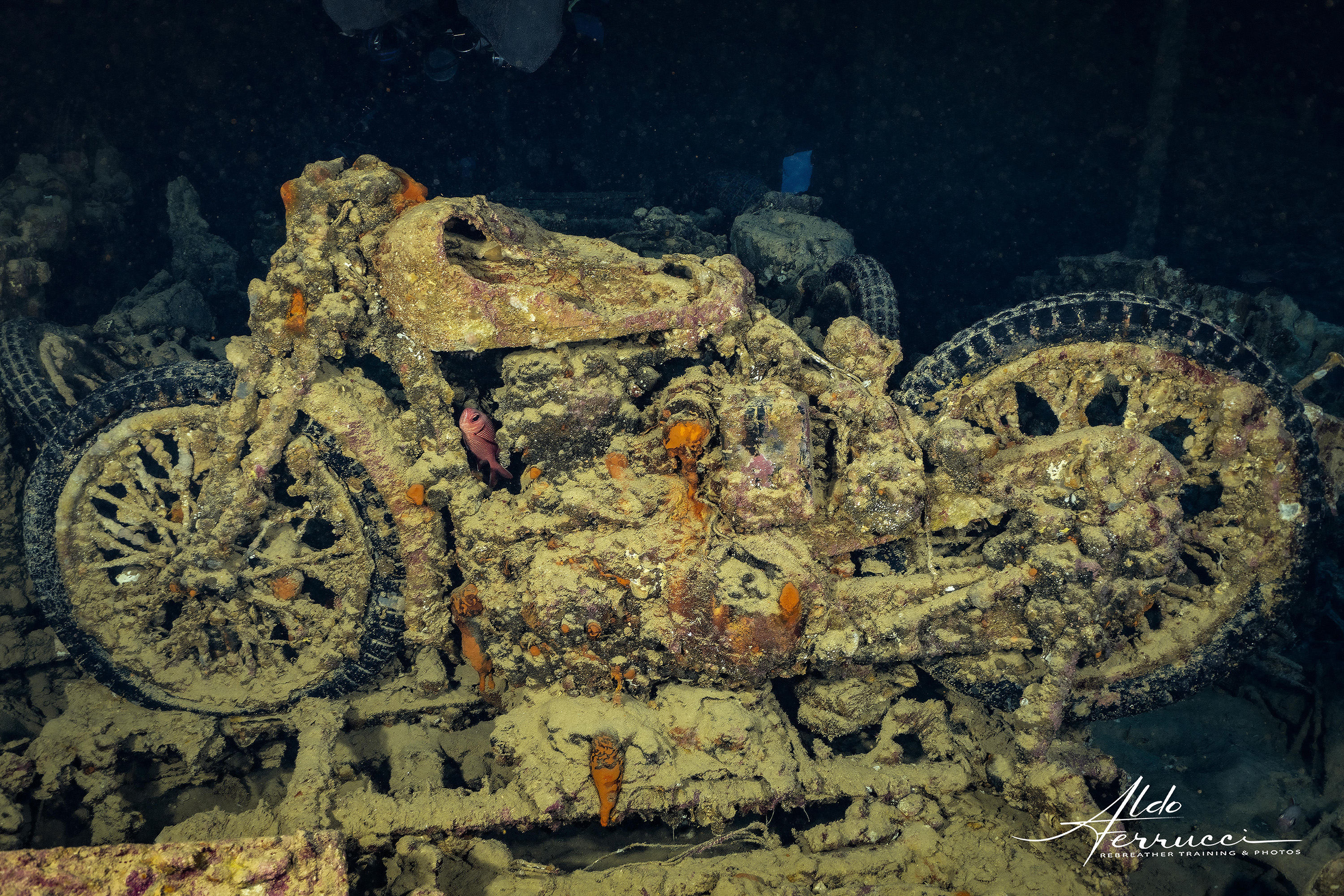
SS Thistlegorm, Red Sea, Egypt — A BSA M20 military motorcycle rests undisturbed within the cargo holds of the iconic SS Thistlegorm, preserved beneath decades of marine growth since the British armed merchant ship was sunk by German bombers in October 1941. Once destined for Allied forces in North Africa, these wartime motorcycles remain among the wreck's most recognizable artifacts, making the Thistlegorm one of the world's greatest historical wreck dives.
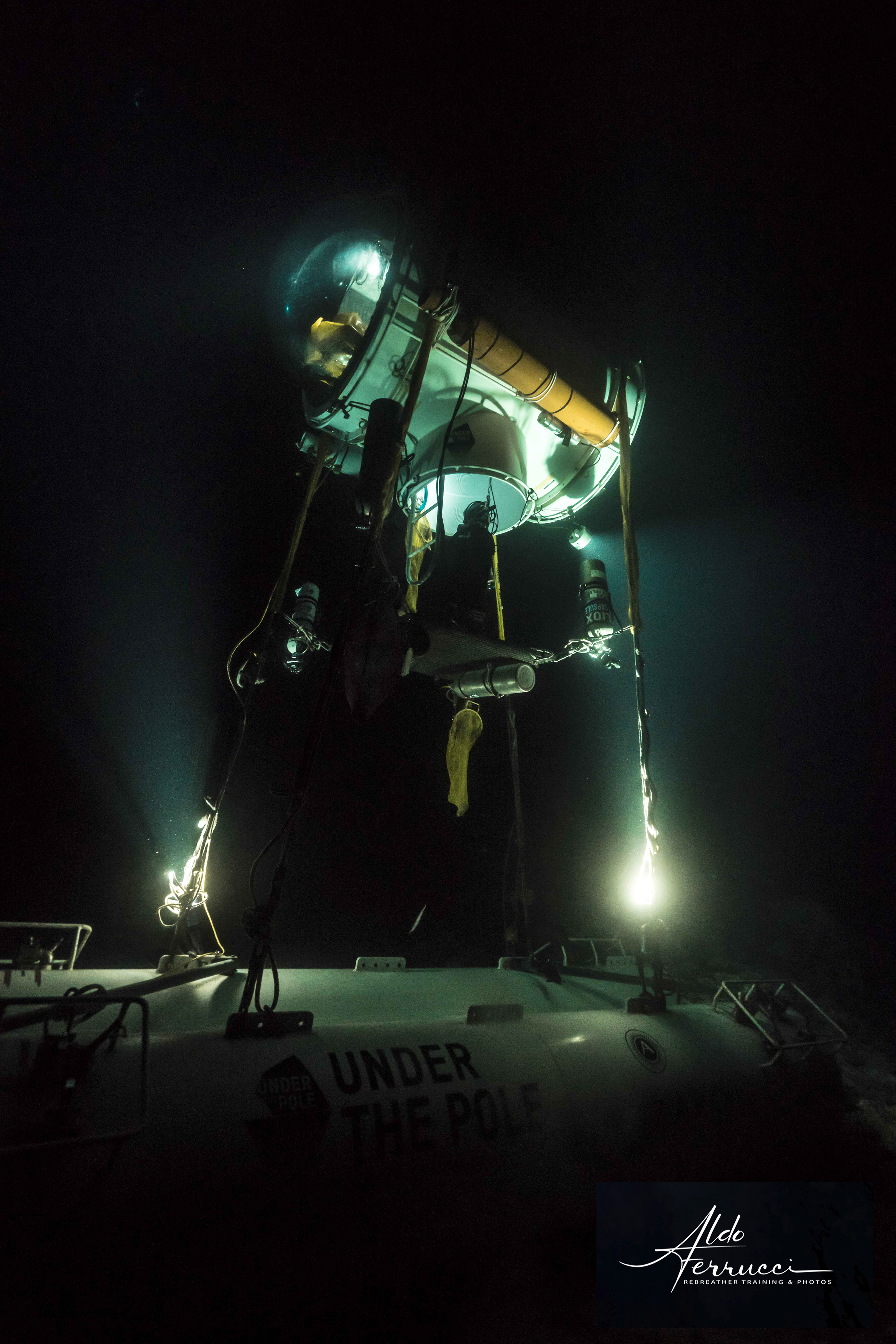
The Capsule Project "Under The Pole," Moorea, French Polynesia — The innovative Capsule Project habitat, part of the Under The Pole expedition, glows beneath the waters of Moorea, French Polynesia. Designed to support extended scientific diving missions, the underwater living capsule allows researchers to spend prolonged periods at depth, reducing repetitive decompression while studying coral reefs, marine ecosystems, and the physiological effects of saturation-style diving. The project represents a new frontier in underwater exploration, combining advanced engineering with marine science to expand humanity's ability to live and work beneath the sea.
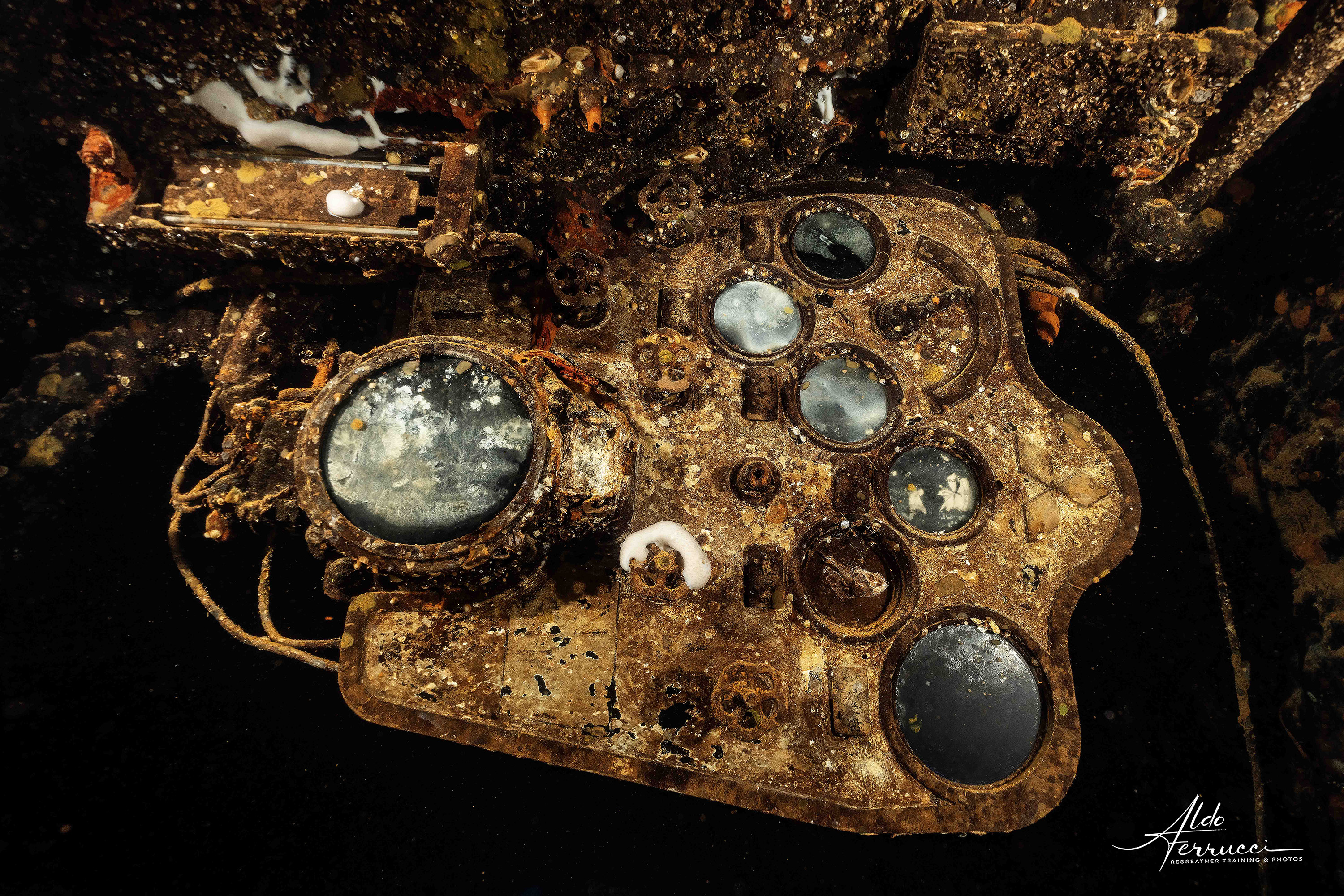
Chuuk Lagoon (Truk Lagoon), Federated States of Micronesia — Time stands still on the corroded engine room control panel of a Japanese ship resting beneath the waters of Chuuk Lagoon. Once used to monitor the vessel's machinery, the gauges are now encrusted with marine life, serving as a silent reminder of Operation Hailstone, the massive U.S. carrier strike in February 1944 that transformed the lagoon into one of the world's greatest collections of historic shipwrecks. Today, these remarkably preserved relics offer divers a rare glimpse into the engineering of Japan's wartime merchant fleet.
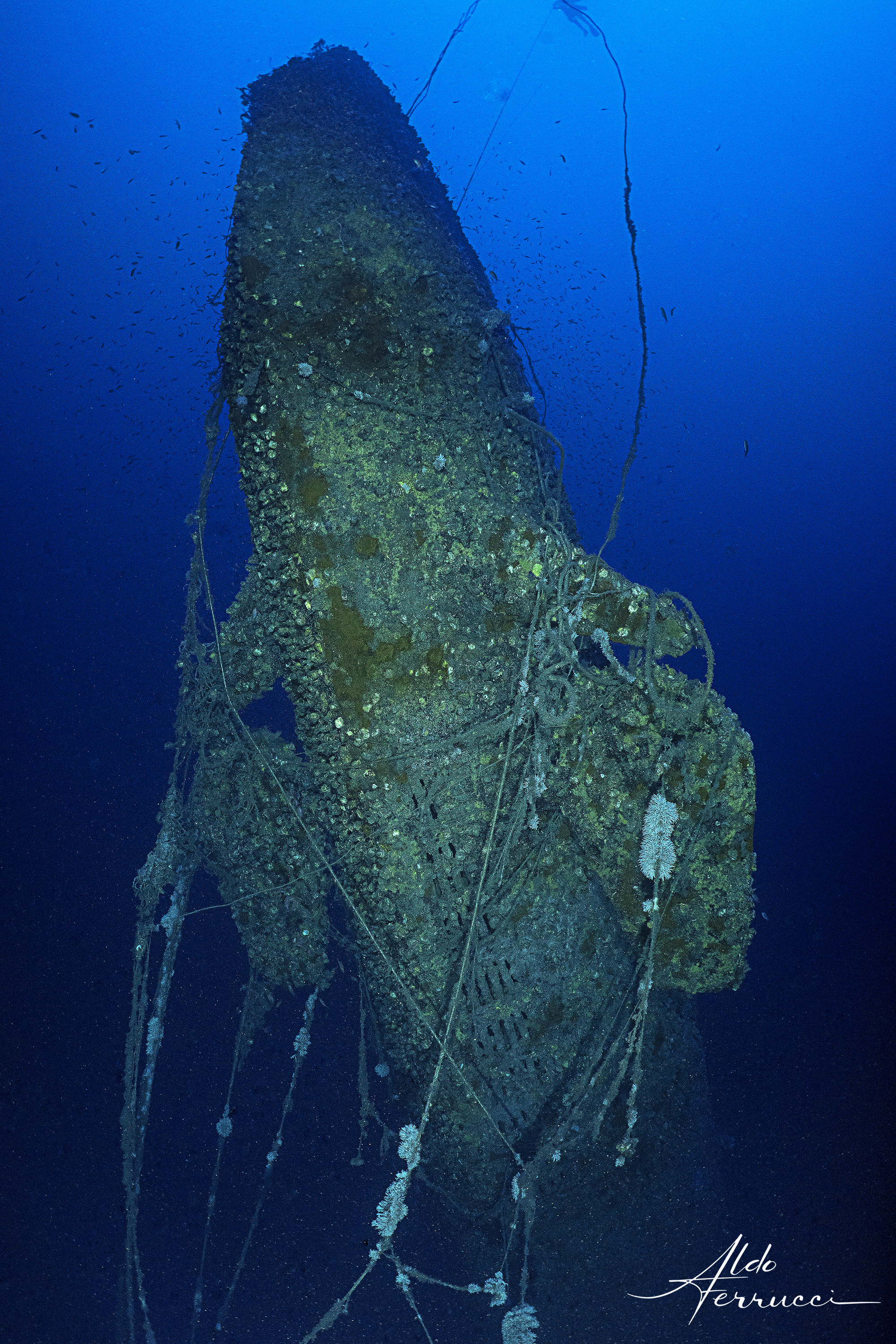
U-455, Camogli, Genoa, Italy — The towering stern of the German Type VIIC submarine U-455 rises from the depths off Camogli, Genoa, Italy, where the wreck has rested since disappearing during a patrol in April 1944. Believed to have been lost to a minefield, the submarine was discovered decades later remarkably intact at a depth of approximately 120 meters (394 feet). Today, U-455 is one of the Mediterranean's most challenging and historically significant technical wreck dives, its encrusted hull serving as a solemn memorial to the 51 crewmen who were lost with the vessel.
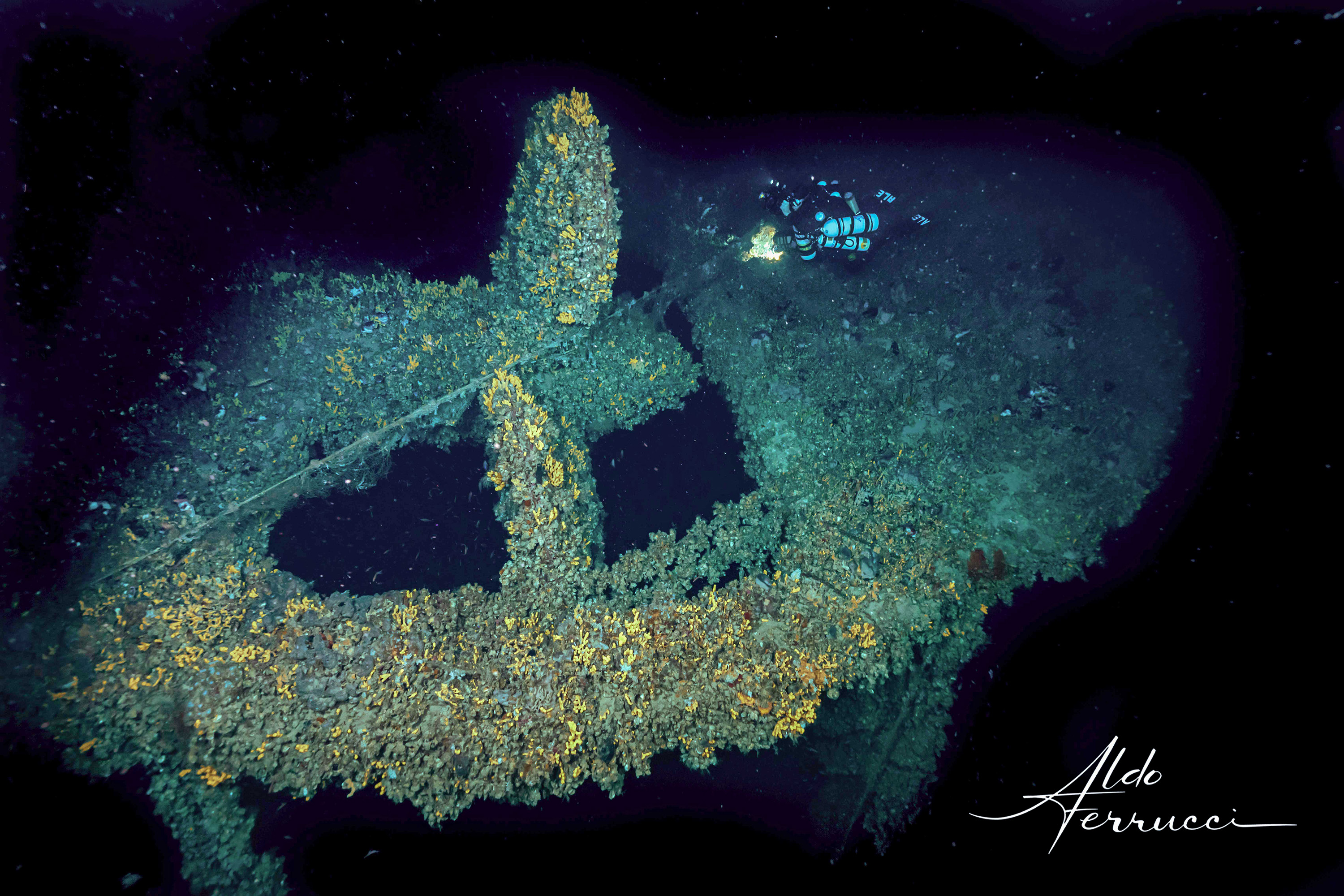
HMHS Britannic, Kea, Greece — One of the massive bronze propellers of the HMHS Britannic dominates the stern of the world's largest ocean liner resting on the seabed. Christian Rivolta explores the immense wreck off Kea, Greece, where the 48,158-ton hospital ship sank in November 1916 after striking a mine in the Aegean Sea. Measuring nearly 7 meters (23 feet) in diameter, Britannic's propellers remain among the most iconic features of this legendary deep-water wreck and stand as enduring symbols of the Titanic's larger sister ship.
Togo Wreck, Cavalaire-sur-Mer, France — Ángel Caballero explores the historic wreck of the Togo, one of the Mediterranean's premier deep wreck dives. Originally launched in 1882 as the passenger steamer Ville de Valence, the vessel was later converted into an auxiliary warship before striking a German mine and sinking off the French Riviera in May 1918. Resting between 42 and 68 meters (138–223 feet), the remarkably preserved wreck has become a spectacular artificial reef and a favorite destination for technical divers exploring the rich maritime history of the Mediterranean.






 Widely respected throughout the technical diving community as an instructor, expedition leader, and rebreather specialist, Ferrucci has dedicated decades to advancing diver education while encouraging others to safely explore some of the world's most extraordinary underwater environments. His photographs are not simply beautiful images; they are authentic moments captured by someone who has spent a lifetime immersed in the places most people will never experience.