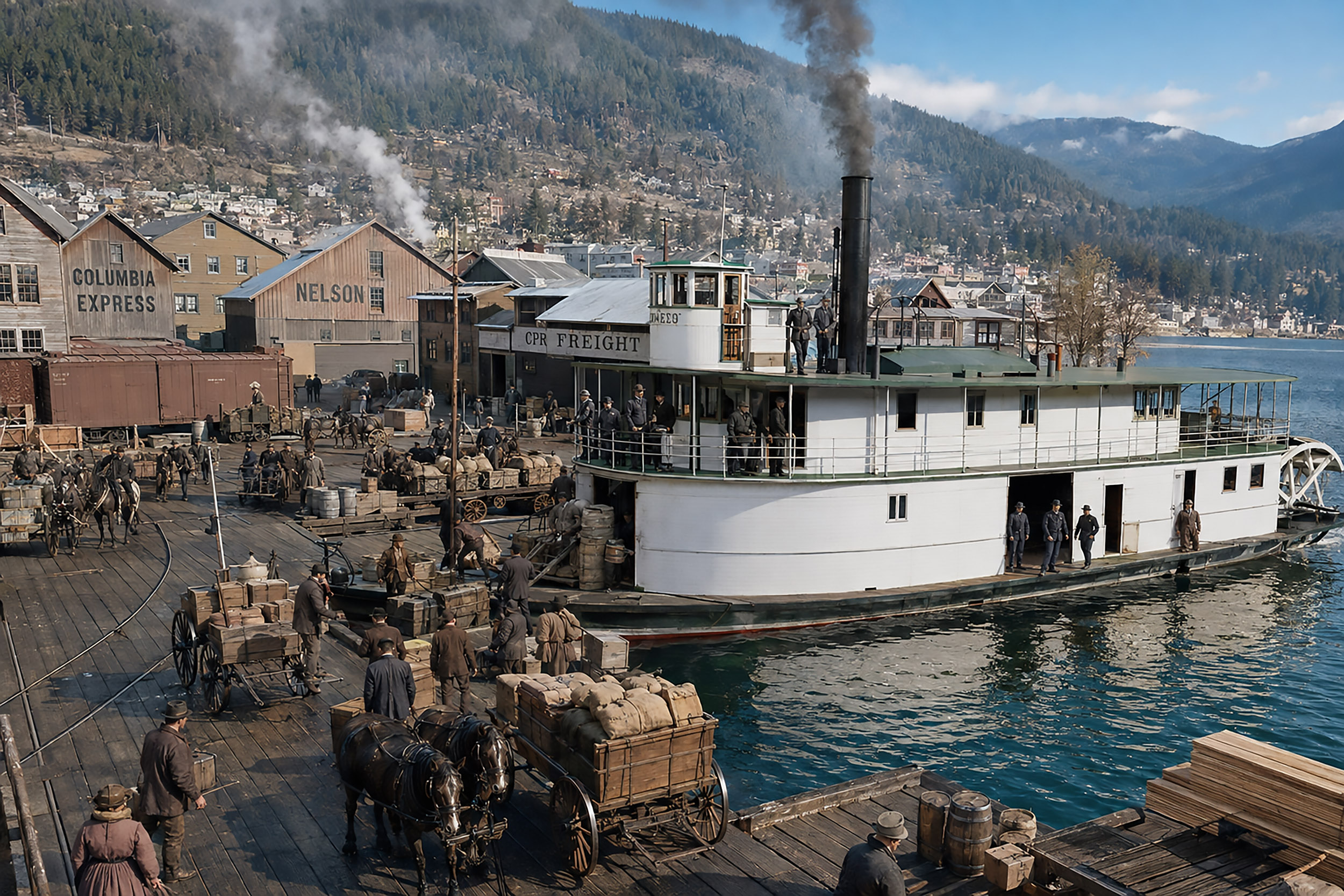
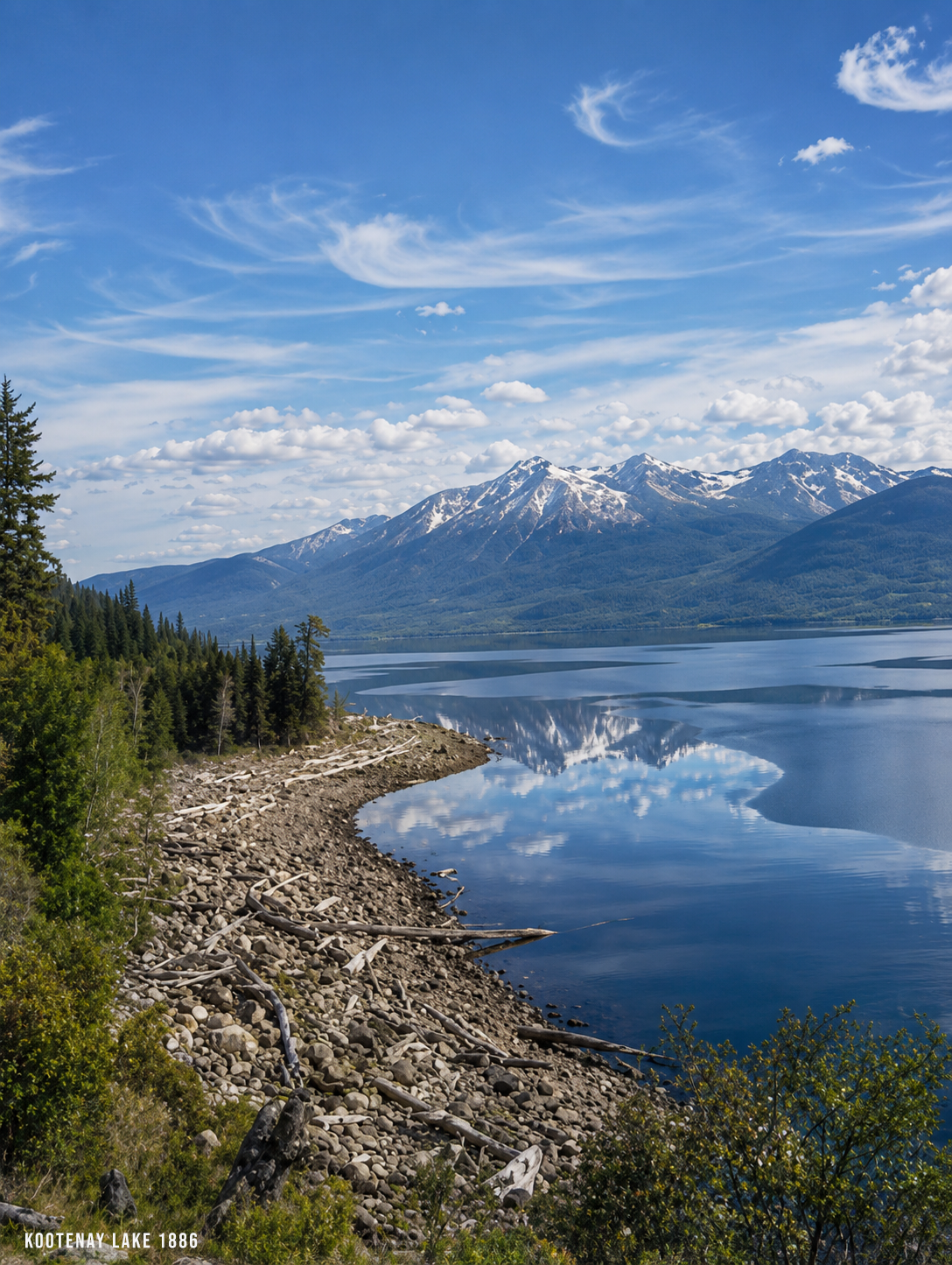
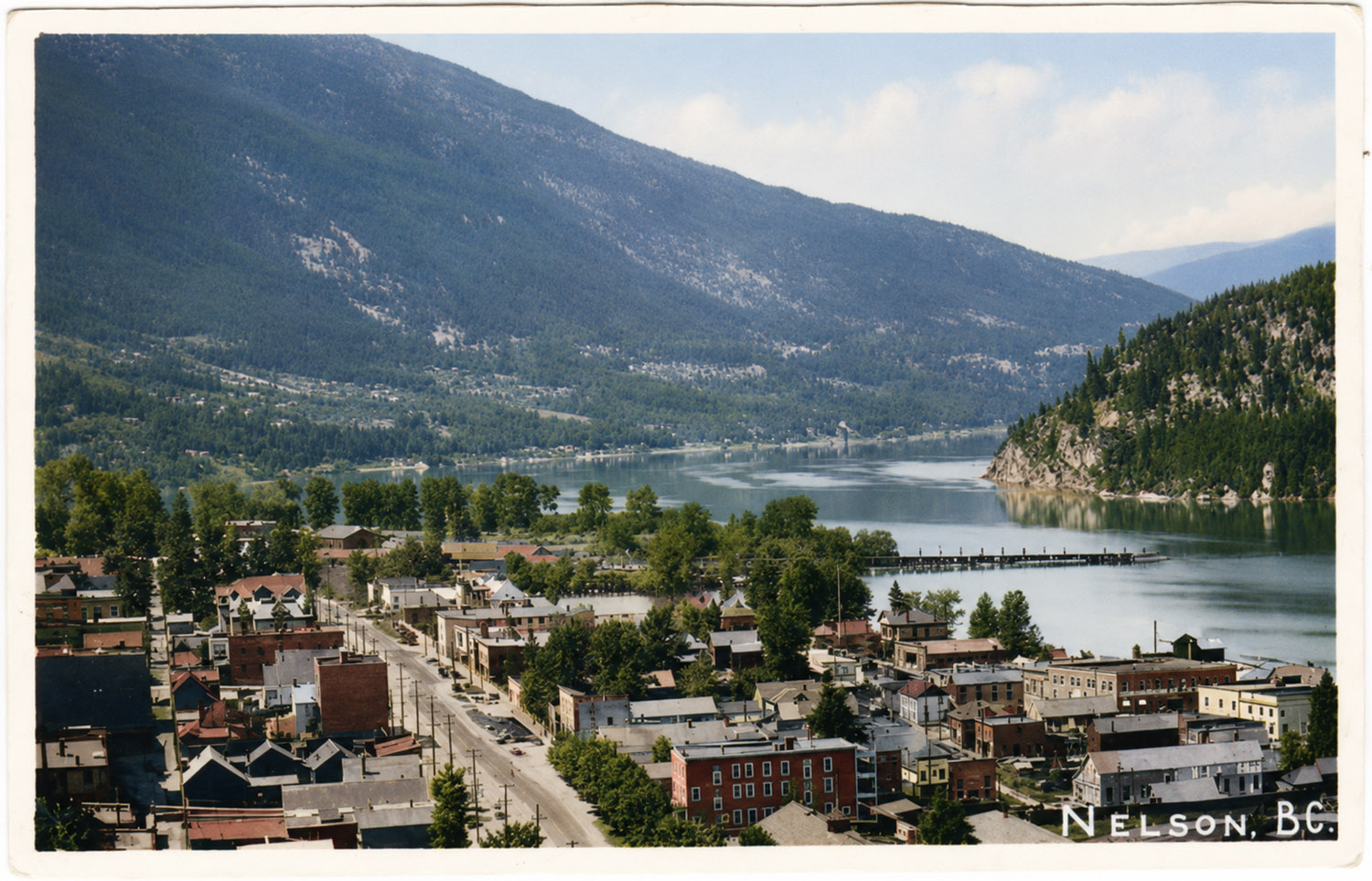
The first light of Tuesday, November 29, 1898, spread across the Selkirk Mountains as the waterfront of Nelson slowly came to life. Steam drifted from locomotives in the nearby rail yards while horse-drawn wagons rumbled across the cedar-planked wharves, delivering freight destined for communities scattered along Kootenay Lake. The sharp scent of fresh-cut timber mingled with coal smoke and the crisp mountain air, announcing the beginning of another busy day on the water.
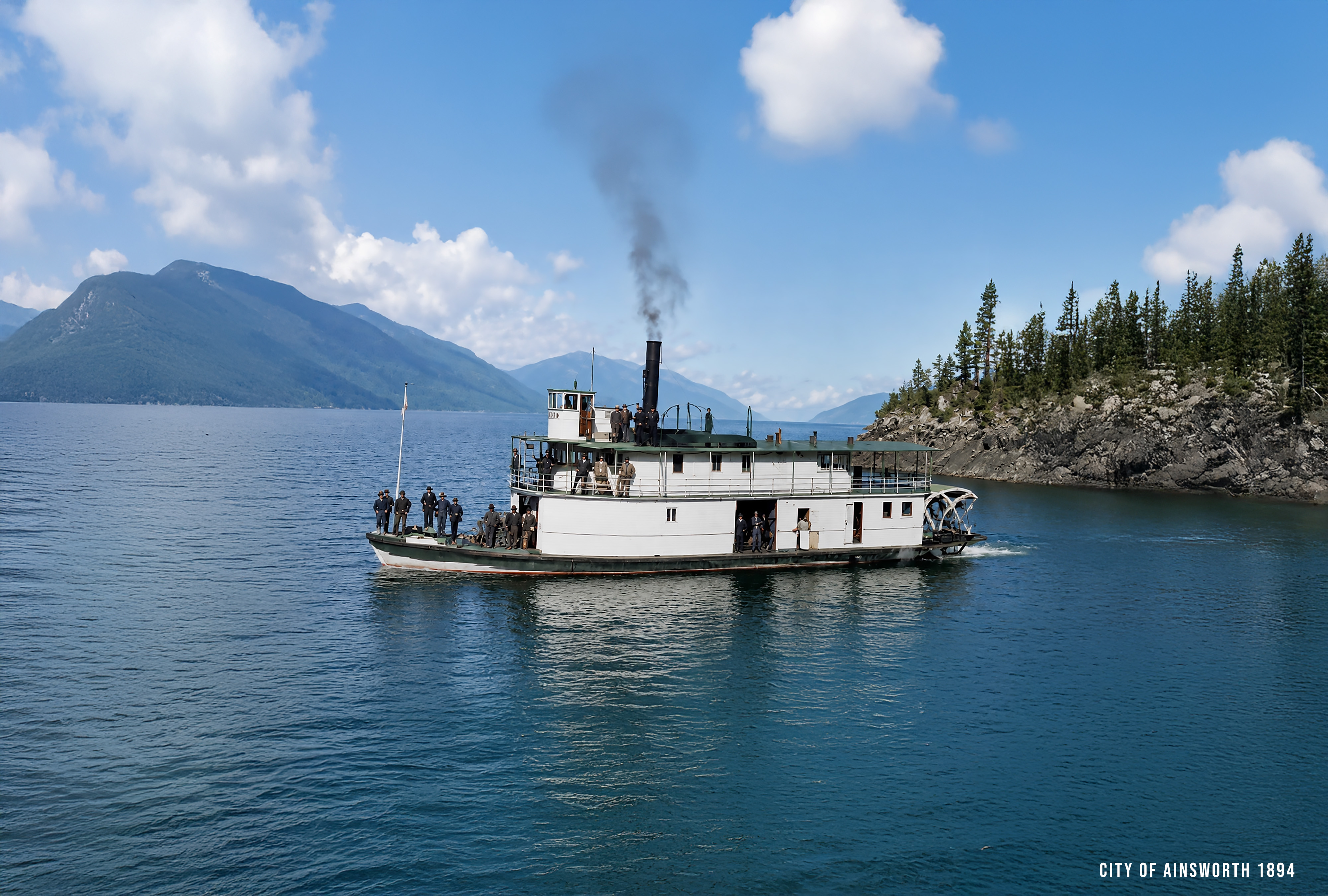
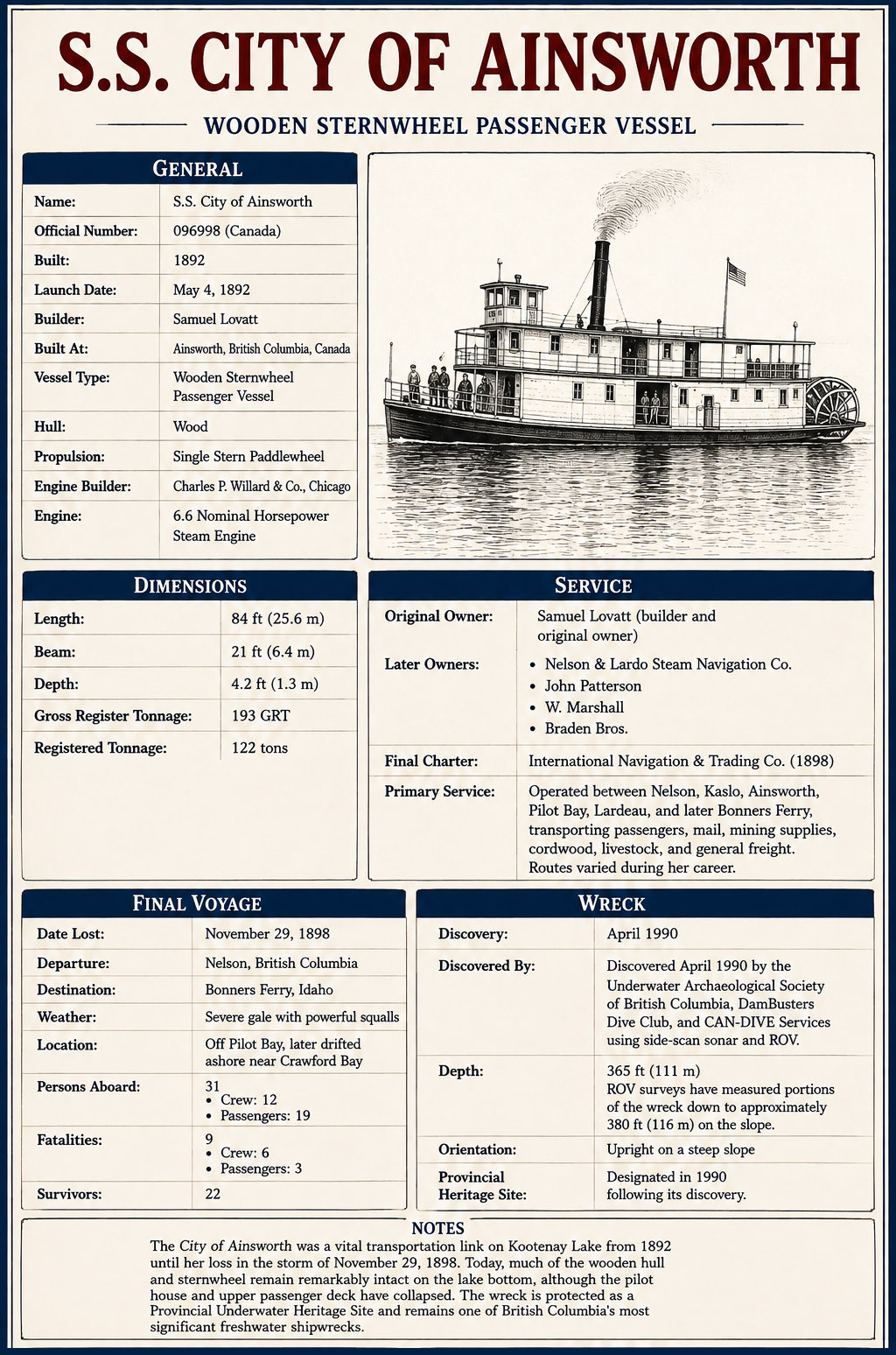
Moored alongside the dock was the City of Ainsworth, an elegant 84-foot wooden sternwheel steamer that had become a familiar sight throughout the Kootenays. Her white-painted cabins gleamed in the morning sunlight, while a tall black smokestack rose proudly above the vessel's centerline. At the stern, the broad paddlewheel rested beneath its ornate wooden housing, waiting for the engineer's signal to begin another day's voyage. Firewood was stacked neatly across the forward freight deck beside barrels, crates, mining equipment, mail, and general merchandise bound for settlements farther south.
Passengers arrived steadily throughout the morning. Businessmen, miners, merchants, families, and settlers crossed the gangplank carrying carpetbags, leather valises, trunks, and carefully wrapped parcels. Crew members welcomed familiar faces, stowed luggage, and directed travelers into the warm passenger saloon, where a glowing coal stove offered welcome relief from the late-November chill. Along the dock, friends exchanged final farewells while children paused to watch the little steamer preparing to depart.
High above the activity, Captain Lean stood quietly inside the pilot house, observing the organized bustle below. Though still a comparatively young master, he carried himself with the quiet confidence earned from countless crossings of Kootenay Lake. Every voyage demanded careful planning, and every safe arrival strengthened the trust placed in him by the passengers, merchants, and isolated communities that depended upon the lake's steamers.
Below, the crew worked with practiced efficiency. Deckhands secured the last of the cargo, the engineer inspected the boiler and confirmed a full head of steam, while the purser completed the passenger list and finalized the day's manifest. Satisfied that everything was ready, the last mooring line was cast off, and a sharp blast from the steam whistle echoed across Nelson Harbor. Moments later, the stern paddlewheel began its slow, deliberate rotation, churning the clear water into a frothy wake as the City of Ainsworth eased gracefully away from the wharf.
Leaving Nelson behind, the City of Ainsworth steamed eastward through the sheltered waters of the West Arm. Her paddlewheel beat a slow, reassuring rhythm that echoed from the forested mountains rising on either side of the narrow channel. Protected by the surrounding slopes, the water remained remarkably calm despite the late-November season. Inside the passenger saloon, travelers relaxed beside the warmth of the stove, while others stepped onto the open decks to admire the snow-covered peaks reflected in the still waters.
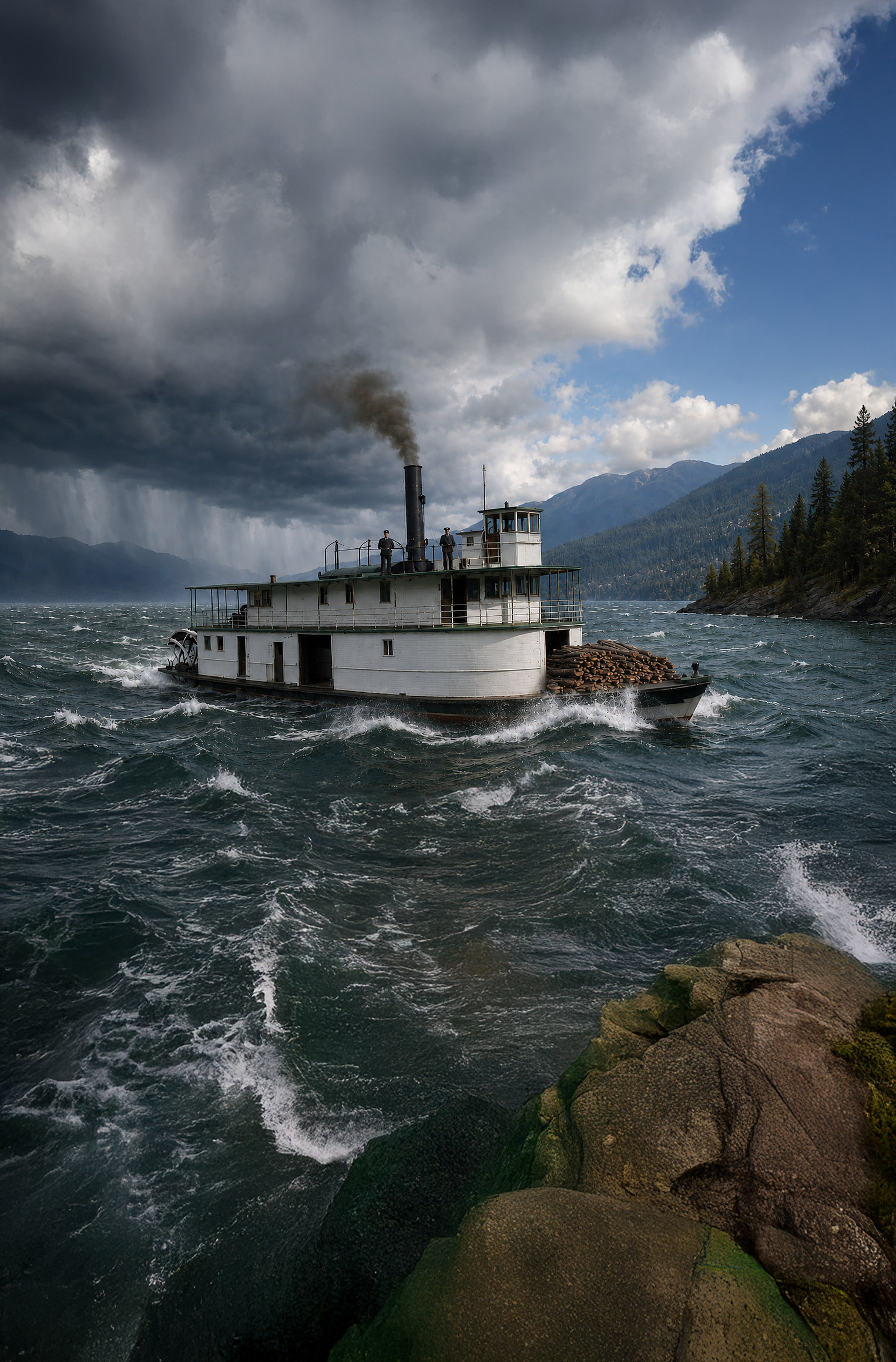
As the afternoon wore on, subtle signs of changing weather began to appear. Dark clouds slowly gathered above the Selkirk Mountains, and a cold wind swept down the valleys. Beyond the shelter of the West Arm, long rows of whitecaps stretched across the open waters of southern Kootenay Lake. From where the steamer traveled, the approaching storm appeared distant, giving little indication of the violence waiting beyond the headland.
Late that afternoon, the City of Ainsworth eased alongside the dock at Pilot Bay, a small lakeside settlement serving the nearby lead smelter. Freight was unloaded, fresh supplies taken aboard, and additional firewood stacked on the forward deck for the remainder of the journey to Bonners Ferry. While the crew handled cargo and secured the vessel alongside the dock, an uneasy discussion unfolded nearby.
John Brett the ship's fireman and crew member Joe Davis had spent much of the afternoon watching the worsening conditions across the open lake. Concerned by the strengthening wind and rapidly building seas, they approached Captain Lean and urged him to remain at Pilot Bay until the weather improved. They believed attempting the crossing after dark would place both the passengers and crew in unnecessary danger.
Captain Lean listened carefully but remained resolute. The City of Ainsworth had maintained her schedule through difficult weather before, and he believed his experienced crew and sturdy little steamer could safely complete the voyage.
The two crewmen disagreed. Unwilling to risk the crossing, they gathered their belongings, stepped ashore, and resigned their positions rather than continue into the approaching storm. Their departure delayed the voyage while Captain Lean searched the small settlement for someone willing to replace the missing fireman. After a brief search, James McNeill a local musician, who needed to get to Bonners Ferry for a wedding gig agreed to take the position free of pay for the ride. With little time for instruction, he climbed aboard and received only a hurried explanation of his unfamiliar duties before reporting to the boiler room.
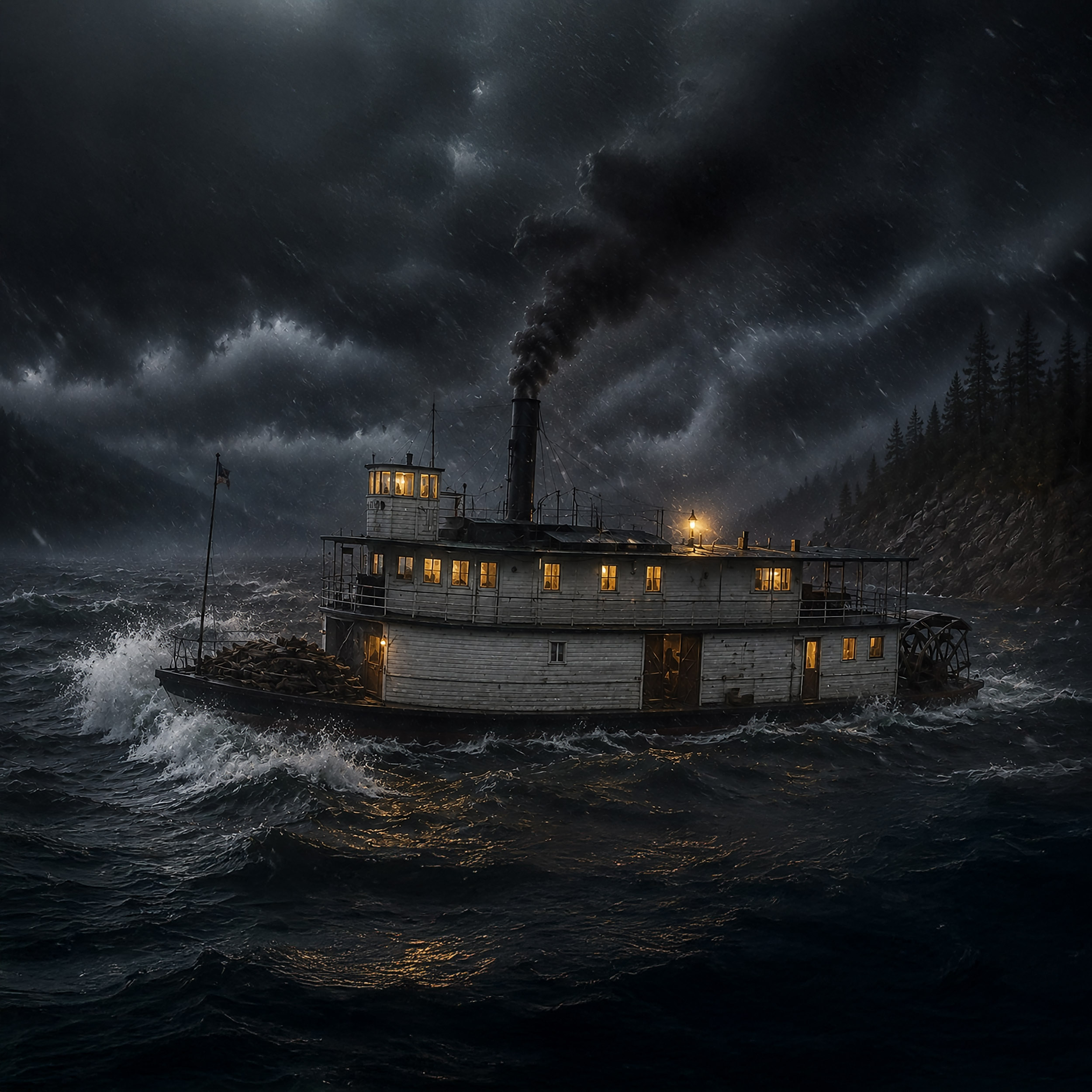
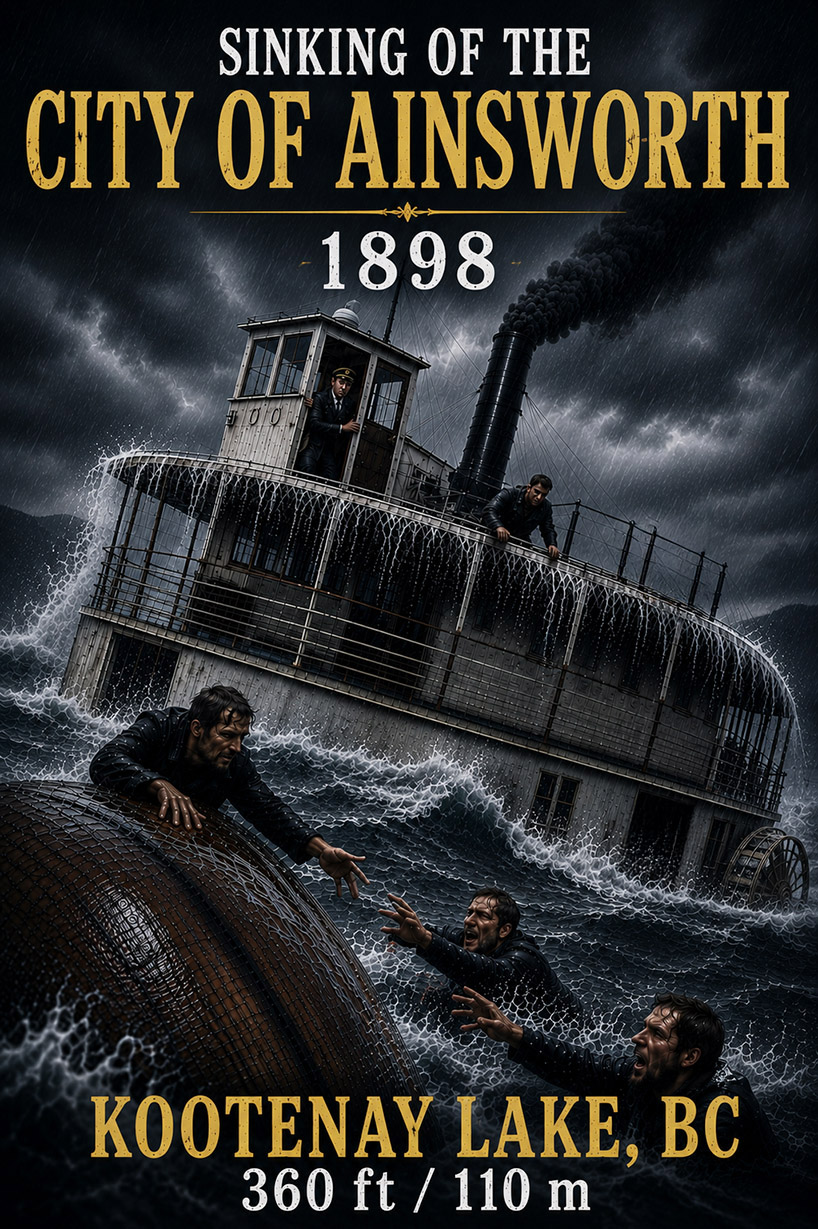
As daylight faded behind the mountains, the mooring lines were cast off once again. The paddlewheel slowly turned astern, easing the City of Ainsworth away from the dock before the captain rang for ahead. Swinging toward the broad expanse of southern Kootenay Lake, the little sternwheeler left the shelter of Pilot Bay and headed into the gathering darkness, where only wind, towering seas, and the most desperate night in the vessel's history awaited.
Leaving the shelter of Pilot Bay astern, Captain Lean guided the City of Ainsworth south along the western shoreline of Kootenay Lake. By keeping close to the mountains, he hoped to take advantage of whatever protection the rugged coast could provide from the strengthening southwesterly winds sweeping across the open lake.
At first the strategy appeared to work. Although the water had become noticeably rougher, the steep shoreline broke some of the wind, allowing the little sternwheeler to continue making steady progress. With every passing mile, however, the conditions steadily deteriorated. The waves grew taller, the wind strengthened into a full gale, and freezing spray swept continuously across the forward freight deck.
Designed for the relatively sheltered waters of Kootenay Lake, the City of Ainsworth measured just 84 feet (25.6 meters) in length with a narrow 16-foot (4.9-meter) beam. Her shallow draft, low freeboard, and modest steam engine made her an efficient passenger and freight steamer during ordinary weather, but she had never been intended to battle the sustained storm now raging across the lake.
Hour after hour, the little steamer fought her way south. Her bow plunged deeply into the steep oncoming seas before climbing heavily over each successive wave. Tons of icy water crashed across the freight deck, soaking the stacked firewood and adding dangerous weight to the bow. Instead of riding over the waves, the heavily laden vessel drove deeper into them with every plunge, slowing her progress against the mounting storm.
Recognizing the growing danger, Captain Lean ordered the crew forward to lighten the vessel. Battling freezing wind and blinding spray, the men wrestled heavy cords of firewood over the side, watching them disappear into the dark water below. It was exhausting, backbreaking work, but every load cast overboard raised the bow a little higher and offered a small hope of surviving the crossing.
Despite their efforts, the weather continued to intensify. The paddlewheel maintained its relentless rhythm while the boiler strained to keep up steam pressure, yet the little sternwheeler made less headway with every passing hour. By early evening, Captain Lean could see that continuing along the western shoreline was becoming impossible. The storm was steadily gaining the upper hand.
No matter how hard the engineer pushed the engines, the City of Ainsworth could no longer force her way into the gale. The paddlewheel churned relentlessly, but every surge forward was met by another wall of wind and water. Progress slowed to little more than a crawl as the seas continued to build.
Captain Lean knew remaining on the same course would eventually leave the vessel helpless against the storm. His only remaining option was to abandon the relative shelter of the western shoreline and attempt a run across the open lake toward Crawford Bay. If the City of Ainsworth could reach the lee of the eastern mountains, calmer water might offer one final opportunity to save the ship.
The helm was brought over, and the little sternwheeler slowly turned away from the pounding head seas. Almost immediately, the powerful gale caught her from astern. Instead of climbing directly into each wave, the vessel began surfing down the steep faces of the following seas as wind and water drove her northeast toward Crawford Bay. Although the engines continued turning the paddlewheel, the immense waves had become the vessel's greatest source of forward motion.
For a brief time, the maneuver appeared to succeed. The shoreline seemed to draw closer as the storm carried the little steamer across the lake. But each massive wave that lifted the stern also drove water against the exposed paddlewheel and swept across the afterdeck. With every passing minute, more water poured into the hull than the crew could remove.
Below deck, the engineer kept the steam-powered pumps operating continuously, but they had been designed to handle ordinary leakage—not the relentless flooding produced by a full November gale. Despite every effort, the water continued to rise, and the City of Ainsworth settled lower in the lake with each passing sea.
Before long, the steamer developed a noticeable list to port. At first the angle was slight, but it steadily increased as loose cargo shifted across the deck and frightened passengers struggled to keep their footing. Crew members rushed to steady those nearest them while casting anxious glances toward the captain, hoping the shoreline was closer than it appeared through the driving rain and blowing spray.
Captain Lean fixed his eyes on Crawford Bay. Through the darkness he could still make out the distant shoreline, but it remained frustratingly beyond reach. The pumps could no longer keep pace with the flooding, the list continued to worsen, and every passing wave left the City of Ainsworth riding lower in the water than before.
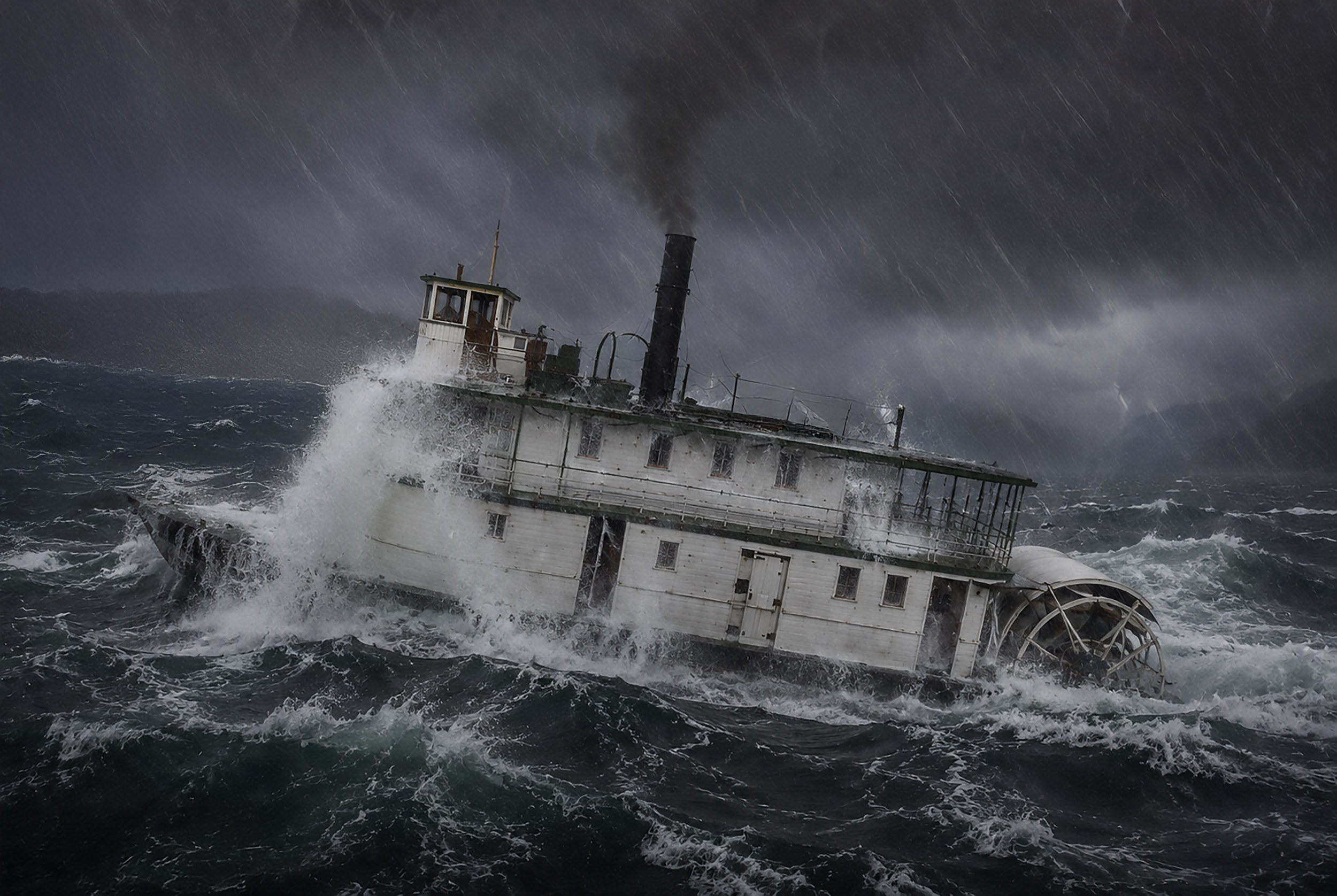
With the City of Ainsworth settling ever lower in the water, the storm finally took complete command of the little sternwheeler. Driven broadside by the gale, the vessel rolled violently as towering waves exploded against her hull and poured across the decks. Although the paddlewheel continued turning, the helm had become nearly useless. Captain Lean could no longer control the steamer's course as wind and sea swept her relentlessly toward the rocky shoreline near Cape Horn.
Realizing there was no longer any hope of saving the ship, Captain Lean ordered everyone to abandon her. Crew members fought desperately to lower the vessel's two small wooden lifeboats into the raging lake, but they were little more than open dinghies, hopelessly undersized for the number of frightened passengers and crew waiting to escape. As the boats rose and fell violently alongside the listing steamer, terrified men and women scrambled aboard, knowing there would not be room for everyone.
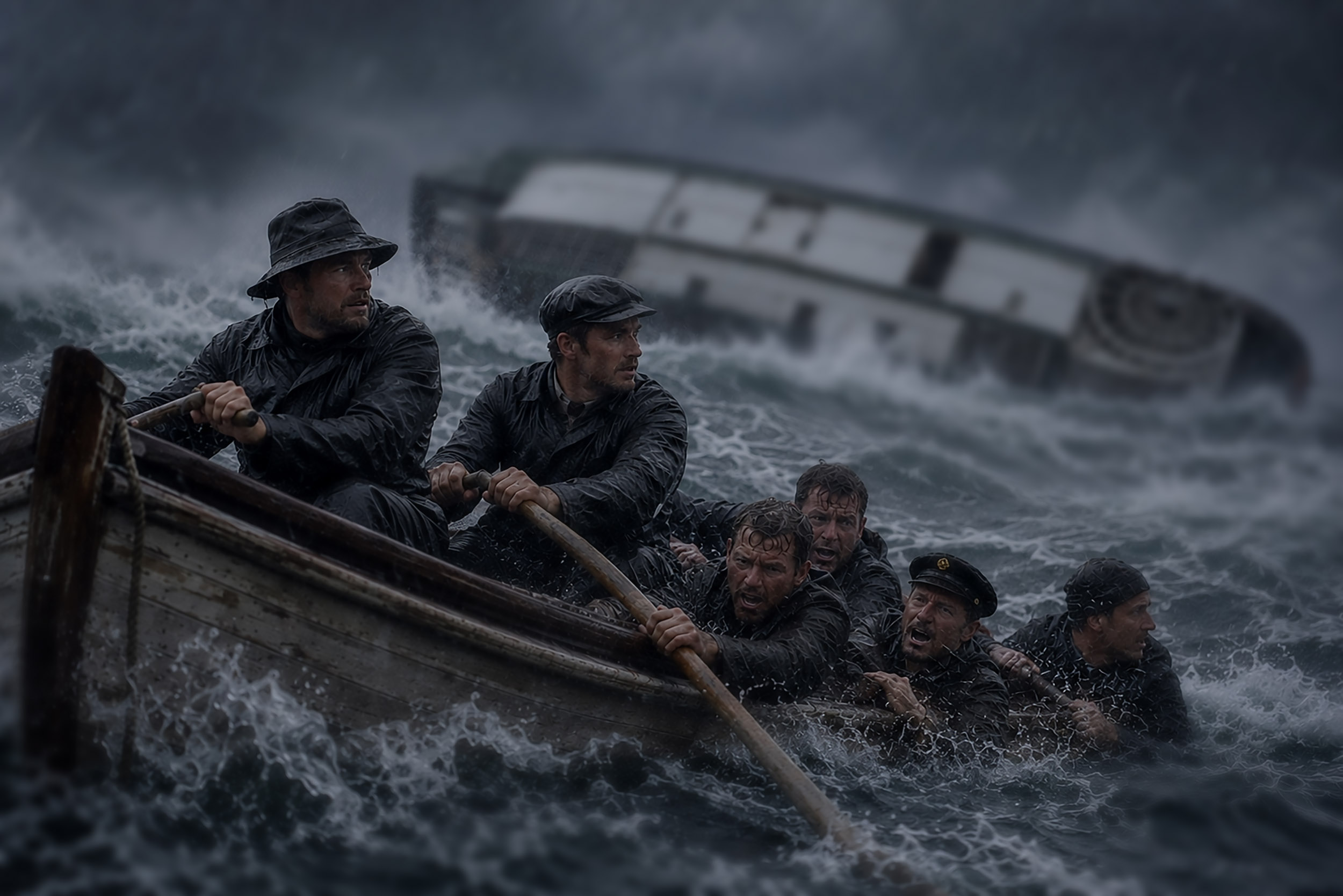
Before either boat could pull clear, a series of powerful waves crashed over their gunwales. Both boats filled almost instantly, rolled over, and threw their occupants into the freezing darkness of Kootenay Lake. Some survivors managed to cling to the overturned dinghies while others grasped desperately for ropes trailing alongside the sinking steamer. Every crashing wave threatened to tear them away into the night.
Amid the confusion, two crewmen still aboard the City of Ainsworth managed to seize a line attached to one of the overturned boats and haul it back alongside the foundering vessel. Working against the relentless pounding of the sea, they righted the little craft and helped several passengers climb aboard once again. As the storm continued driving the crippled steamer toward Cape Horn, those aboard the tiny dinghy pulled desperately at their oars, battling towering seas and gale-force winds as they slowly fought their way toward the rocky shoreline. Behind them, those still aboard the City of Ainsworth watched anxiously, praying the fragile boat would somehow survive the crossing and return.
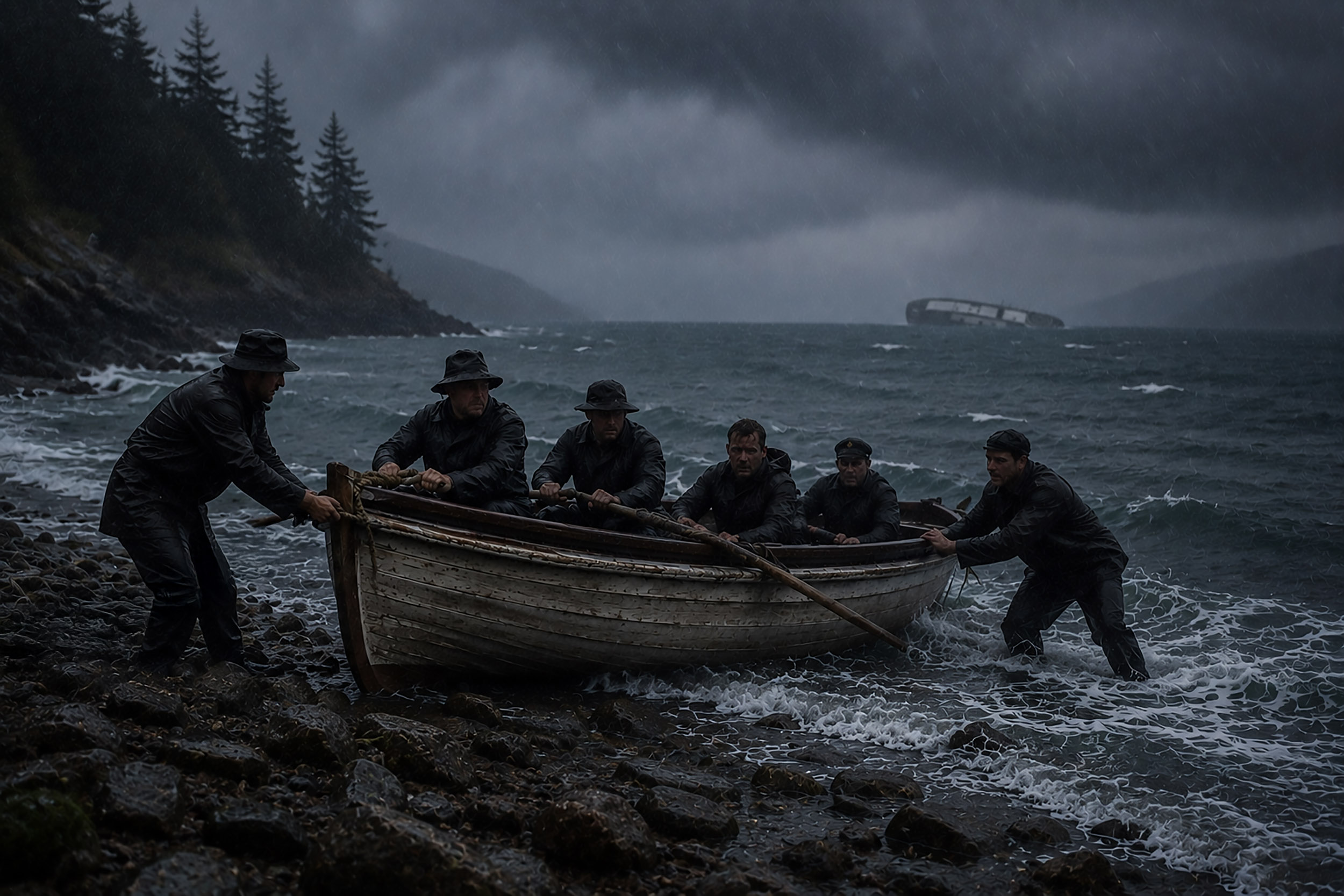
The battered dinghy finally scraped against the rocky shoreline south of Cape Horn at La France Creek, where exhausted passengers and crew stumbled into the icy surf before crawling onto the wave-swept rocks. Soaked, bruised, and shivering from the bitter cold, many collapsed where they landed, grateful simply to have reached solid ground. Their relief, however, lasted only a moment. Looking back through the darkness, they could still make out the City of Ainsworth drifting helplessly offshore with survivors stranded aboard.
Without hesitation, two of the strongest men made an extraordinary decision. They pushed the tiny wooden dinghy back into the pounding surf and turned once more toward the storm. Again and again, the little boat disappeared into the darkness before reappearing alongside the foundering steamer. Battling crashing waves, freezing spray, and gale-force winds, the rescuers ferried frightened passengers and crew from the sinking vessel to the rocky shore. Every crossing demanded tremendous strength and determination as the overloaded dinghy teetered on the edge of disaster.
Against overwhelming odds, the rescuers refused to give up. Trip after trip, they continued rowing through the storm until twenty-two passengers and crew had been safely brought ashore. Their extraordinary courage transformed what could have become an even greater tragedy into one of the most remarkable rescues in the history of Kootenay Lake.
Meanwhile, those already on shore gathered driftwood and whatever dry timber they could find among the rocks. Shielding a small flame from the wind, they somehow managed to build a warming fire despite the driving rain and relentless gale. One by one, the survivors gathered around its flickering glow, their soaked clothing steaming in the heat as they comforted one another and waited anxiously for daylight.
The survivors endured a long, miserable night along the rocky shoreline of La France Creek. Huddled around the small fire they had managed to build, they did everything possible to keep warm as freezing rain, fierce winds, and crashing waves battered the shore. Some drifted into restless sleep from sheer exhaustion, while others remained awake tending the fire and watching over those weakened by cold and exposure.
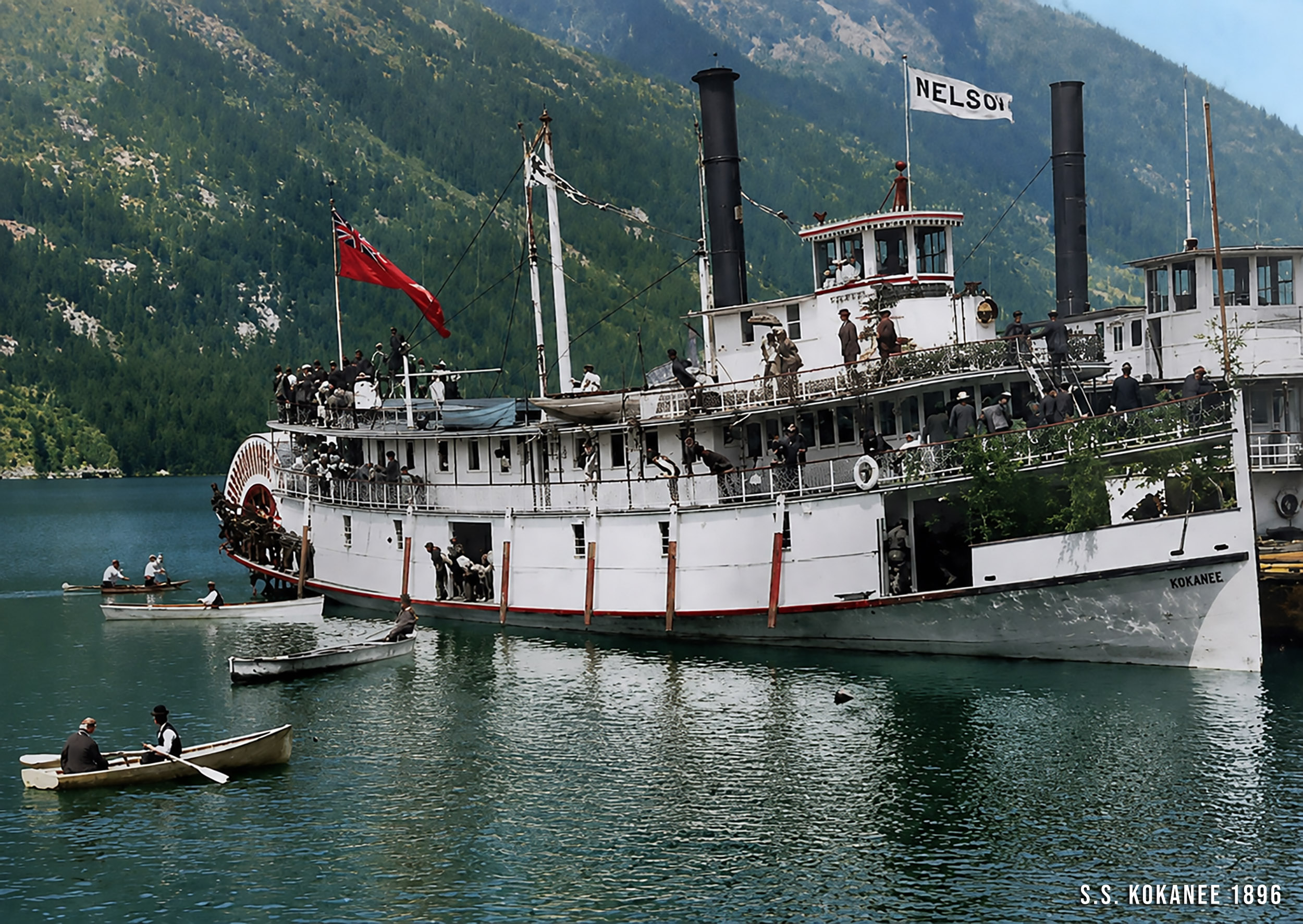
By mid-morning, the storm had finally begun to lose its grip. The winds eased, the rain became intermittent, and the clouds slowly lifted to reveal the rugged shoreline of Kootenay Lake. As visibility improved, hope appeared on the water in the form of the much larger sternwheel steamer SS Kokanee, making her way along the lake near Cape Horn.
The stranded survivors immediately waved coats, hats, and tree branches while feeding the fire with fresh wood to produce a column of thick smoke. Their desperate signals caught the attention of those aboard the SS Kokanee, whose crew quickly realized that a major disaster had taken place during the night.
The larger steamer slowed offshore and lowered her lifeboats. Rowing through the still-swelling seas, the rescue crews carefully reached the rocky shoreline and began ferrying the exhausted survivors aboard. Cold, weary, and grieving the loss of friends and family, the men, women, and children were finally safe.
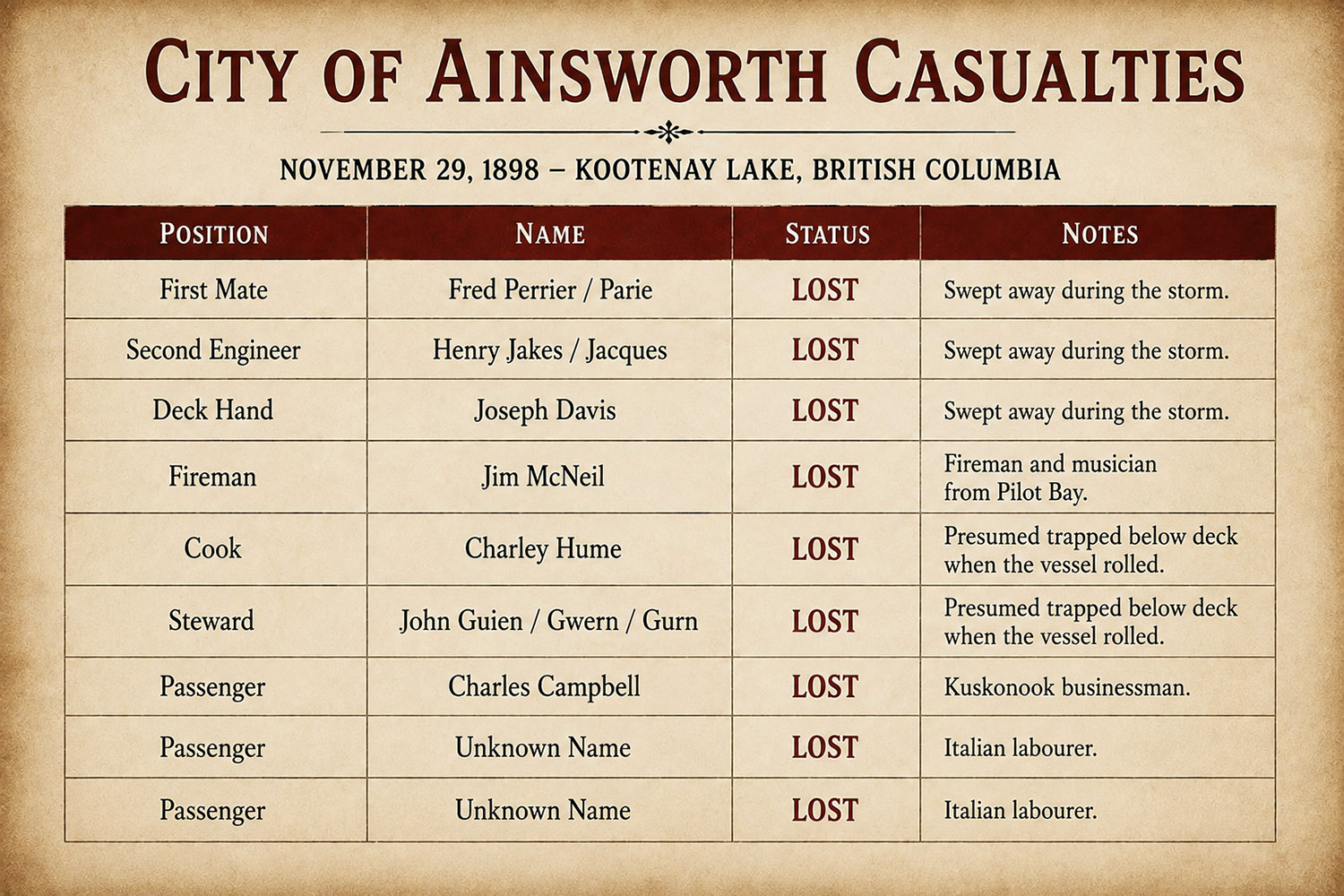
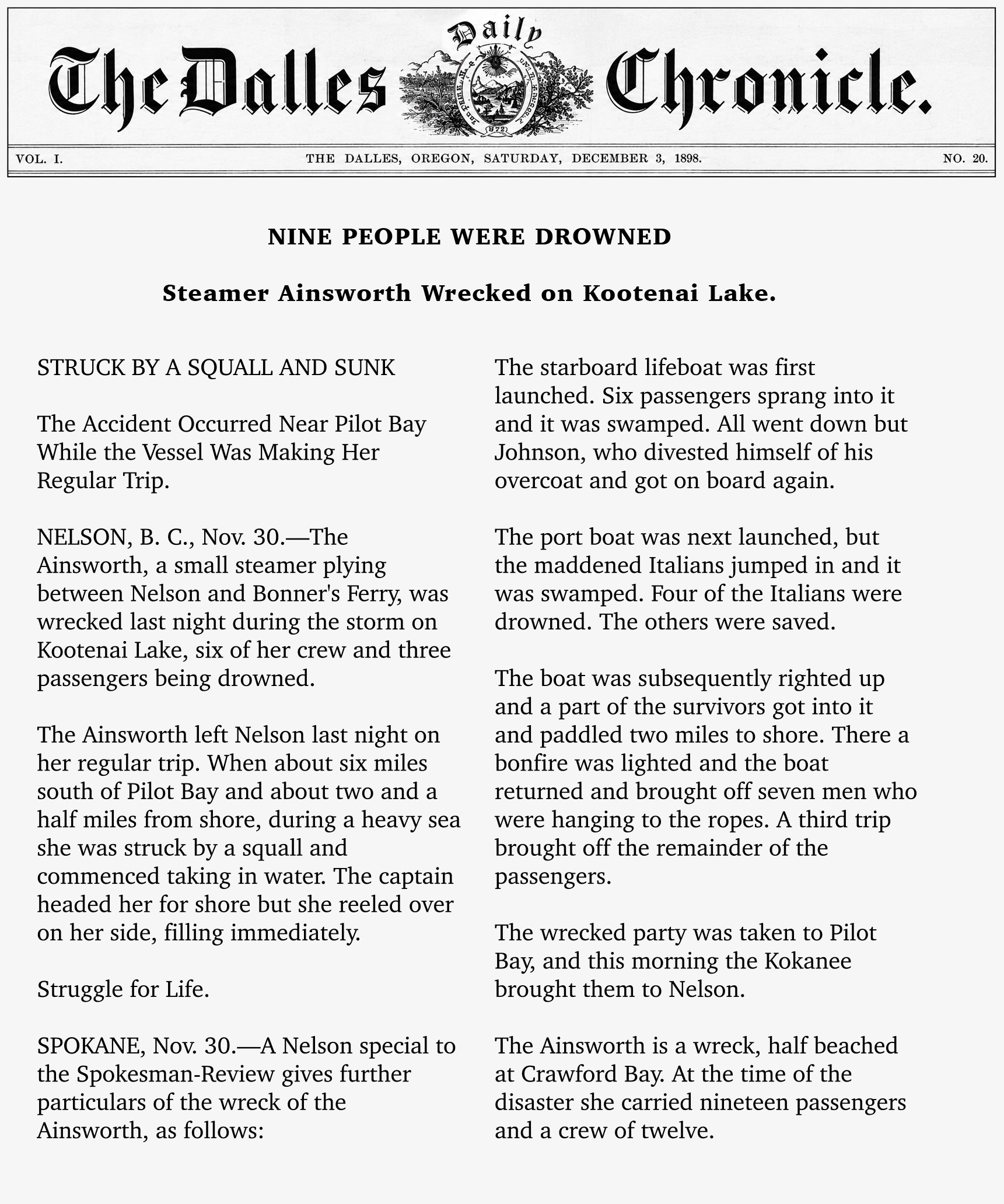
As the SS Kokanee steamed toward Nelson, silence settled over the passengers. Only hours earlier they had boarded the City of Ainsworth expecting nothing more than another routine journey across Kootenay Lake. Instead, nine lives had been claimed by one of the most devastating maritime disasters in the region's history.
For three days, the battered City of Ainsworth remained stranded on the rocky shoreline near Cape Horn, where towering storm waves had driven her aground. Although badly damaged, the little sternwheeler had survived the wreck, and many believed she could still be salvaged, repaired, and returned to service.
When the weather finally improved, a local tug arrived to recover the stranded vessel. Heavy towlines were secured, and with a steady pull the City of Ainsworth was gradually worked free from the rocks. For a brief moment, the salvage appeared successful as the damaged sternwheeler once again floated free.
The optimism was short-lived. Once clear of the shoreline, water that had flooded the weakened hull shifted suddenly, overwhelming the vessel's remaining buoyancy. The City of Ainsworth settled lower with every passing minute as the tug's crew watched helplessly. Then, with little warning, the towline stretched tight one final time before the battered sternwheeler slipped beneath the surface and disappeared into the dark waters of Kootenay Lake.
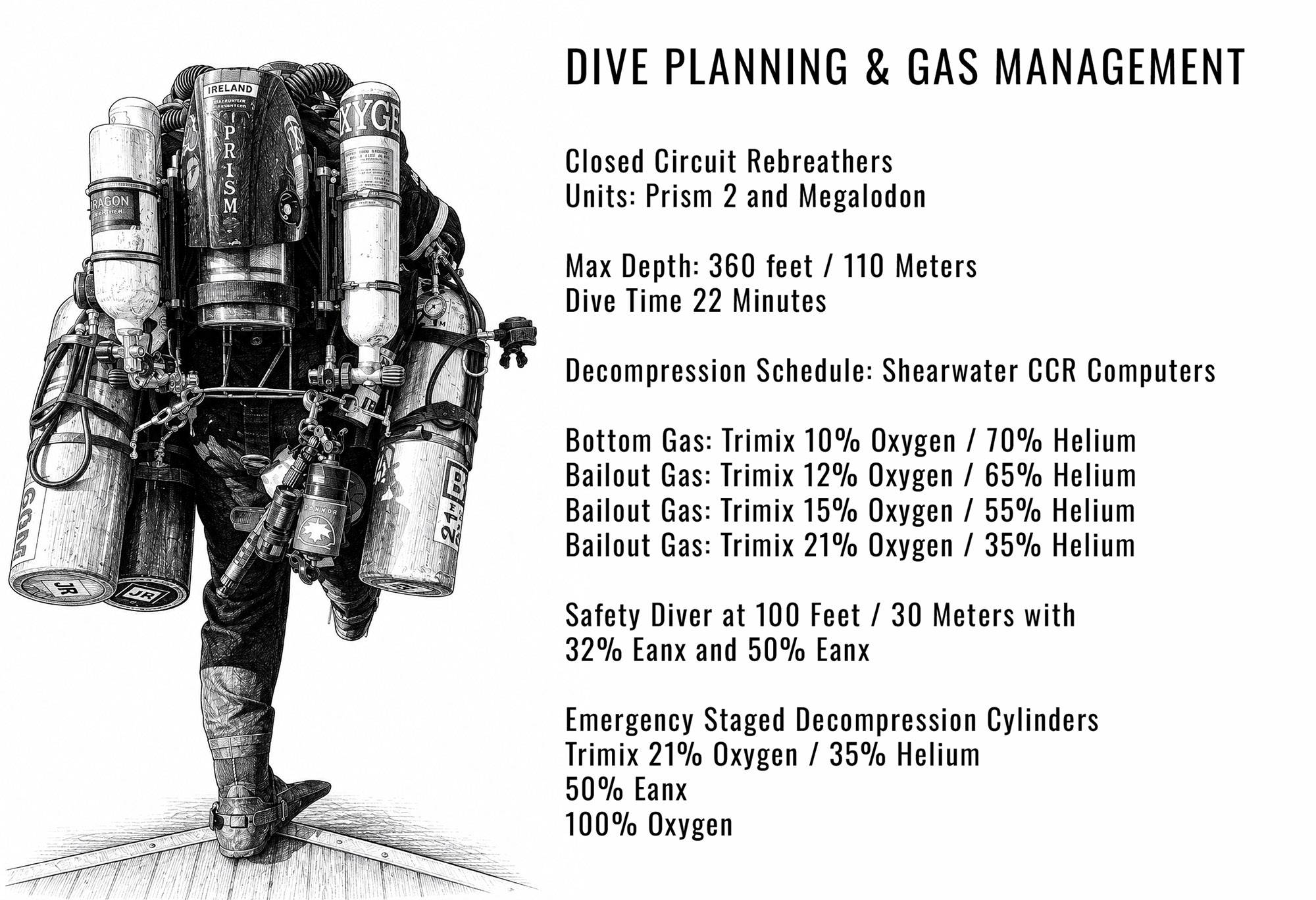
The wooden steamer slid silently down the lake's steep underwater slope before coming to rest upright at a depth of approximately 360 feet (110 meters). There she remained, hidden beneath the cold, crystal-clear waters of Kootenay Lake for nearly a century, her remarkably preserved wooden hull untouched by time.
The November 1898 sinking of the sternwheeler City of Ainsworth (CofA) remains British Columbia's deadliest inland lake maritime disaster, claiming the lives of nine people. As a result, the wreck has long been of great interest to the Underwater Archaeology Society of British Columbia (UASBC).
Through the combined efforts of the UASBC, The Dambusters Dive Club, Simon Fraser University in Vancouver, and the commercial diving company CAN-Dive, the wreck was located in 1990 using remotely operated vehicle (ROV) technology at a depth of 110 m (360 ft). In 1997, the wreck was explored by Bart Bjorkman and John Chluski of the Cambrian Foundation using open-circuit scuba equipment. At the time, and as far as is currently known, it was the second-deepest shipwreck dive ever completed in Canada. The deepest remains the wreck of the Edmund Fitzgerald in Lake Superior, also explored by the Cambrian Foundation in 1995.
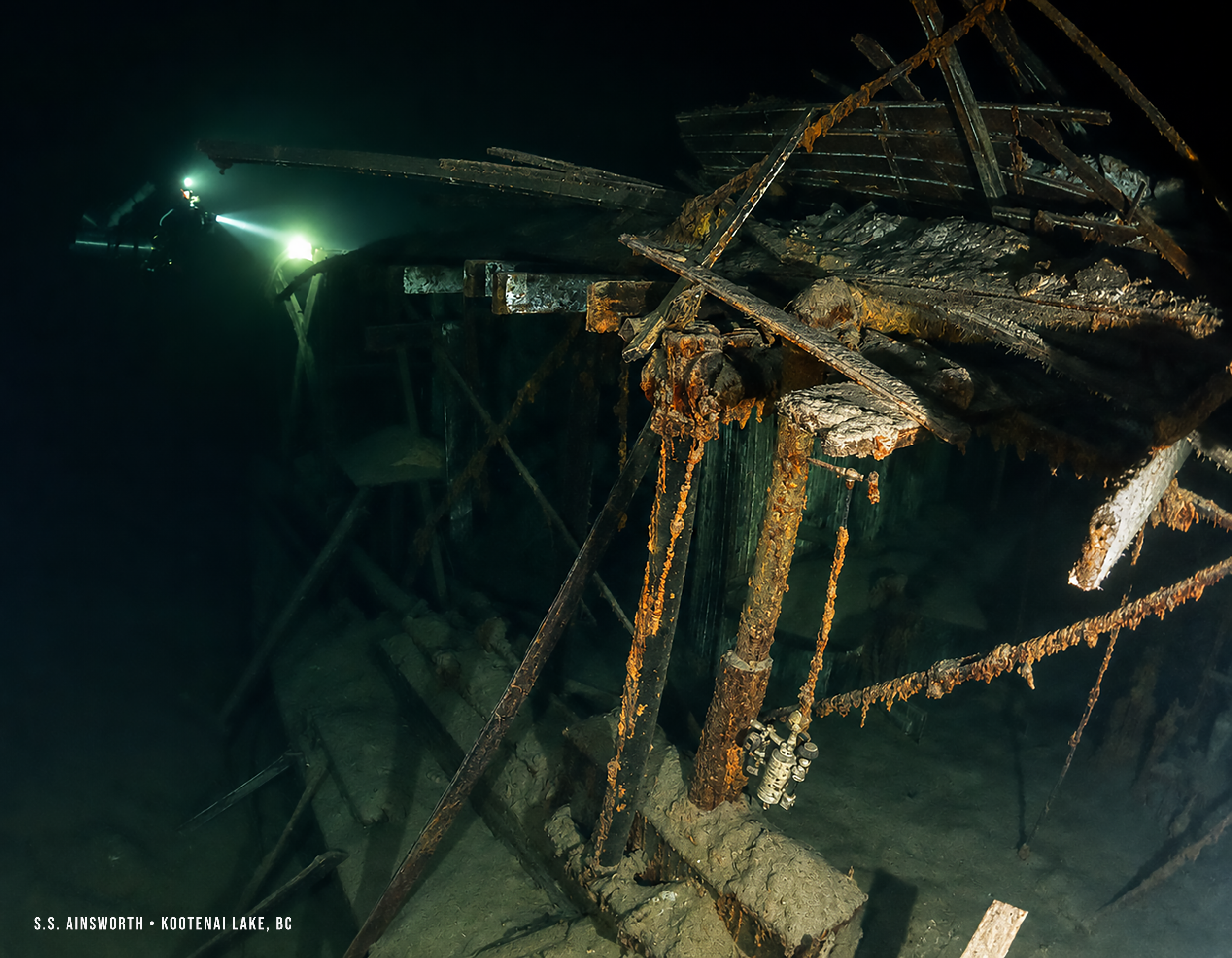
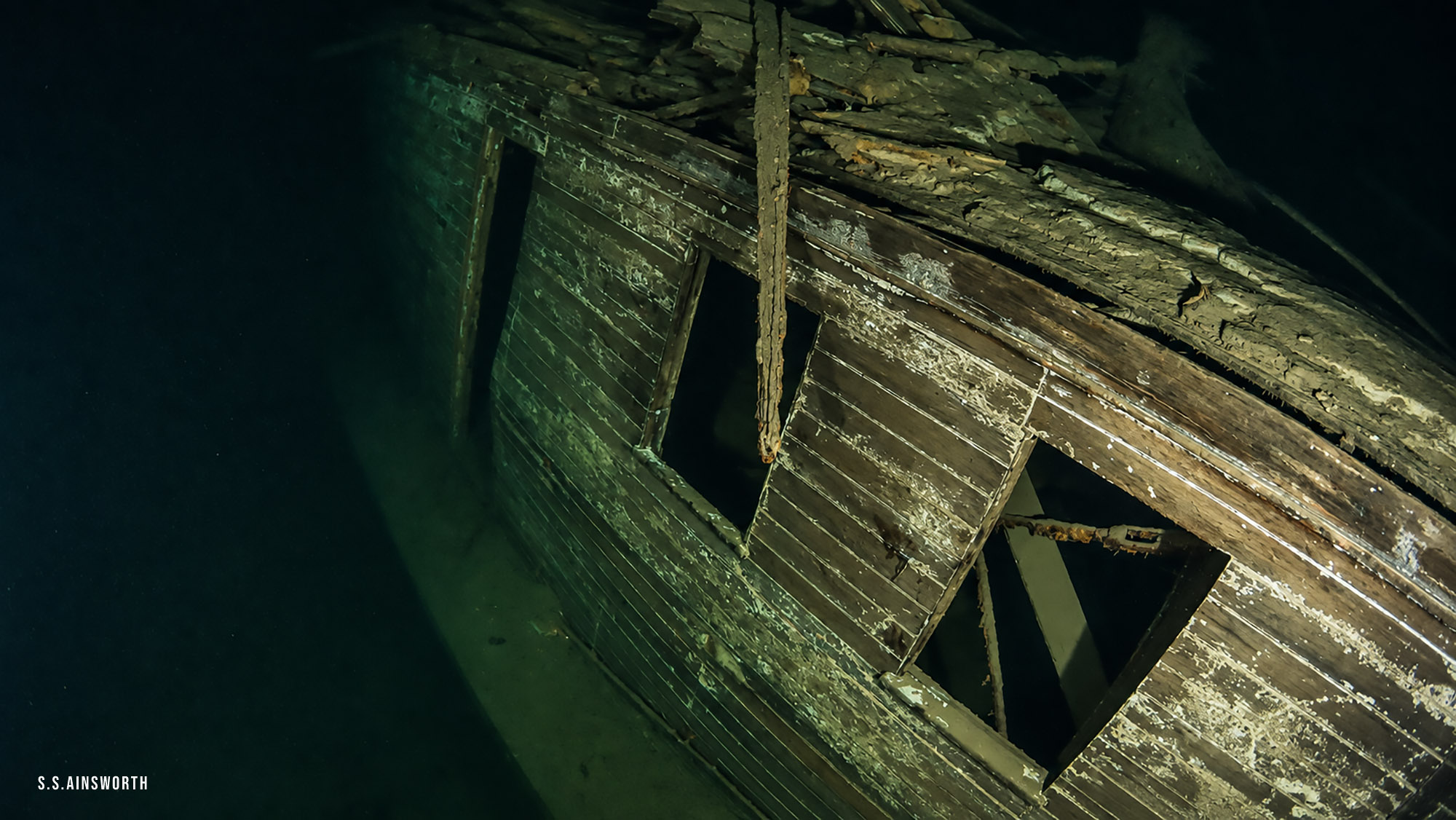
Above: Starboard side view looking aft toward the stern of the City of Ainsworth. Constructed as an 84-foot wooden sternwheel steamer with a single paddlewheel and shallow draft, she was designed for inland lake service, carrying passengers, freight, mail, and mining supplies throughout British Columbia's Kootenay region.
In 2010, the UASBC conducted an expedition using remotely operated vehicles (ROVs) to investigate the scour marks left as the City of Ainsworth slid down the steep lakebed to its final resting place. This was followed in 2011 by another ROV expedition, which successfully relocated the wreck and captured a few minutes of video footage of the vessel's uniquely staggered stern paddlewheels before the ROV suffered a major malfunction.
In 2019, a privately funded expedition was launched with UASBC Interior Director Bill Meekel serving as an observer. Due to limited underwater visibility, the ROV was only able to survey the port side of the wreck from the stern to the bow. The footage revealed that the port side of the main deck remained standing to approximately amidships, while nearly everything else visible had collapsed.
It was believed that the wheelhouse had broken free during the vessel's descent to the lake bottom, as no trace of it could be found. Because only limited footage had been obtained during the various expeditions over the years, it became clear that divers, despite the extreme depth and remote location, would need to return to directly assess the wreck's condition. Thus, the VexNow team was assembled with the goal of diving and documenting the City of Ainsworth in the depths of Kootenay Lake.
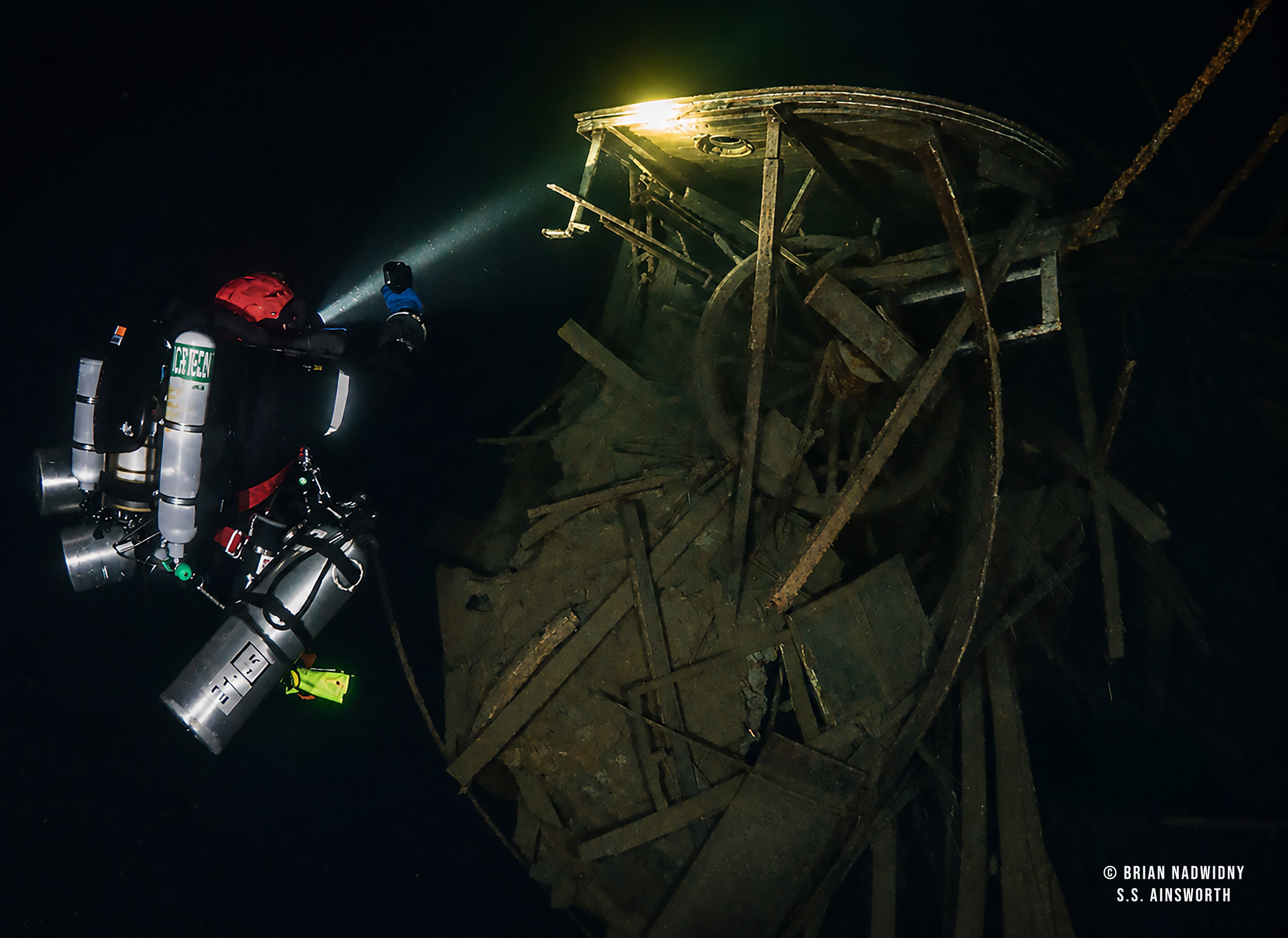
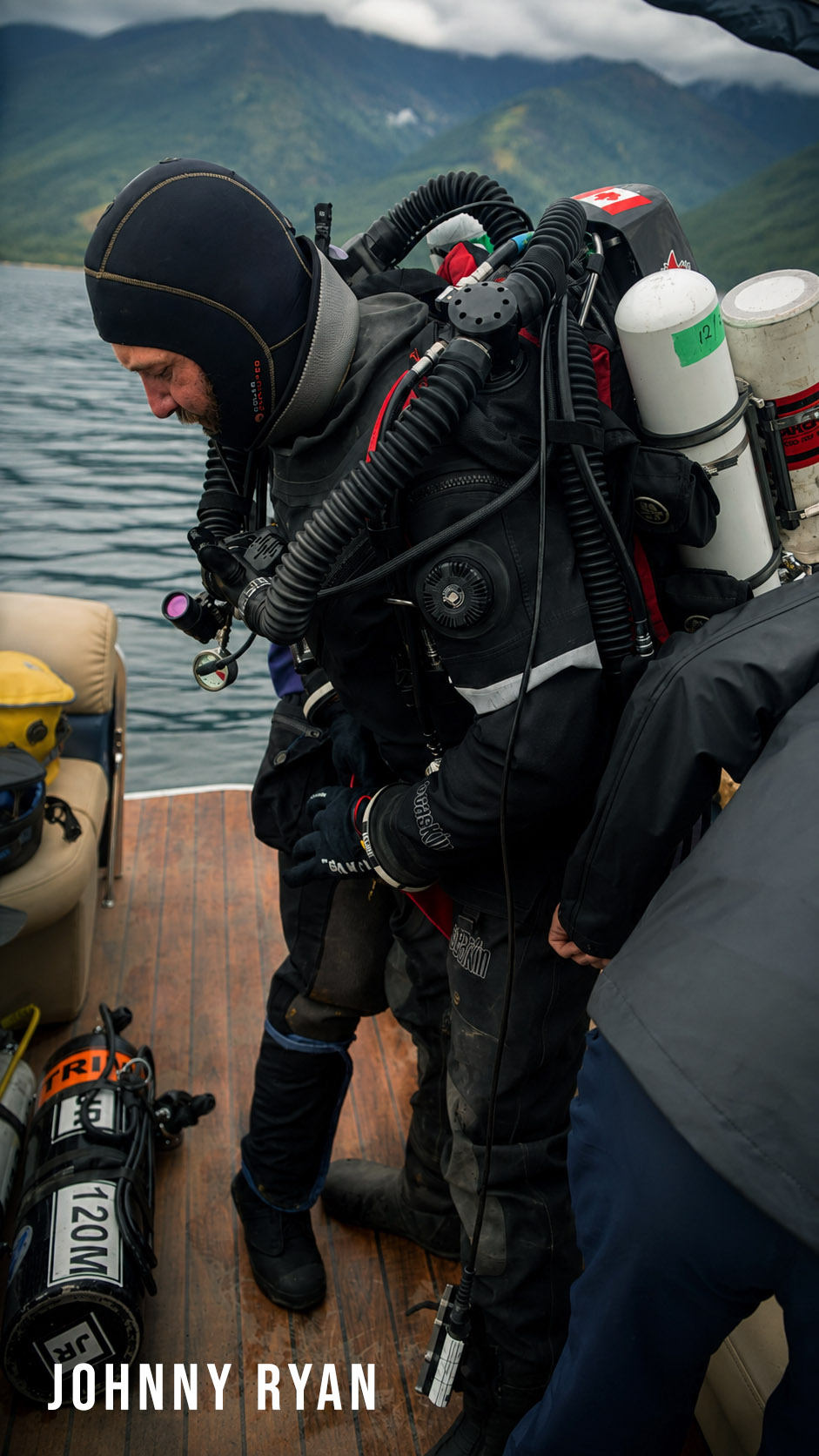
Above: CCR diver Johnny Ryan examines the remains of the City of Ainsworth's wheelhouse during the 2023 expedition. Resting at 360 feet (110 m) in Kootenay Lake, the remarkably preserved wreck continues to reveal new details about the vessel's final moments.
VexNow is a team of highly experienced technical divers from Alberta and British Columbia. Individually and collectively, its members have participated in numerous exploration and discovery projects, including shipwreck expeditions off Halifax, Nova Scotia, the Inside Passage of British Columbia, cave and wreck diving in South Africa, and exploration of the Reappearing River and Wet Dream cave systems on Vancouver Island.
For the 2023 expedition, the team chose to dive in late August and early September, the same seasonal window used by the 1997 Cambrian Foundation expedition. The timing was selected because Kootenay Lake is at its warmest, particularly between 6 and 10 m (20–30 ft), where the majority of decompression would take place.
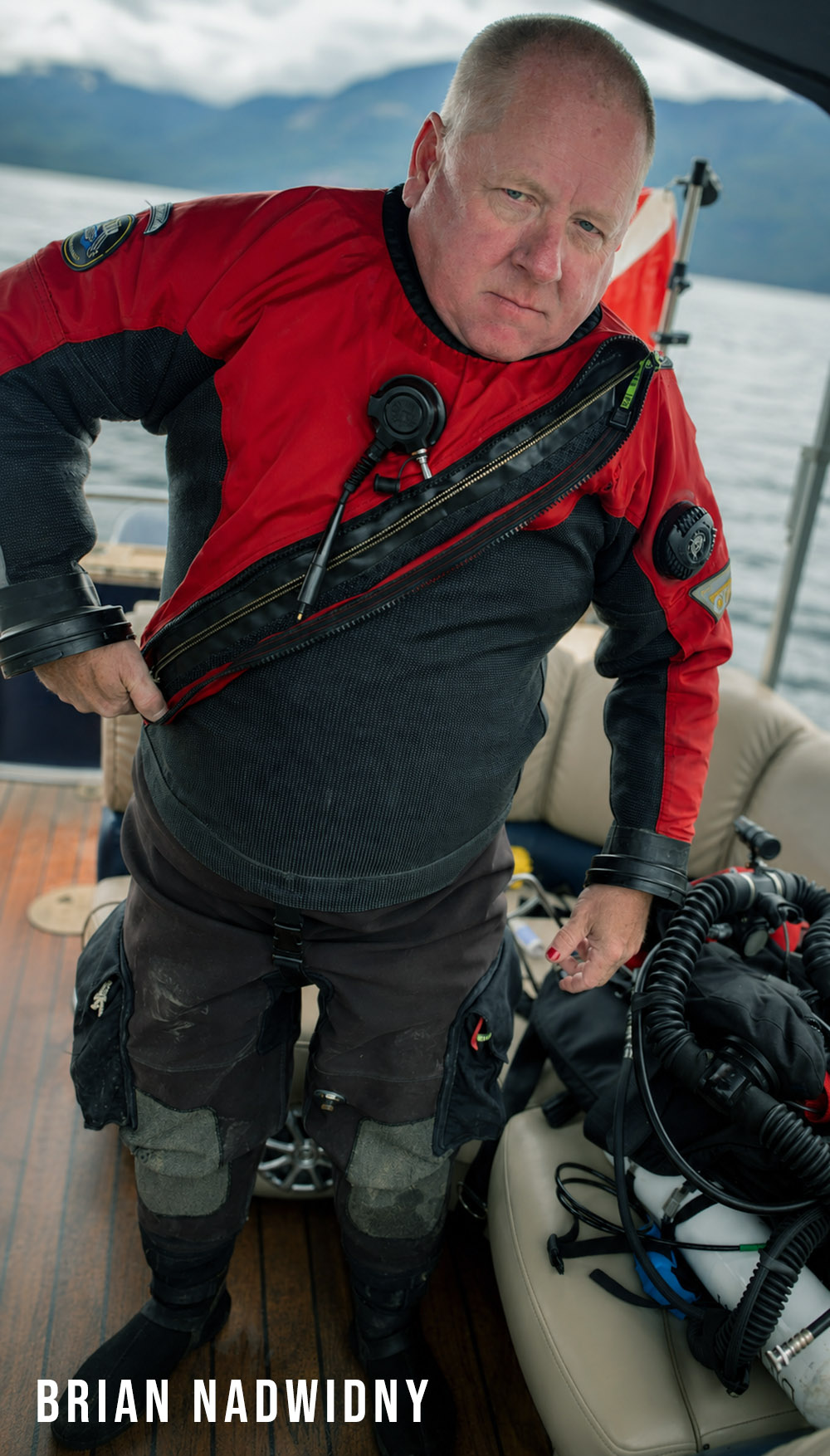
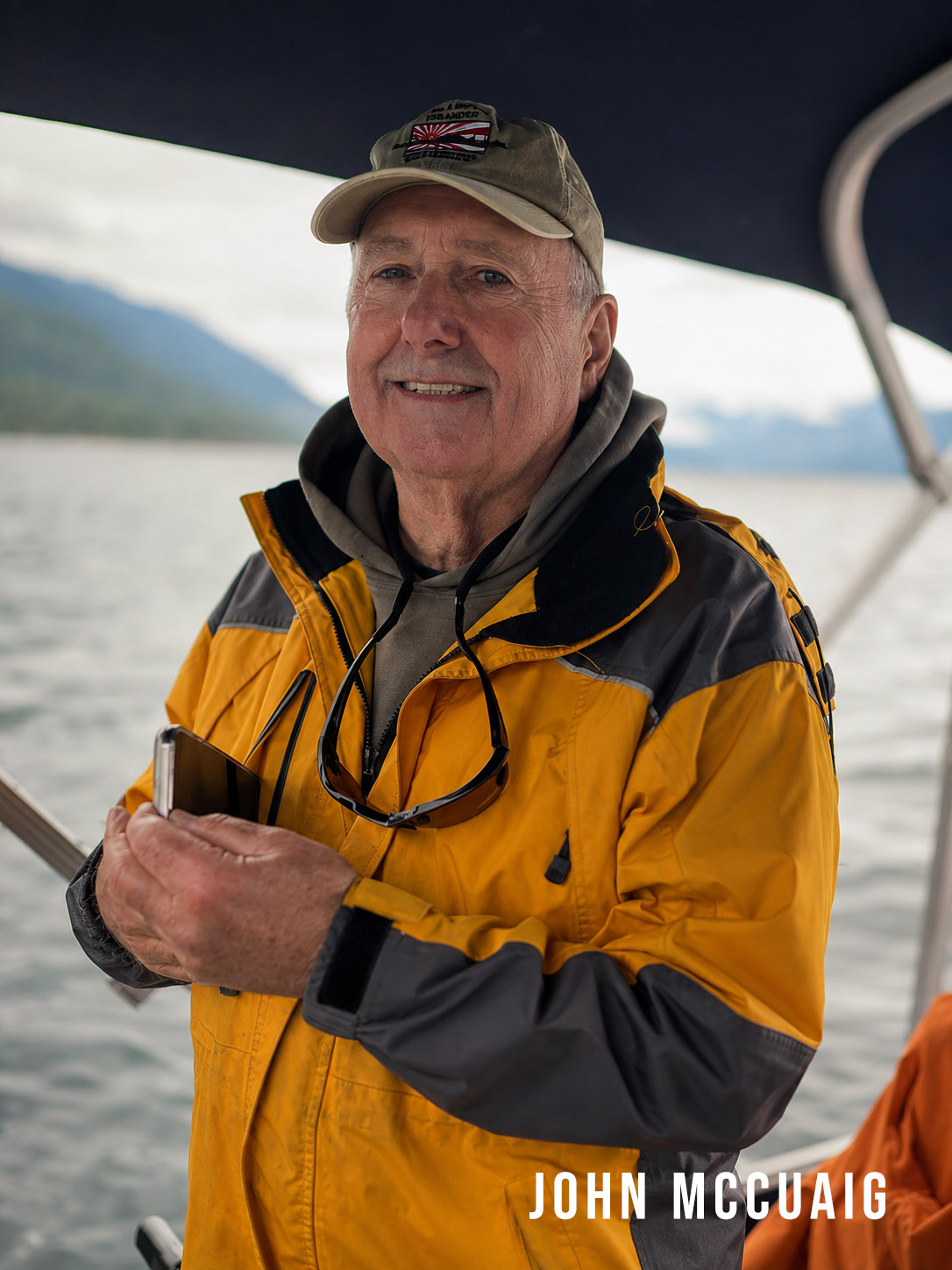
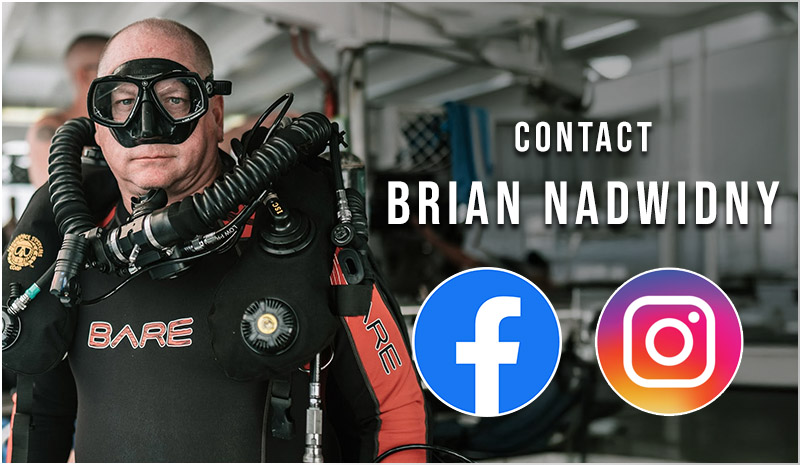
On August 26, Brian Nadwidny, John McCuaig, and Cathie McCuaig arrived ahead of the rest of the team to locate the wreck and install a permanent downline. Using coordinates established during previous expeditions and bottom-imaging sonar, they successfully relocated the City of Ainsworth and secured the line. The remainder of the expedition team arrived the following day.
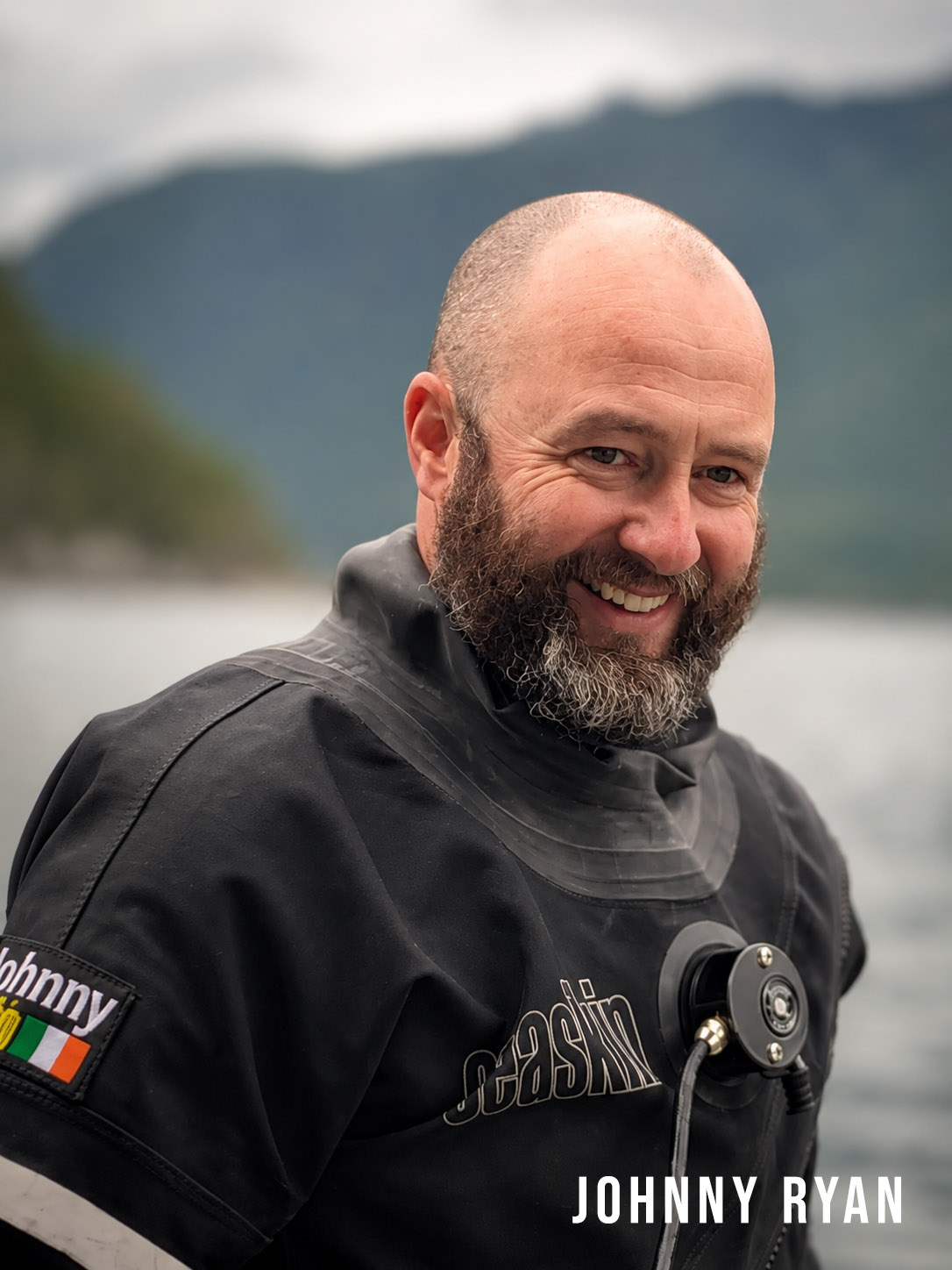
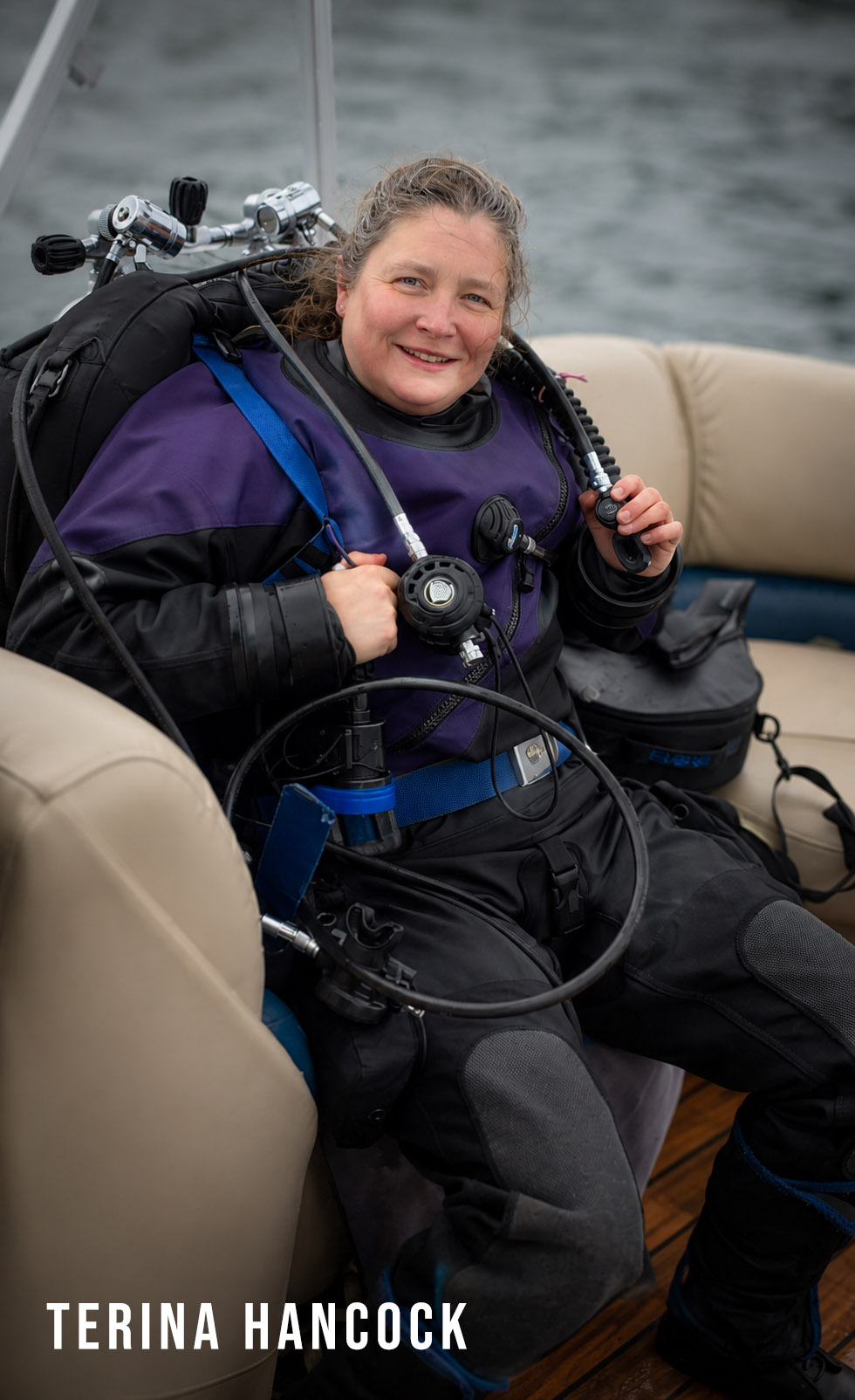
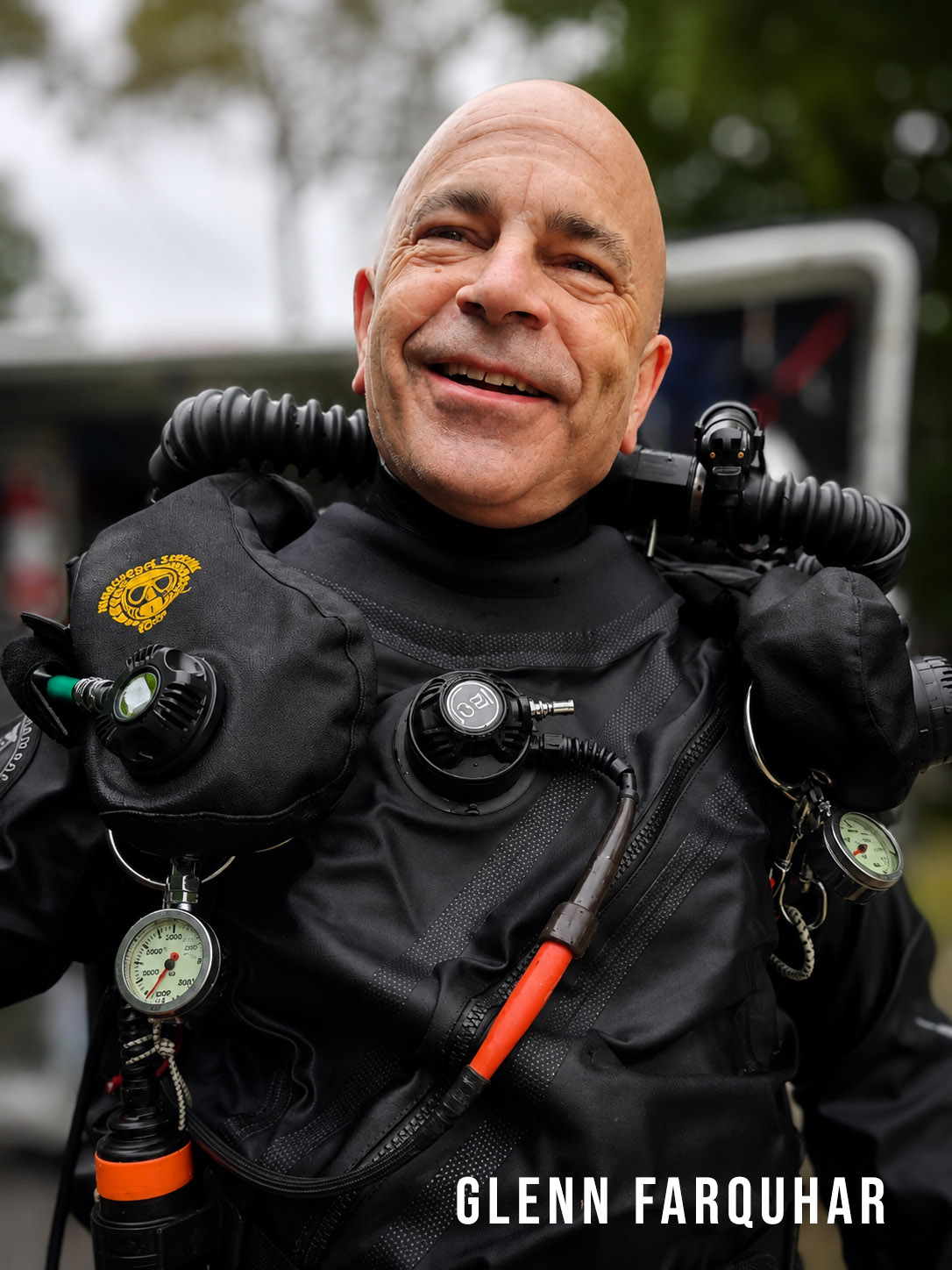
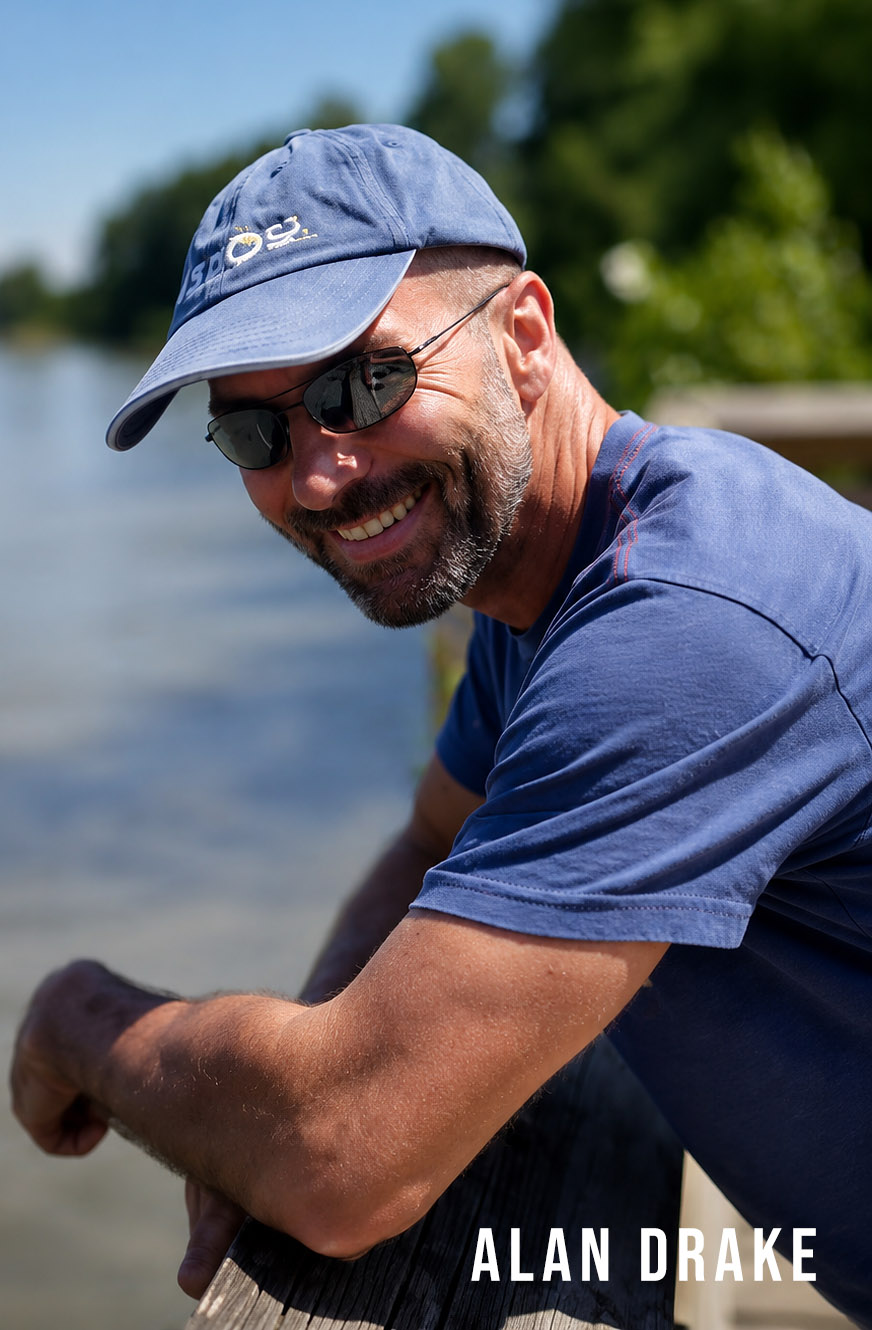
The diving team consisted of Johnny Ryan (Airdrie, Alberta), Brian Nadwidny (Cranbrook/Kaslo, British Columbia), Glenn Farquhar (Langley, British Columbia), and Alan Drake (Vancouver, British Columbia). Surface support was provided by John McCuaig (Edmonton, Alberta), while Terina Hancock (Edmonton, Alberta) served as the expedition's safety diver. Shore support was provided by Cathie McCuaig.
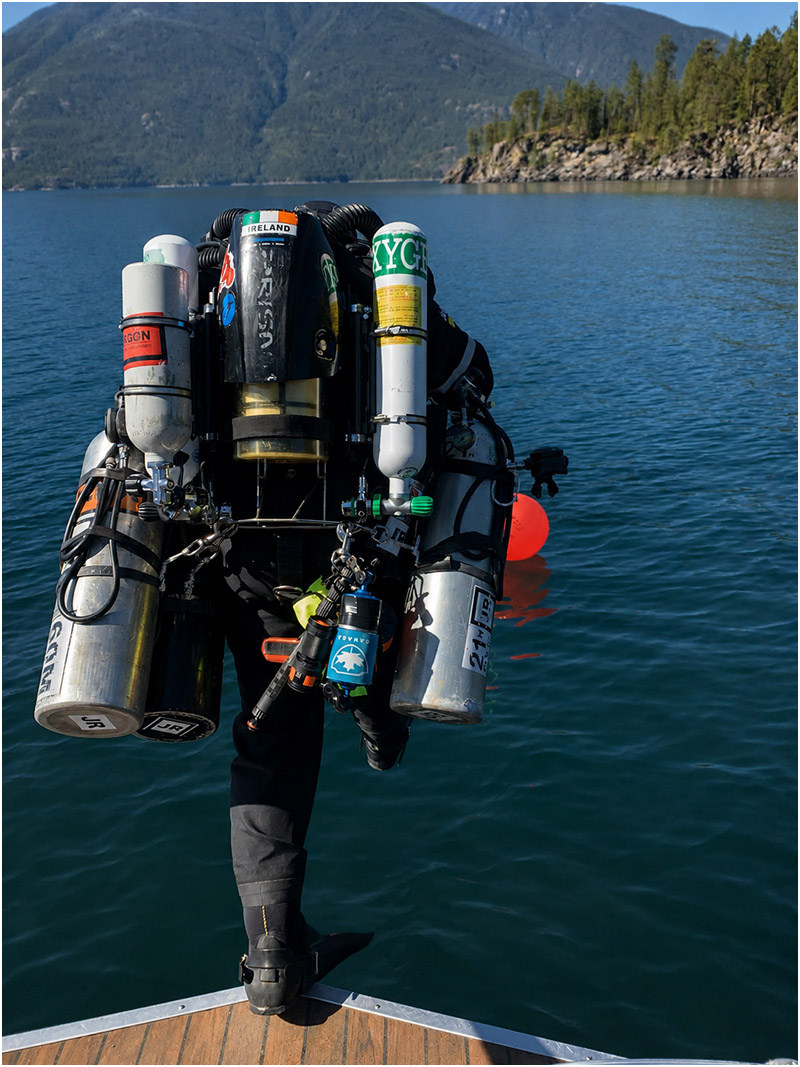
The bottom divers used closed-circuit rebreathers with a 10/70 trimix diluent (10% oxygen, 70% helium, and 20% nitrogen), allowing them to safely conduct exploration at the wreck's 110 m (360 ft) depth.
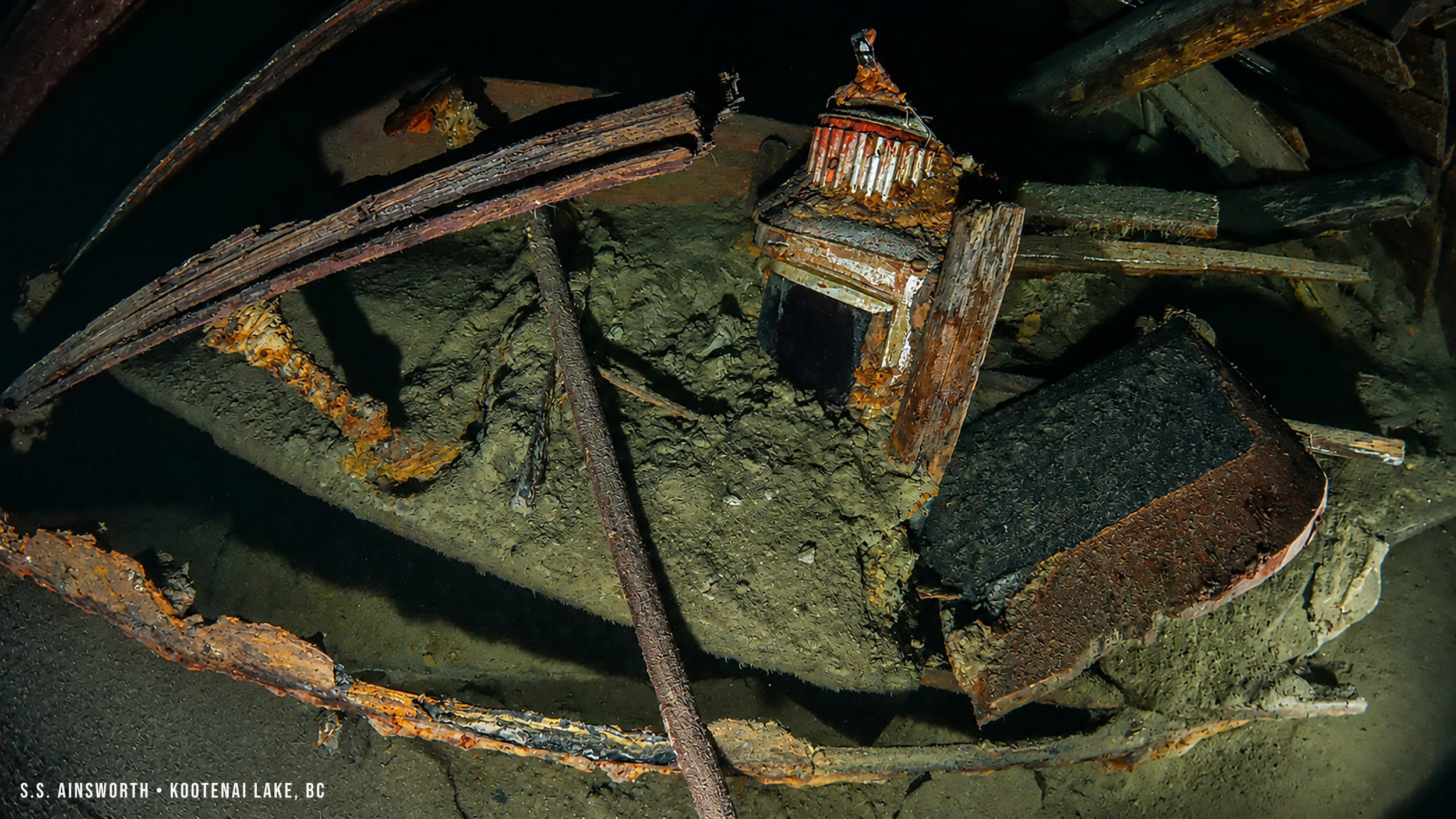
Above: One of the expedition's most rewarding discoveries was the vessel's port navigation lantern. The artifact remains in place, providing a tangible connection to the City of Ainsworth's final hours on Kootenay Lake.
On August 28, the dive boat departed for the wreck site. It had been decided in advance that only one dive team would enter the water each day. Team Irish, consisting of Johnny Ryan and Brian Nadwidny, was assigned the first dive.
Upon arrival, the crew discovered that a pleasure boat had anchored to the buoys marking the downline. A scan with the bottom-imaging sonar quickly confirmed that the line had been dragged off its original position. After resetting the downline, the divers descended. Reaching 110 m (360 ft), they found only silt and mud with no sign of the wreck. It was immediately apparent that the reset had missed its target. The only clue was a 6-inch iron pipe with a flange protruding from the lakebed, suggesting they were close to the wreck. After spending 10 minutes searching without success, the team began their ascent. Despite not locating the wreck, the dive lasted just over two hours.
The following day, August 29, another attempt was made. The downline was repositioned once again, and Team Left Coast, consisting of Glenn Farquhar and Alan Drake, descended to the wreck. About an hour later, support diver Terina Hancock met the team during their 30 m (100 ft) decompression stop. Using a dive slate, the divers confirmed they had successfully reached the City of Ainsworth. The downline had landed only 6 m (20 ft) from the wreck.
For the first time in 26 years, divers had once again visited the City of Ainsworth. Several minutes of high-quality video were captured—far superior to any previously obtained by ROVs—and documented much of the starboard side of the wreck, an area that had rarely been seen due to the limited footage collected during earlier expeditions.
The following day, strong southerly winds swept up Kootenay Lake. Despite two attempts to reach the site, the team determined that the wave conditions were unsafe for diving, particularly with a planned 2.5-hour decompression schedule. No dives were conducted that day or the following day, as the winds continued to blow strongly from the south.
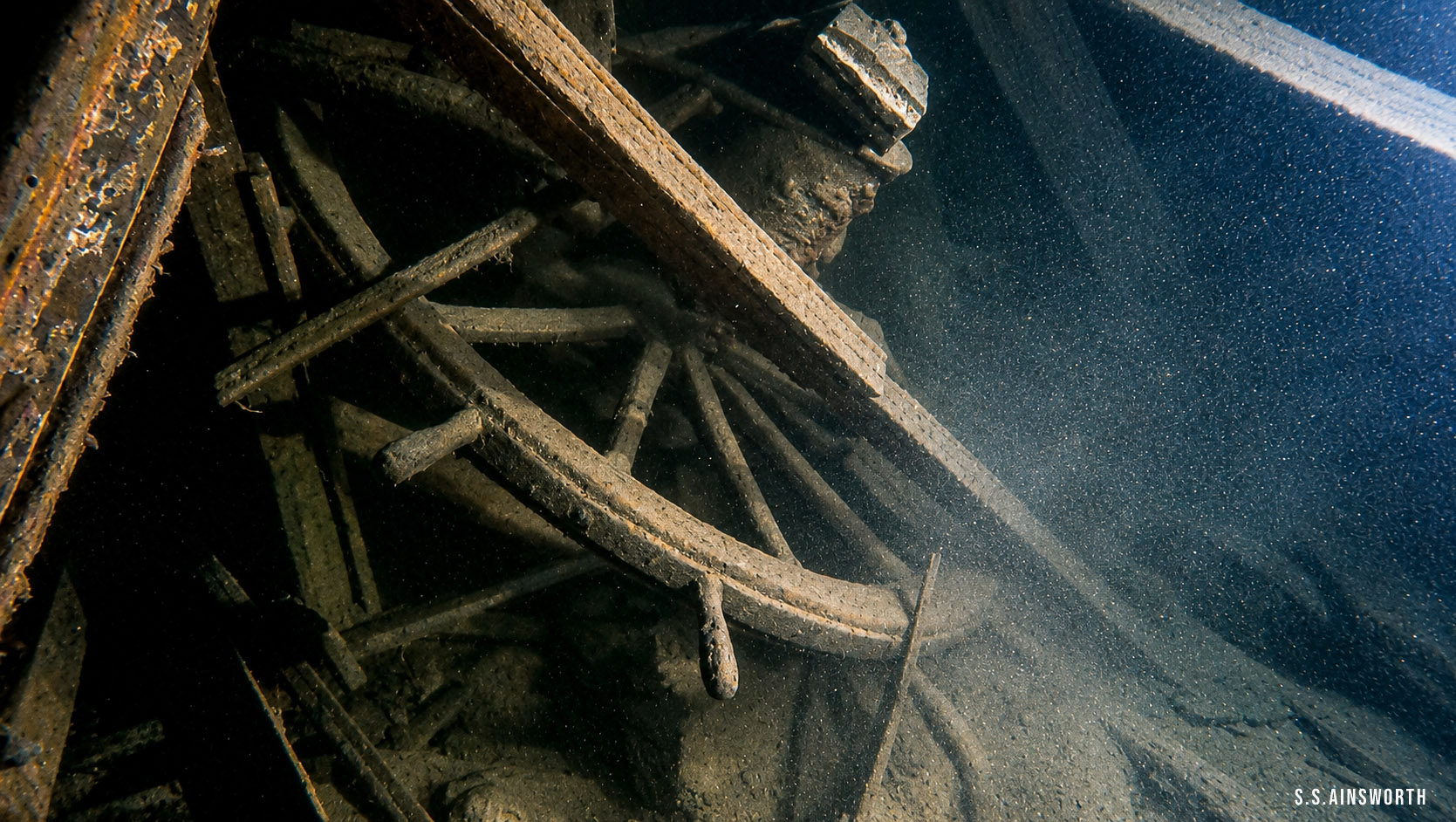
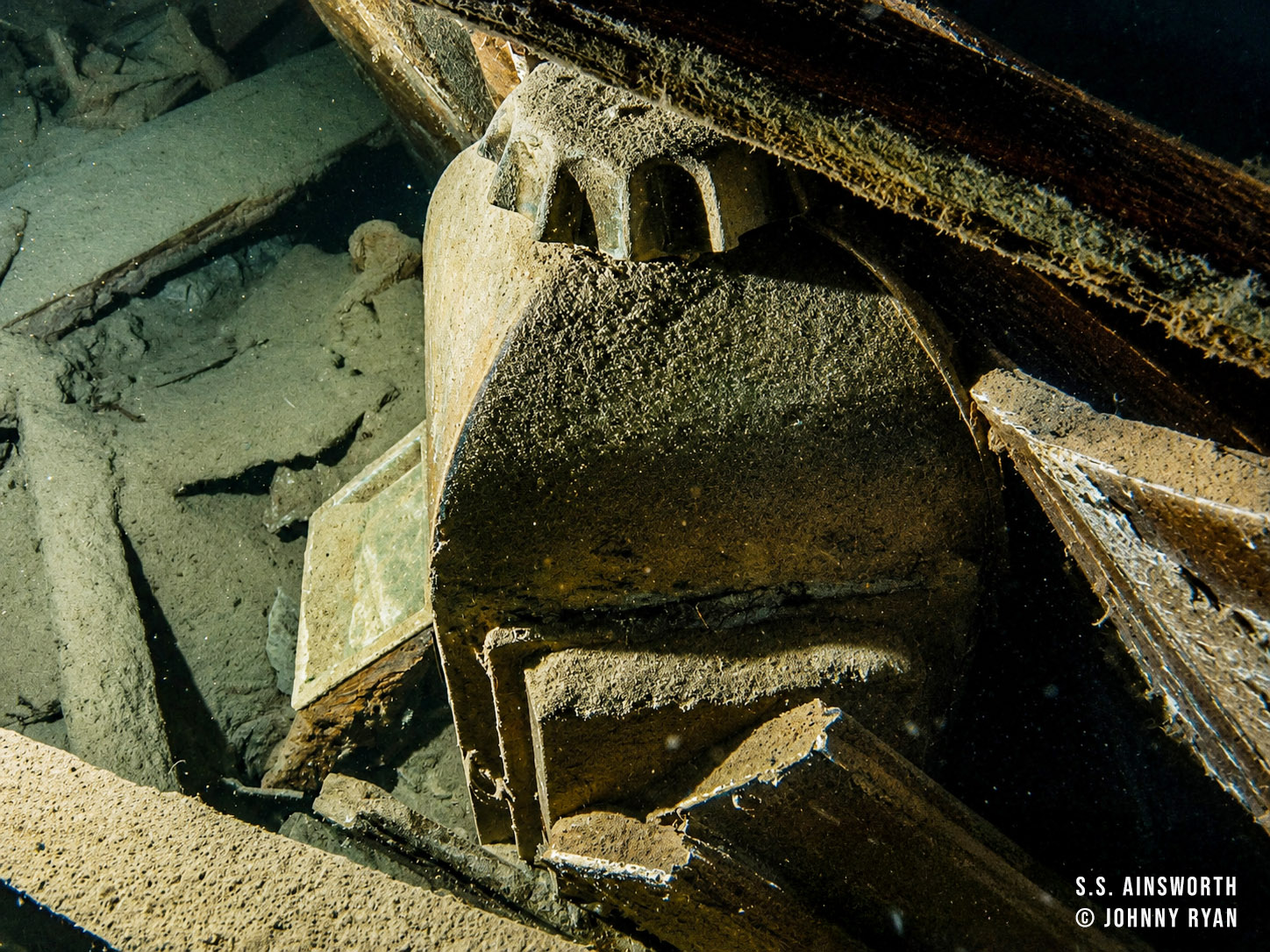
Above: The wooden helm of the City of Ainsworth remains where Captain William Lean made his final steering commands, desperately attempting to bring the stricken sternwheeler safely to shore.
By September 1, the winds had finally subsided, and Team Irish was once again scheduled to dive. Conditions were ideal, and the downline had remained securely in place, allowing the divers to locate the wreck without difficulty. Both video and still photographs were captured during the dive.
One of the most significant discoveries from the footage was that the ship's wheel and wheelhouse were still present on the wreck. Earlier assumptions that these structures had been torn away during the vessel's descent to the lakebed proved to be incorrect. The total dive time was 2 hours and 45 minutes.
The only challenge compared to the previous dives was the thermocline. Before the storm, the transition from the near-freezing bottom water of 2–5°C (36–41°F) to the much warmer 16°C (61°F) surface layer had been at approximately 21 m (70 ft). The storm had pushed the thermocline much shallower, forcing the divers to remain in the colder water until reaching the 10 m (30 ft) decompression stop.
On September 2, it was Team Left Coast's turn once again. The divers had no difficulty locating the wreck and continued documenting the site with additional video footage. Their total dive time was approximately 3 hours.
The 2023 expedition represented the culmination of 15 years of planning, dreaming, and preparation. It was an expedition that had to happen if the story of the City of Ainsworth was to continue being told. Its success was made possible only through the dedication of a tightly knit team of highly trained and experienced technical divers and support personnel. After 125 years resting in the depths of Kootenay Lake, the City of Ainsworth was finally beginning to reveal more of its story.
The exploration did not end there. Four additional dives were completed in 2024, followed by another expedition in 2025. Plans for 2026 include searching the debris field surrounding the wreck for artifacts carried away during the sinking, as well as further exploration of the scour marks left as the vessel slid down the steep lakebed to its final resting place.
Today, the City of Ainsworth is protected by the Province of British Columbia and is listed on both the British Columbia and Canadian Registers of Historic Places, ensuring that this remarkable piece of inland maritime history will be preserved for future generations.
Above: A possible magic lantern, an early image projection device popular during the late nineteenth century. If correctly identified, it would represent a rare personal artifact carried aboard the City of Ainsworth during her final voyage.
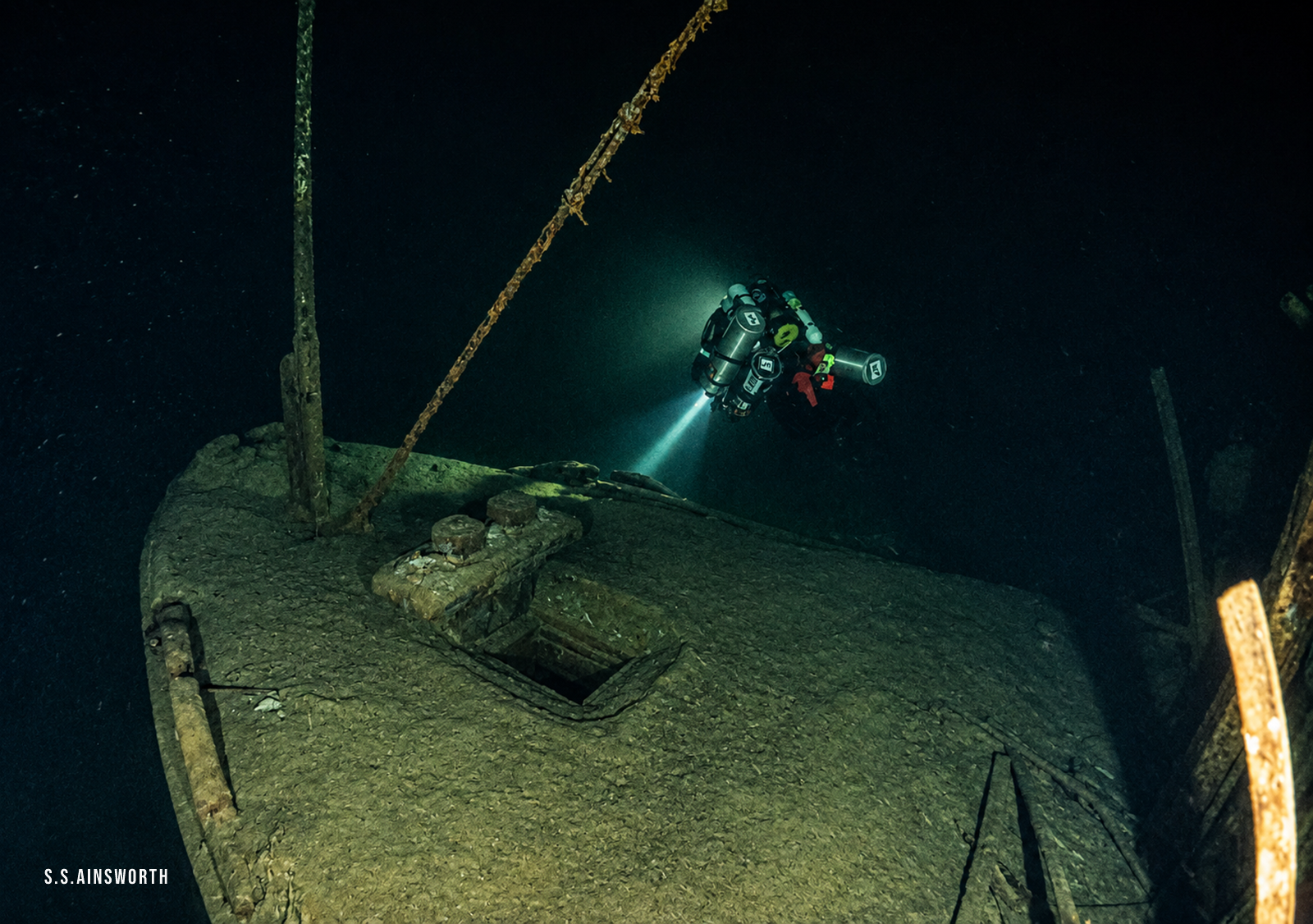
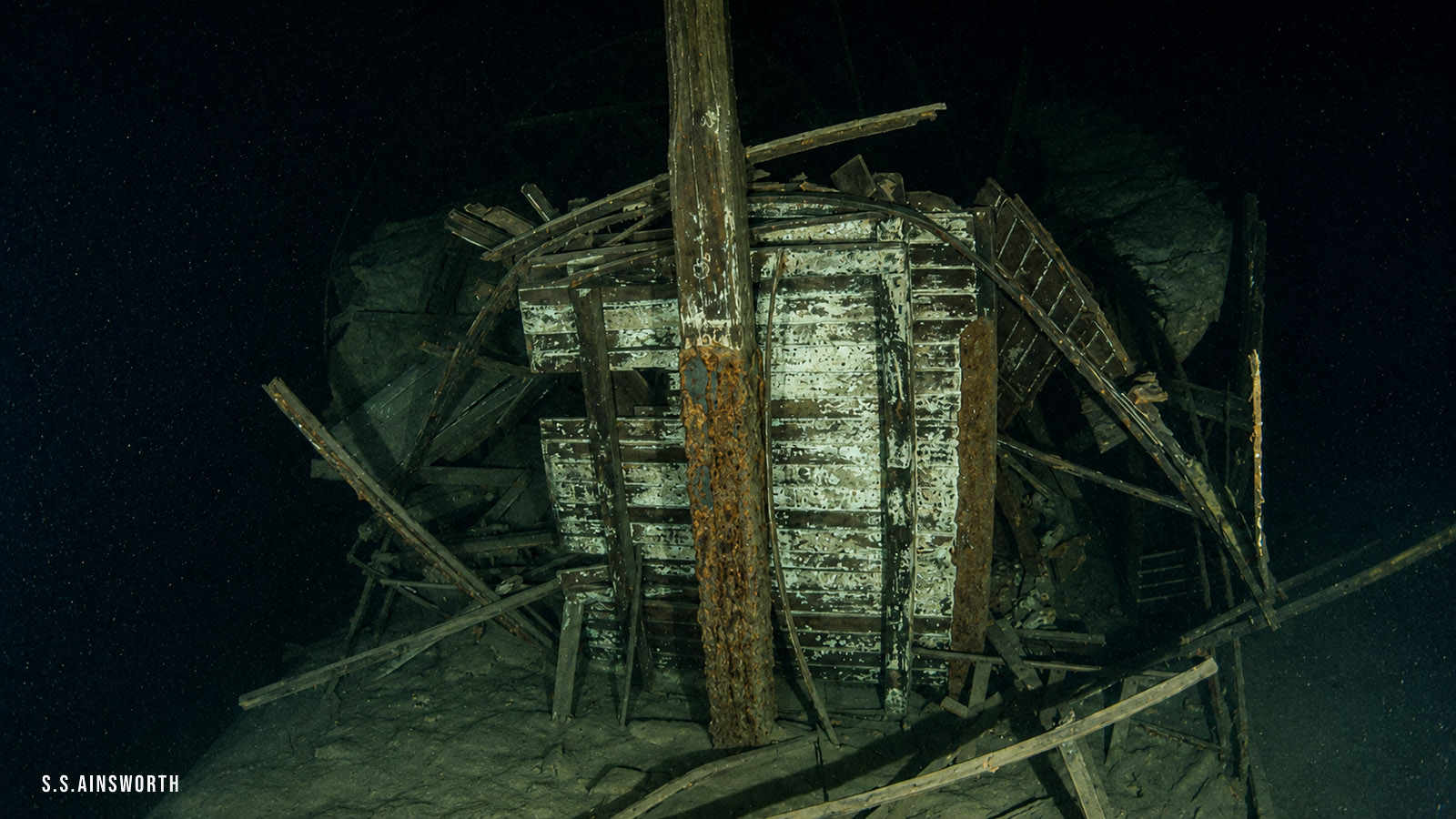
Above: Diver Johnny Ryan hovers above the bow while documenting one of the wreck's defining features—the original bow flagpole, still marking the forward end of the historic sternwheel steamer.
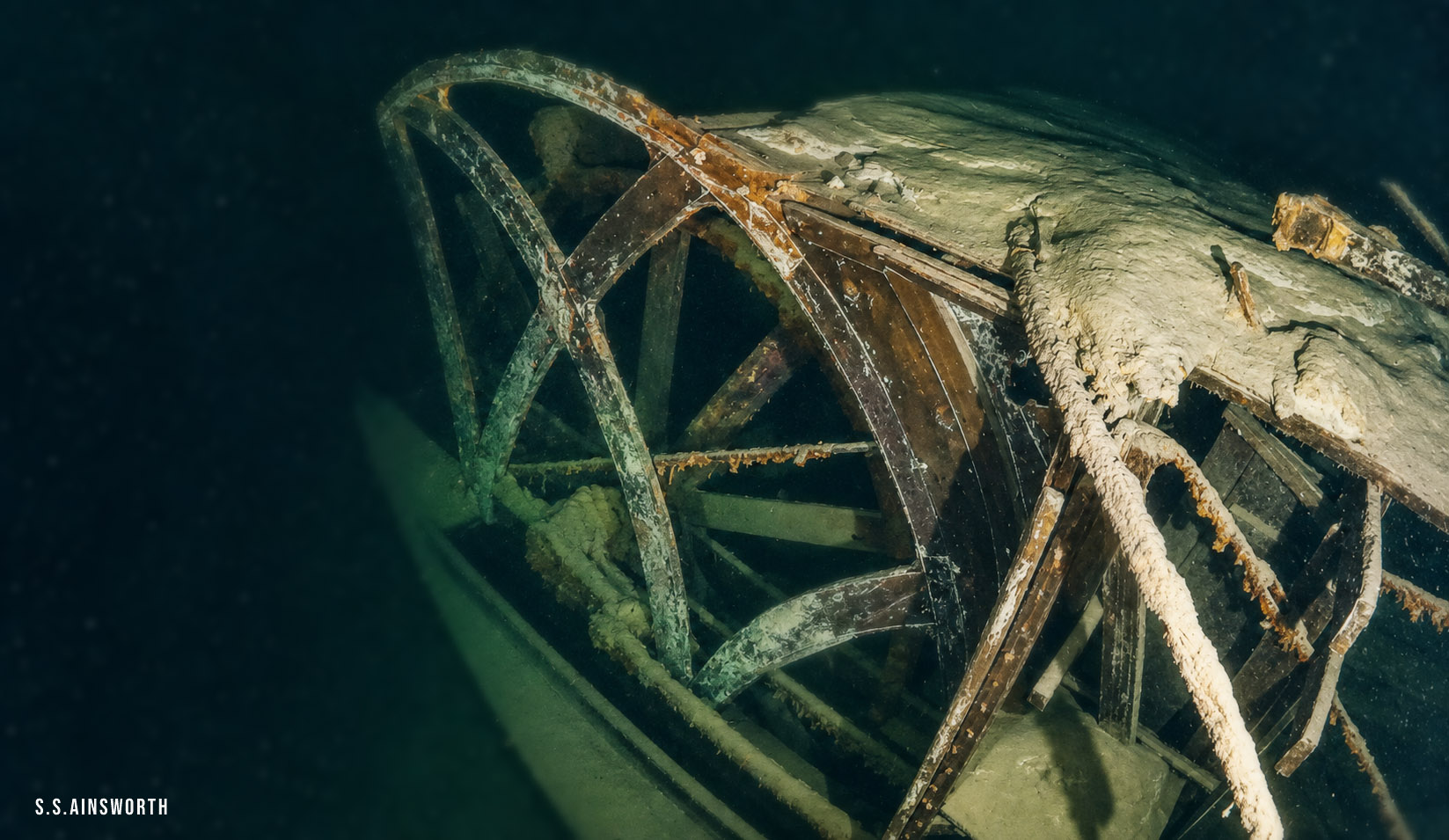
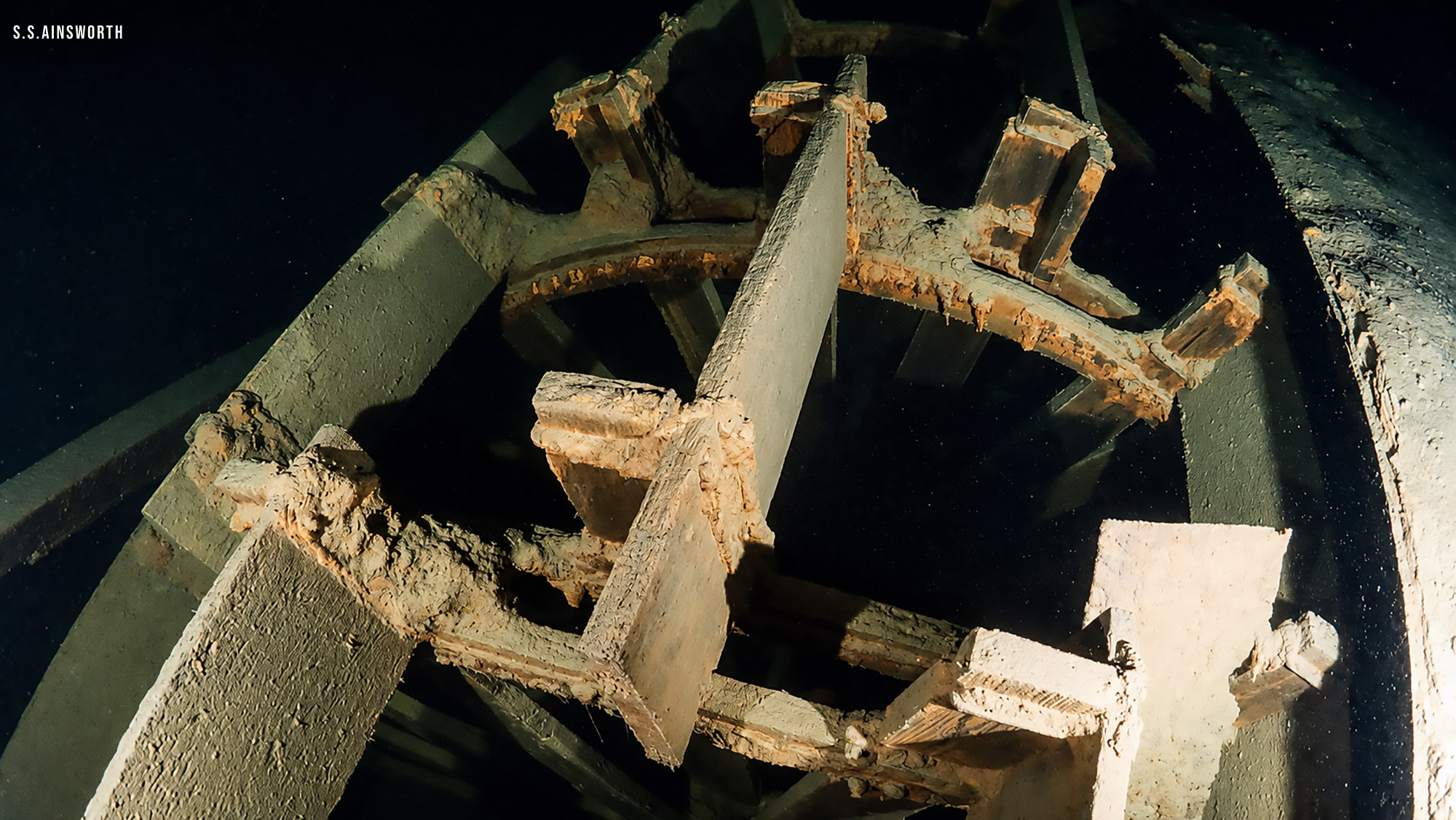
Above: The starboard side of the paddlewheel cover protects the remains of the sternwheel that once propelled the City of Ainsworth throughout Kootenay Lake. Its surviving timberwork provides valuable insight into late nineteenth-century sternwheel construction.
Above: Viewed from above, the stern paddlewheel displays its staggered paddle configuration, an engineering feature designed to improve efficiency by ensuring the paddles entered and exited the water progressively rather than simultaneously.
Above: Looking forward along the port side from the stern, this doorway provided access to the engine room where the steam engine, boilers, and propulsion machinery powered the City of Ainsworth's single stern paddlewheel.
Above: Looking aft from the bow, the collapsed superstructure reveals the tremendous forces unleashed during the sinking and the gradual deterioration that followed more than a century on the floor of Kootenay Lake.
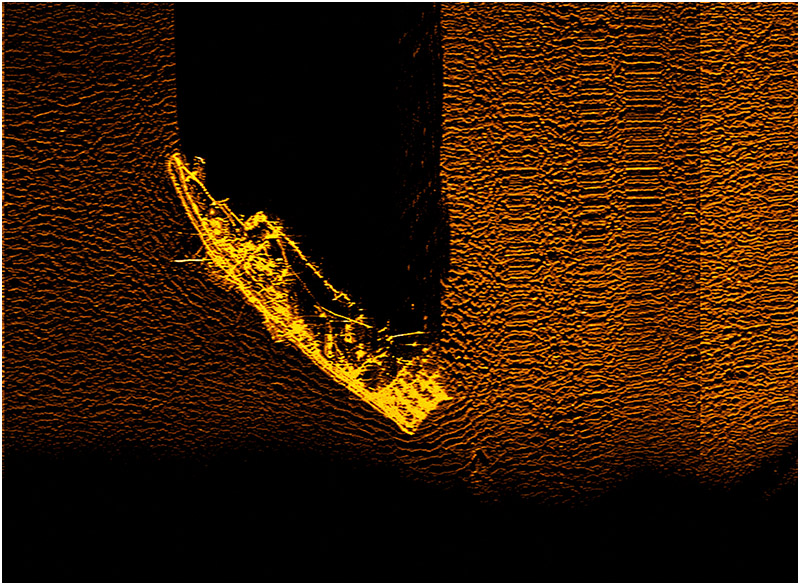
Above: The City of Ainsworth appears as a high-contrast acoustic target in this sidescan sonar image. Sound reflections from the hull, paddlewheel, and surviving superstructure produce the bright returns, while acoustic shadows help define the wreck's height above the lake floor and overall condition.
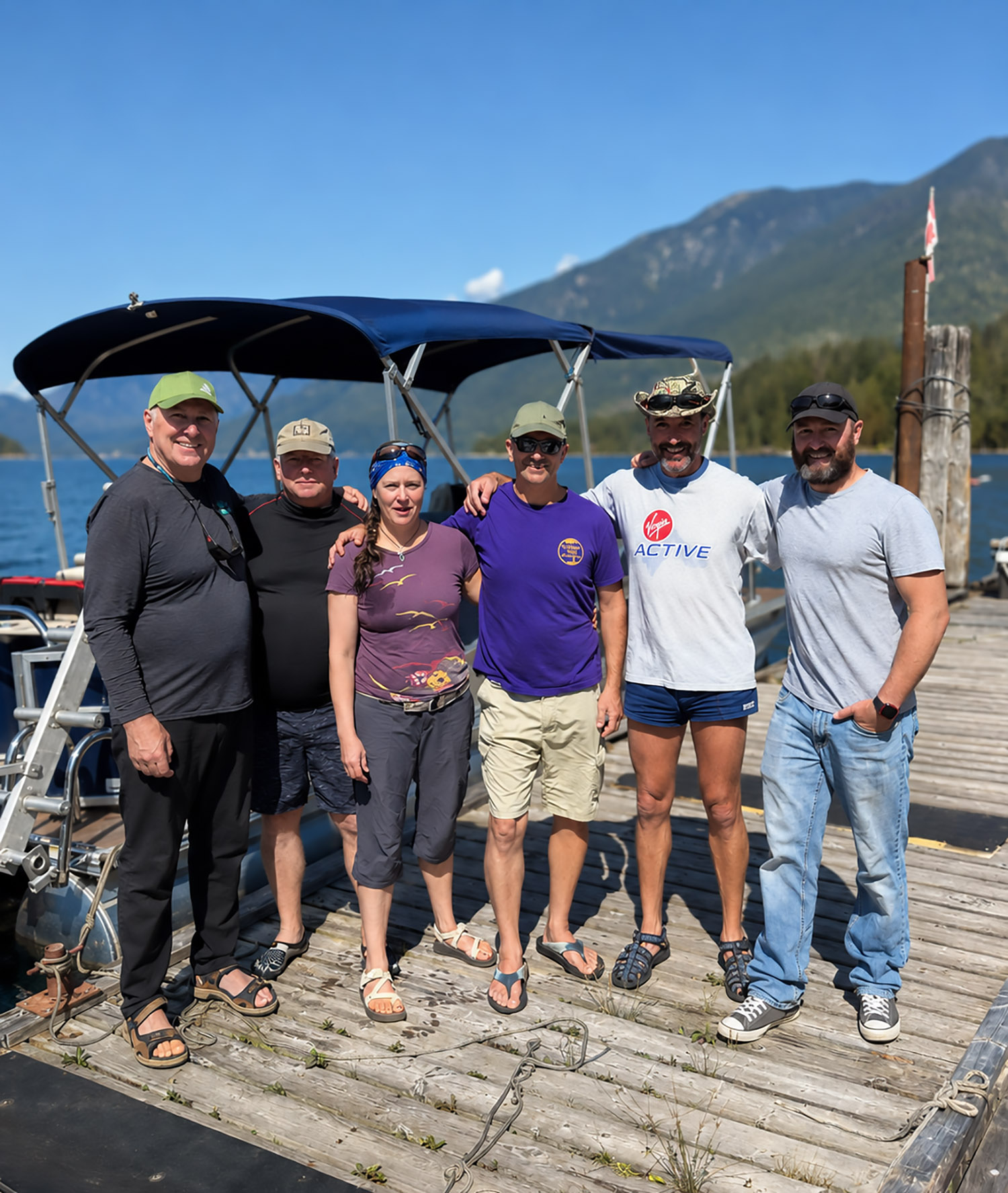
Left to Right: John McCuaig, Boat Support. Brian Nadwidny, Diver. Terina Hancock, Support Diver. Glenn Farquhar, Diver. Alan Drake, Diver. Johnny Ryan, Diver. Alan Keller and Cathie McCuaig, not in photo








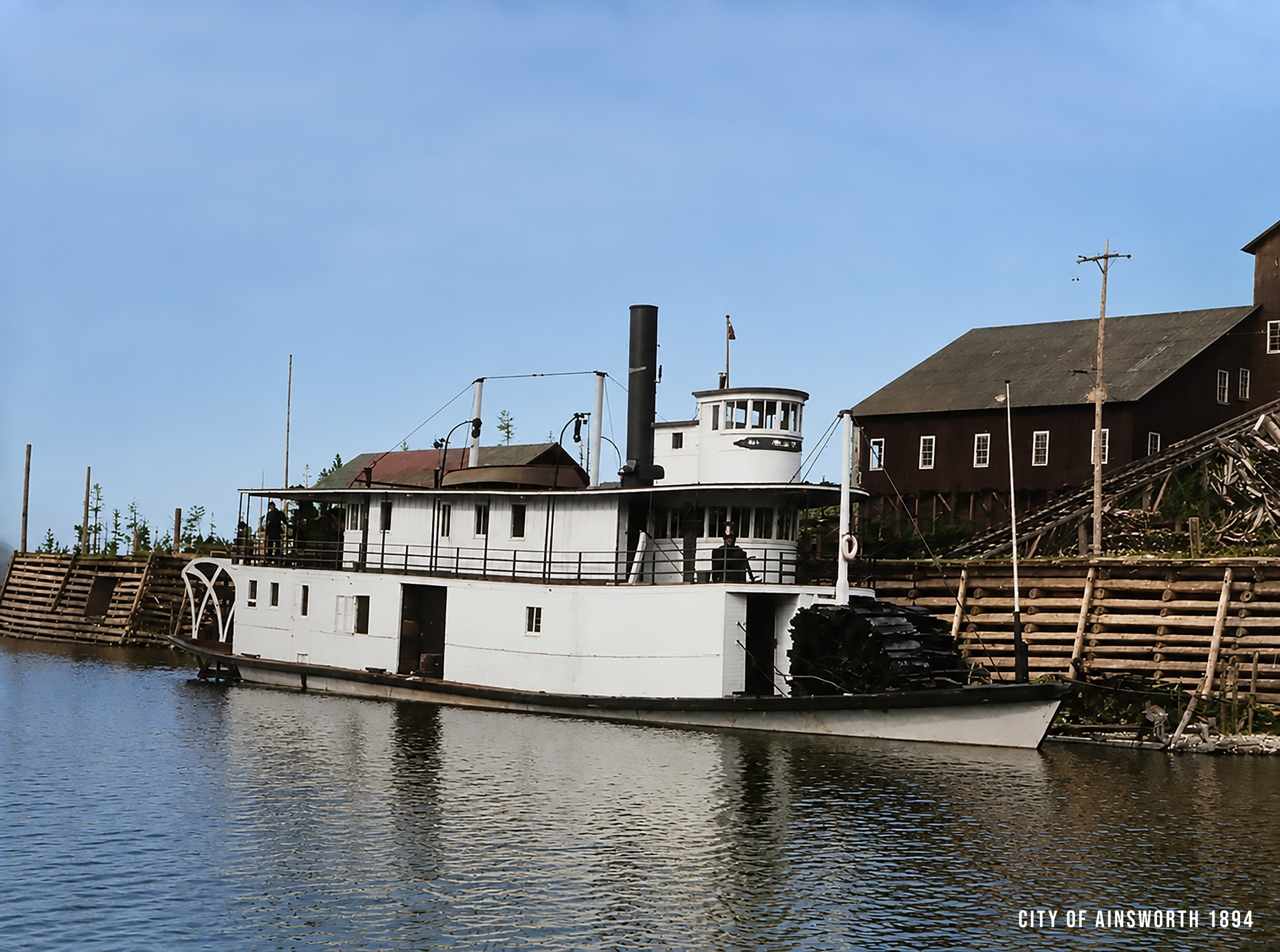

 Moored alongside the dock was the City of Ainsworth, an elegant 84-foot wooden sternwheel steamer that had become a familiar sight throughout the Kootenays. Her white-painted cabins gleamed in the morning sunlight, while a tall black smokestack rose proudly above the vessel's centerline. At the stern, the broad paddlewheel rested beneath its ornate wooden housing, waiting for the engineer's signal to begin another day's voyage. Firewood was stacked neatly across the forward freight deck beside barrels, crates, mining equipment, mail, and general merchandise bound for settlements farther south.